Search

Cecil Pinsent

British landscape architect who designed villas and gardens in Tuscany in the 20th Century

Trained in London before settling in Florence, Cecil created geometrically ordered Tuscan gardens for the vibrant local Anglo-American expatriate community.

Inspired by Geometry

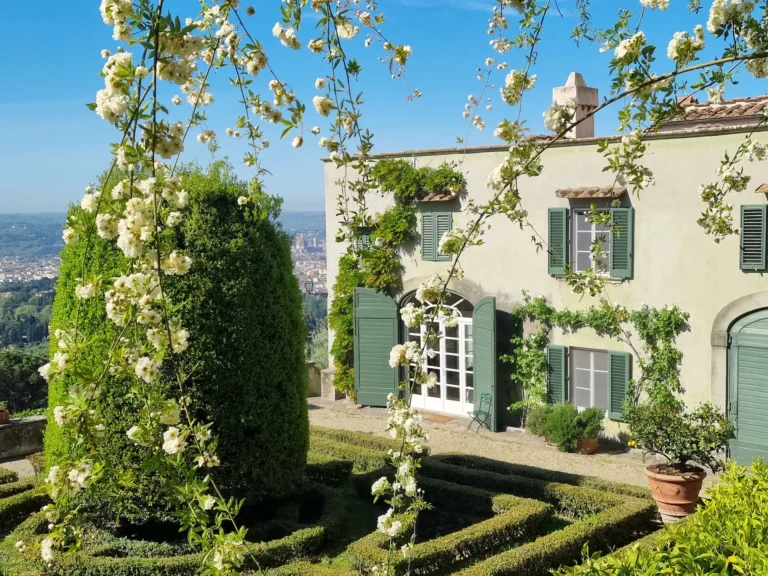
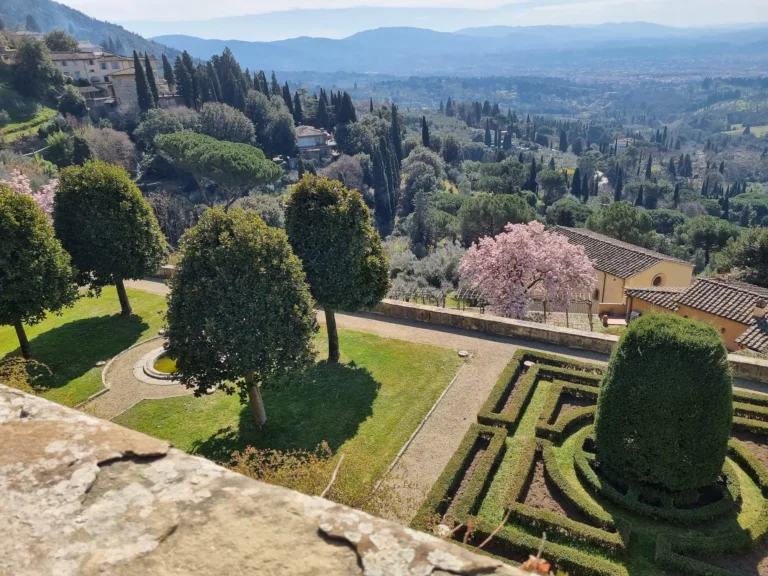
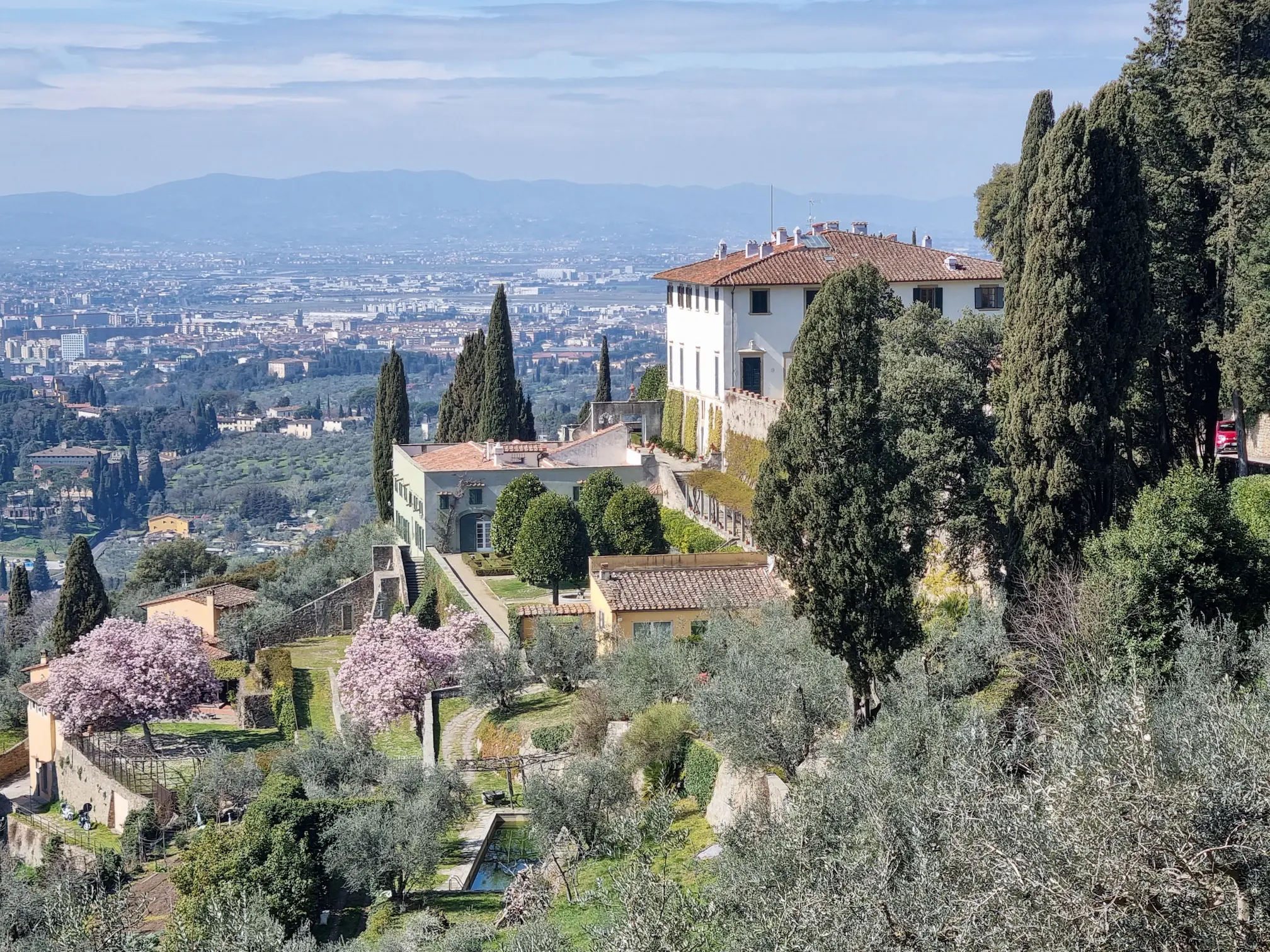
In the early 20th century, on the hills of Fiesole, Pinsent designed splendid gardens for the Anglo-American elite, almost always around an ideal perimeter, often divided into four sections, working within the hilly topography of the Tuscan landscape.

His gardens’ layouts never strayed from symmetry; instead, he closely followed geometry—a defining, traditional feature of Italian gardens—while at the same time reaching out toward the boundlessly open skies of Florence.

Cecil Pinsent was born in 1884 in Montevideo, Uruguay, to a family of English origin. In 1889, the family returned to Selly Hill, near Birmingham, where young Pinsent could play in the garden at home, among damp grottoes and extravagant Gothicising follies. He trained in London under Sir Reginald Blomfeld (1856–1942), professor at the Royal Academy.

Florence

In 1906, he won a scholarship that enabled him to make his first trip to Florence. It was the beginning of a long love affair with the city.

Staying right in the city centre, at a small guesthouse on Via dei Serragli, Pinsent took his first steps in a city teeming with visitors and expatriates from all over the world. Among such outstanding residents were the Romanian princess Catherine Jeanne Keshko Ghyka, who had purchased Villa Gamberaia in 1896, or Bernard Berenson and Mary Costelloe, who had settled nearby at Villa I Tatti.

Florence was teeming with that sociocultural phenomenon that would later be dubbed “Anglo-Florentinism.” “They lived in squares, painted in circles, and loved in triangles”; the phrase, uttered by the laconic Dorothy Parker to describe the Bloomsbury literary circle, is perhaps just as appropriate for the community of foreigners settled between Maiano and San Domenico, just a few kilometres outside Florence, all caught up in scandals, squabbles, and lavish little parties.

In Florence, Cecil Pinsent met Edmund and Mary Houghton. Together, they travelled to Verona, Venice, Siena, Volterra, and San Gimignano in an automobile—a flamboyant and futuristic symbol of the new century.

Friends and Partners

In 1907, Pinsent returned to England, where he met Sir Geoffrey Scott (1884–1929). An Oxford alumnus, Scott was a bubbling fountain of light and classical wisdom and an intellectual of innate elegance.

As such, he had a much more active love life than Pinsent, and it was precisely his unexpected affair with Lady Sybil Cutting, the owner of Villa Medici in Fiesole, that brought about the end of their partnership.

When in 1909 Pinsent and Scott found themselves working together at Villa I Tatti, in the hills near Florence, their employer Mary Berenson (the wife of the renowned art historian Bernard and a scholar in her own right) nicknamed them “the artichokes,” as they were inseparable.

The list of Cecil Pinsent’s works in Italy is long, and his activity in Tuscany stands out as particularly prolific between 1909 and 1939. He seemed to love that region very much, for its beauty as much as for its being a hotbed of excellent clients.

Cecil Pinsent

Places

Eleonora Tonon takes us on a tour of Cecil Pinsent’s famous 20th Century gardens in Tuscany, from their inspiration to their creation.

Styles / Topics

English gardens have been deeply intertwined with Italian design since Roman antiquity, evolving through Tudor symmetry, classical 18th-century revivalism, and Victorian geometric formalism.

Places

When she created East Lambrook Manor Garden, from a farmyard and a rubbish heap, Marjorie Fish developed a new cottage garden style that had a huge influence on garden owners of the time and is still relevant today