Search

Cecil Pinsent and his Gardens in Tuscany

Exploring the gardens of Villa I Tatti, Villa Le Balze, Villa Medici and Villa La Foce

Eleonora Tonon takes us on a tour of Cecil Pinsent's famous 20th Century gardens in Tuscany, from their inspiration to their creation.

Villa I Tatti and Villa Le Balze

Pinsent’s first major project in Tuscany was for Bernard and Mary Berenson at Villa I Tatti in 1909, where he worked alongside Sir Geoffrey Scott.

In this garden, a series of terraces and the austerity of the evergreen vegetation allow for no interruptions in the view. The garden is monochrome and austere: it perfectly embodies the ascetic spirit of 15th-century Florentine bankers, almost a tribute to Cosimo the Elder de’ Medici—all sobriety, diplomacy, and no ostentation. Pinsent was only twenty-five years old, but he already grasped the essence of Florentine character and, indeed, gracefully made it his own.

Villa Le Balze

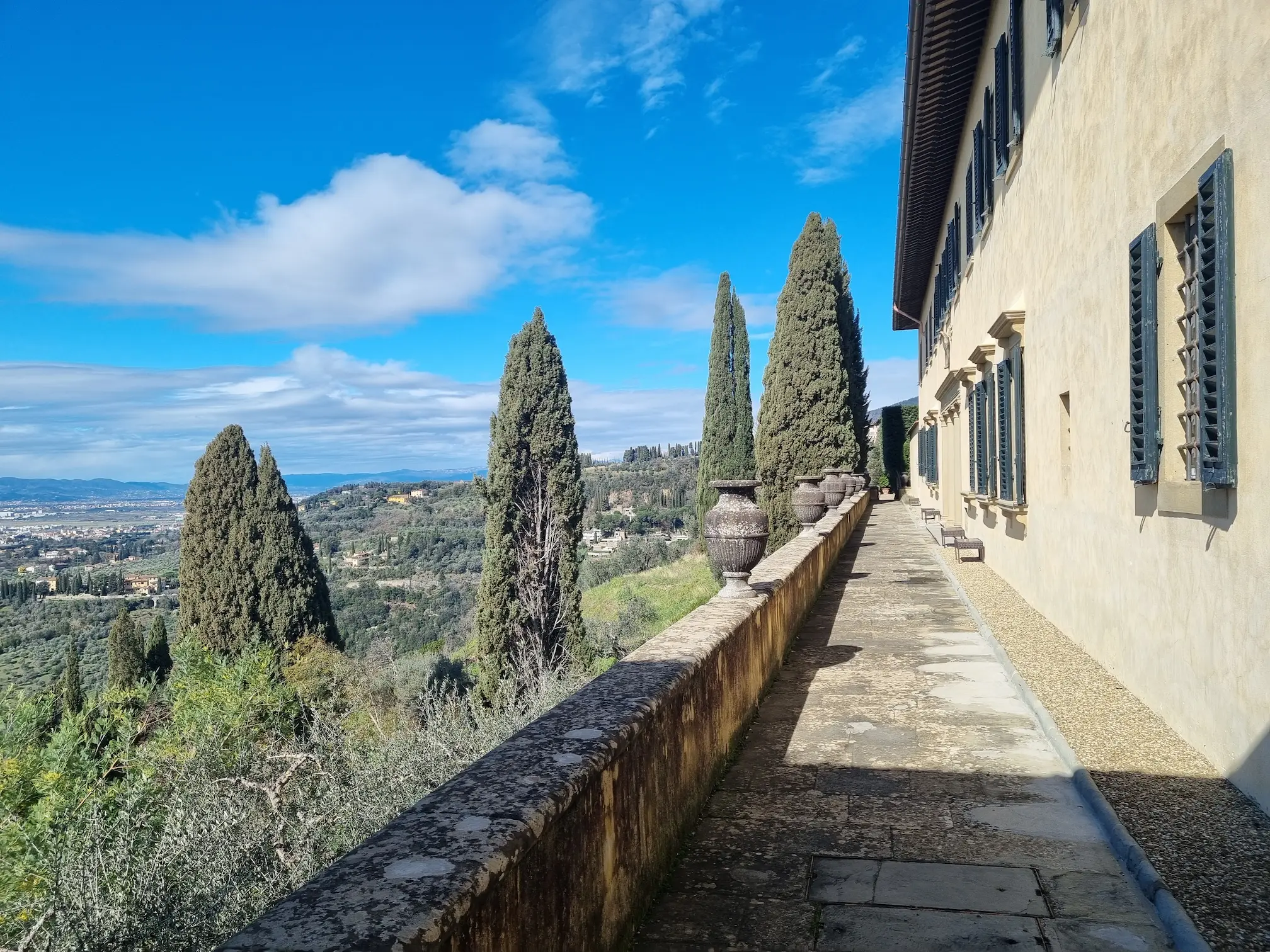
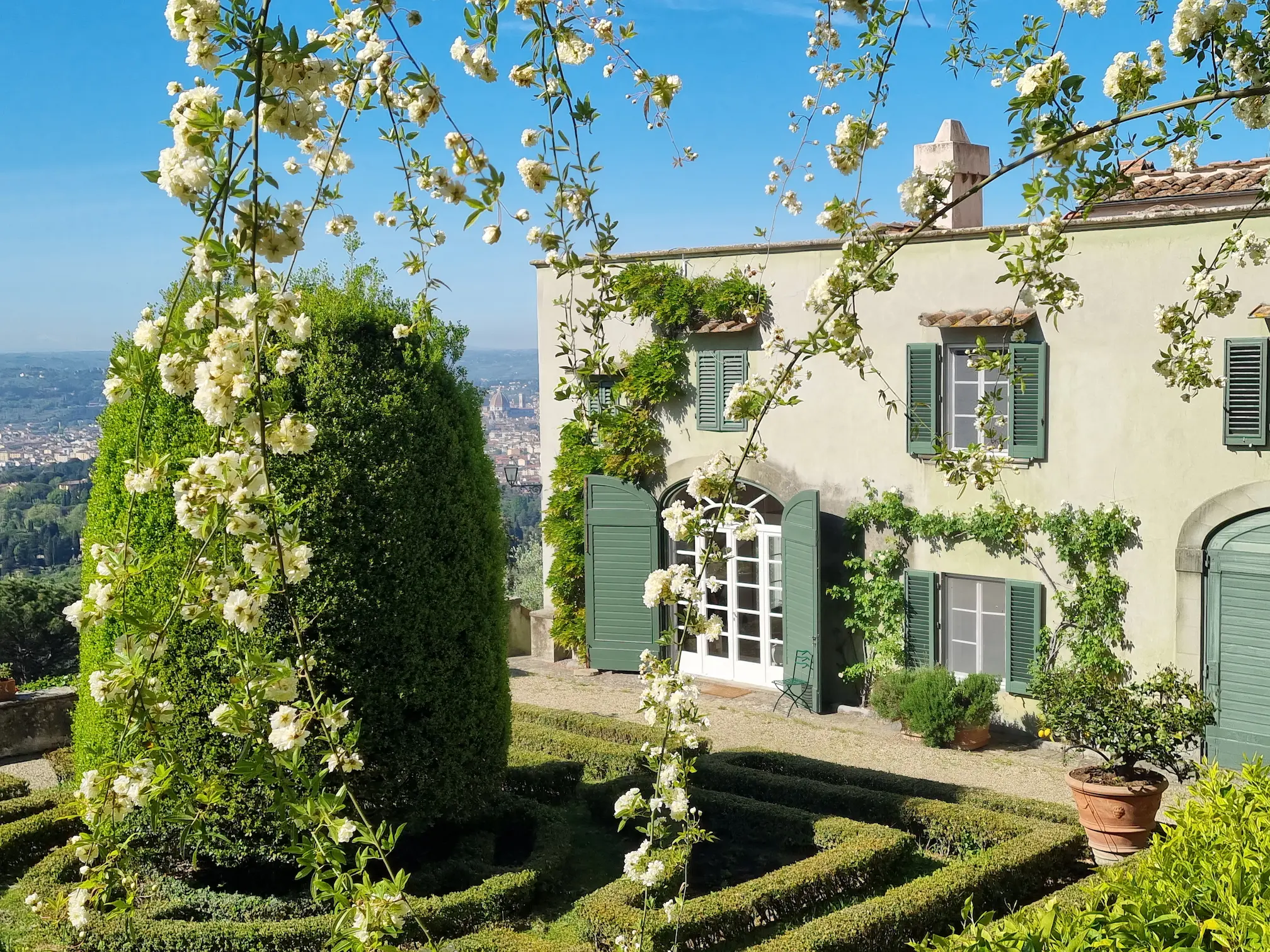
Unstoppable, in 1911 Pinsent arrived at Villa Le Balze, a residence just a stone’s throw from Villa Medici in Fiesole, where he would work a few years later. But rumours were circulating. The Anglo-Americans didn’t trust Italian gardeners… better to rely on English architects, so they thought. This time, Pinsent’s client was Professor Charles Augustus Strong, the widower of Elizabeth Rockefeller. He had bought a plot of land in Fiesole and commissioned an idyllic retreat where he could philosophize in solitude, like members of Lorenzo the Magnificent’s circle. Rumour has it, however, that the view was too beautiful, and the owner found himself distracted…

Pinsent worked alone this time and had to contend with a narrow, steep, and rugged site. In this case, there was no pre-existing garden; the architect had to create one from scratch. He did so in a stunning manner. Critics believe that Villa Le Balze served—literally—as a testing ground for Pinsent prior to his masterpiece, the celebrated Villa La Foce.

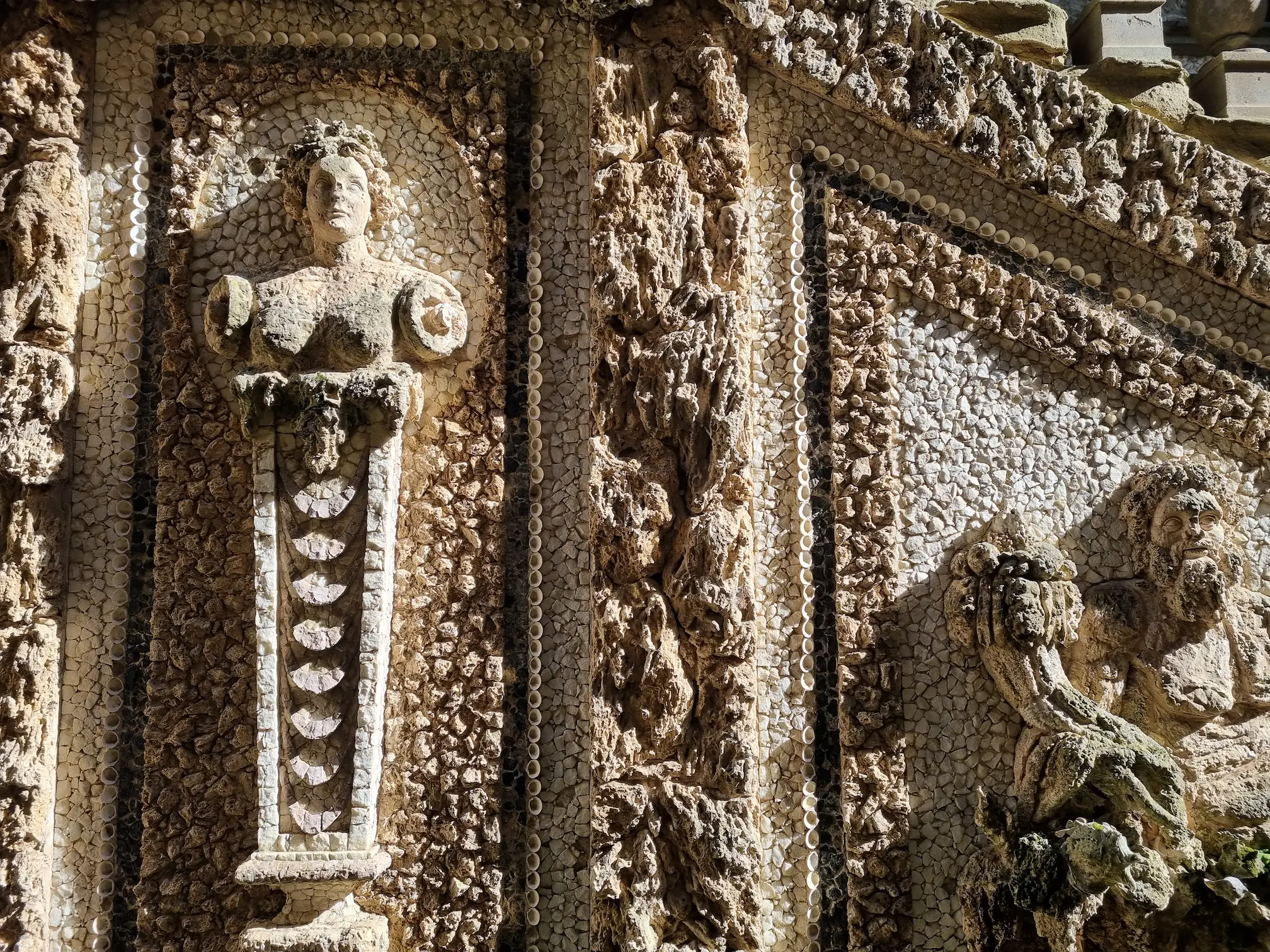
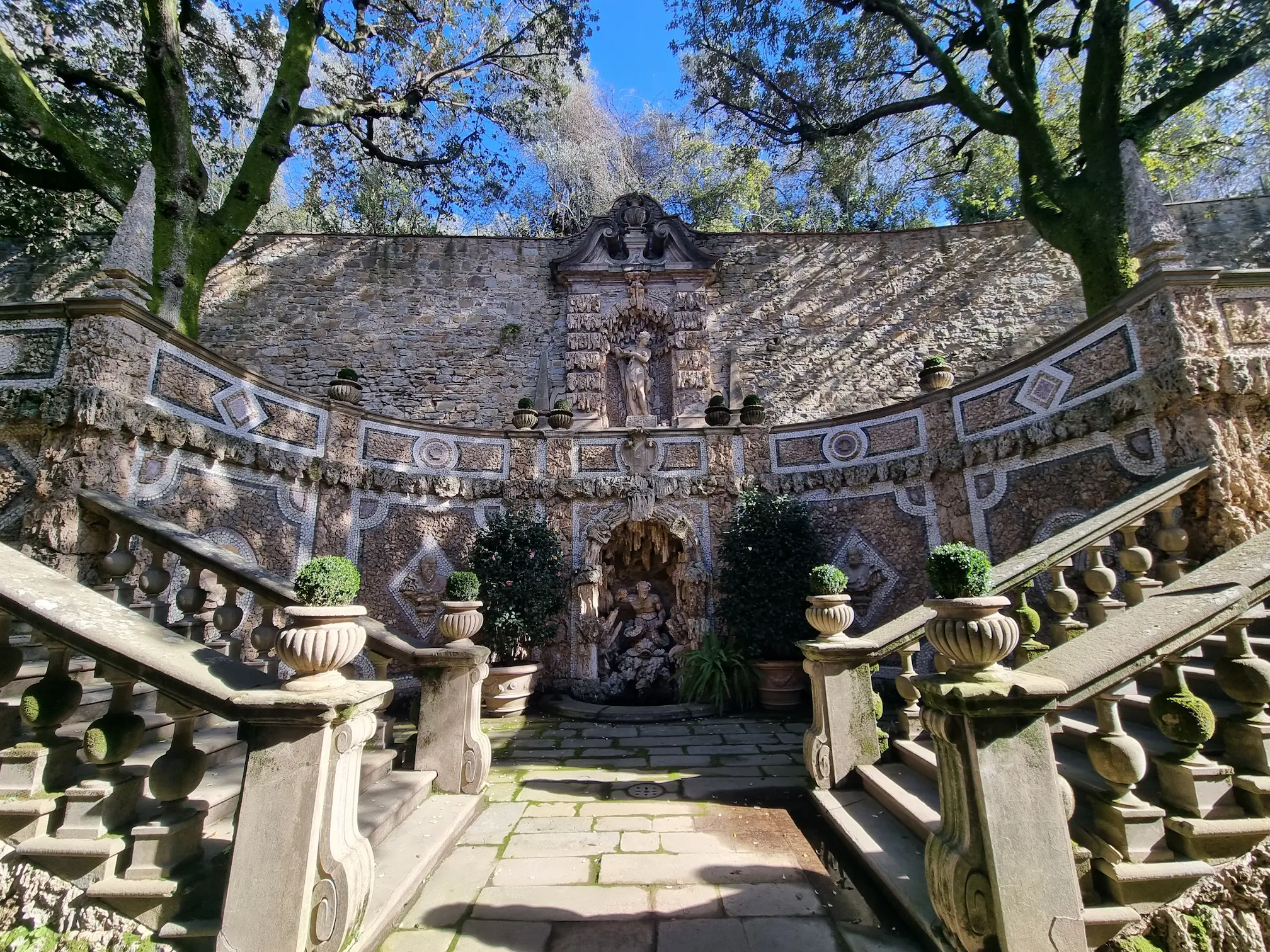
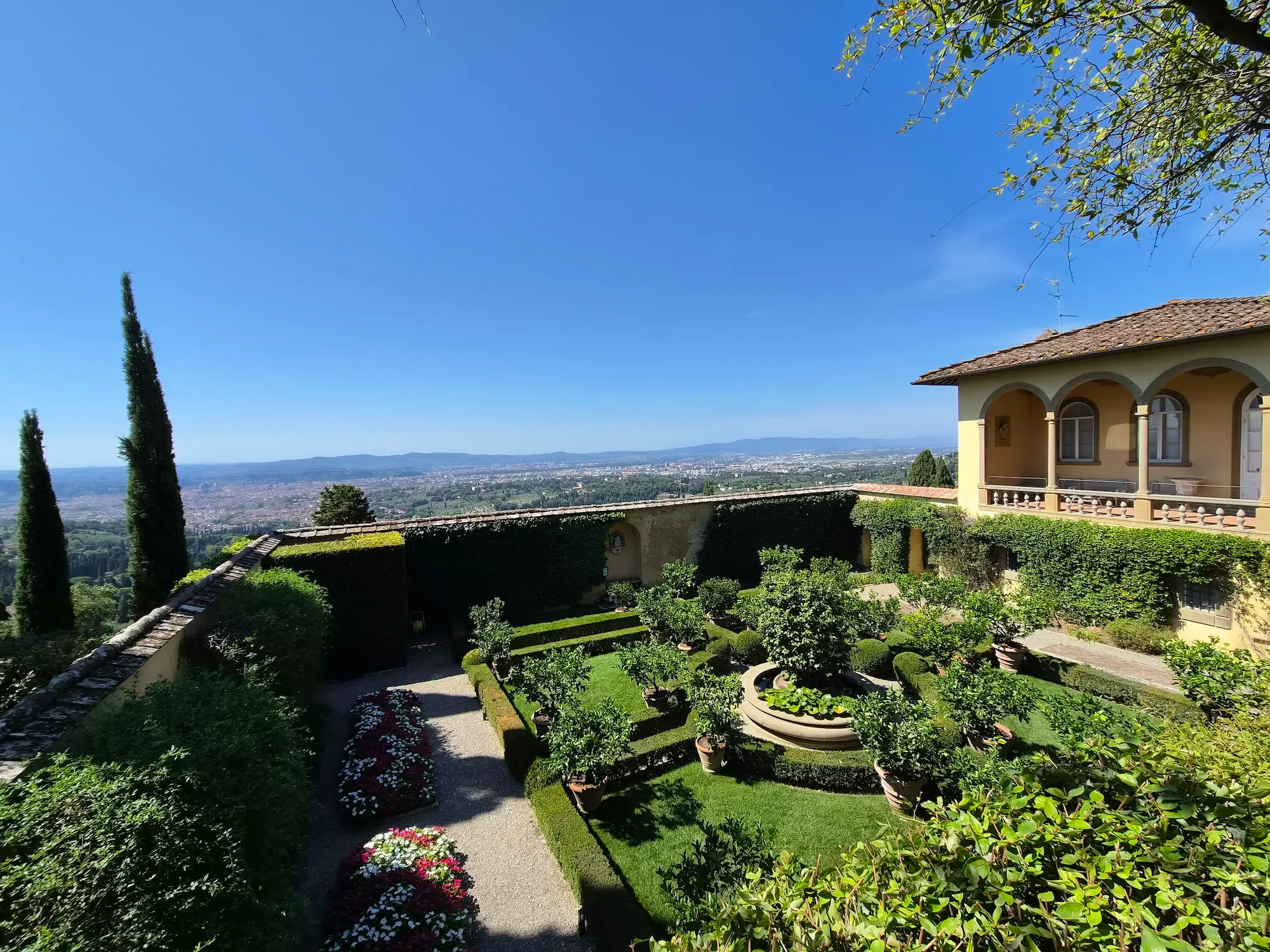
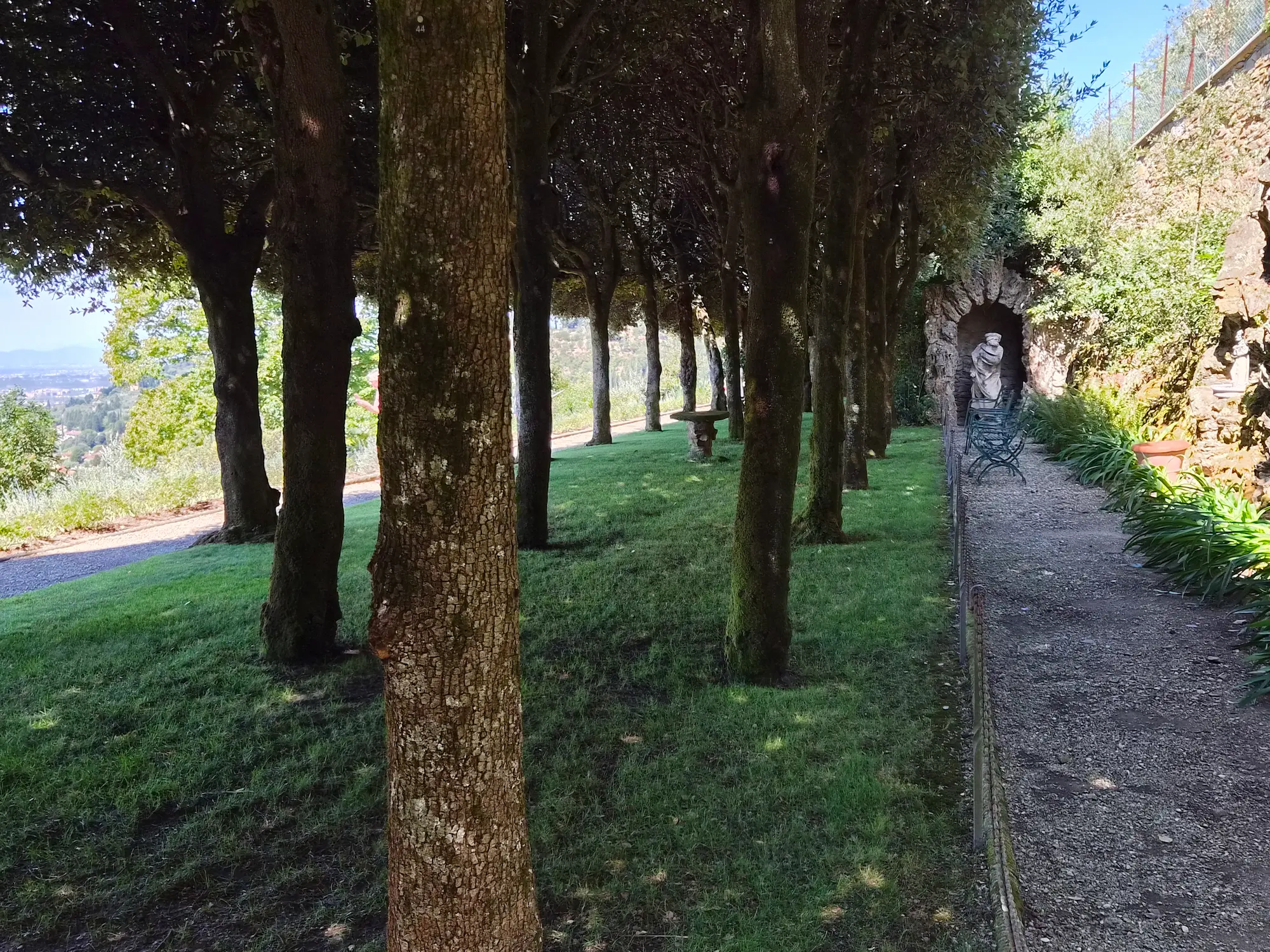
Cecil Pinsent’s interpretation of space at Villa Le Balze is brilliant: on a site with a distinctly longitudinal layout, he masterfully applied the concept of “garden rooms,” enticing visitors to explore every corner of the garden and constantly ask themselves: ‘But what lies on the other side, beyond?’ The result is impeccable. Villa Le Balze is a string of gardens, where each ‘garden room’ links to the next, like dance steps. There is a luminous and unabashed lemon garden; a single-axis avenue of the terrace; the intimate embrace of an agapanthus garden; the monastic solitude of a holm oak garden; and the triumph of the cabinet de rocaille, a tribute to the tradition of grottoes with their “tartari”—artificial stalactites that were a typical feature of Tuscan gardens.
Villa Medici

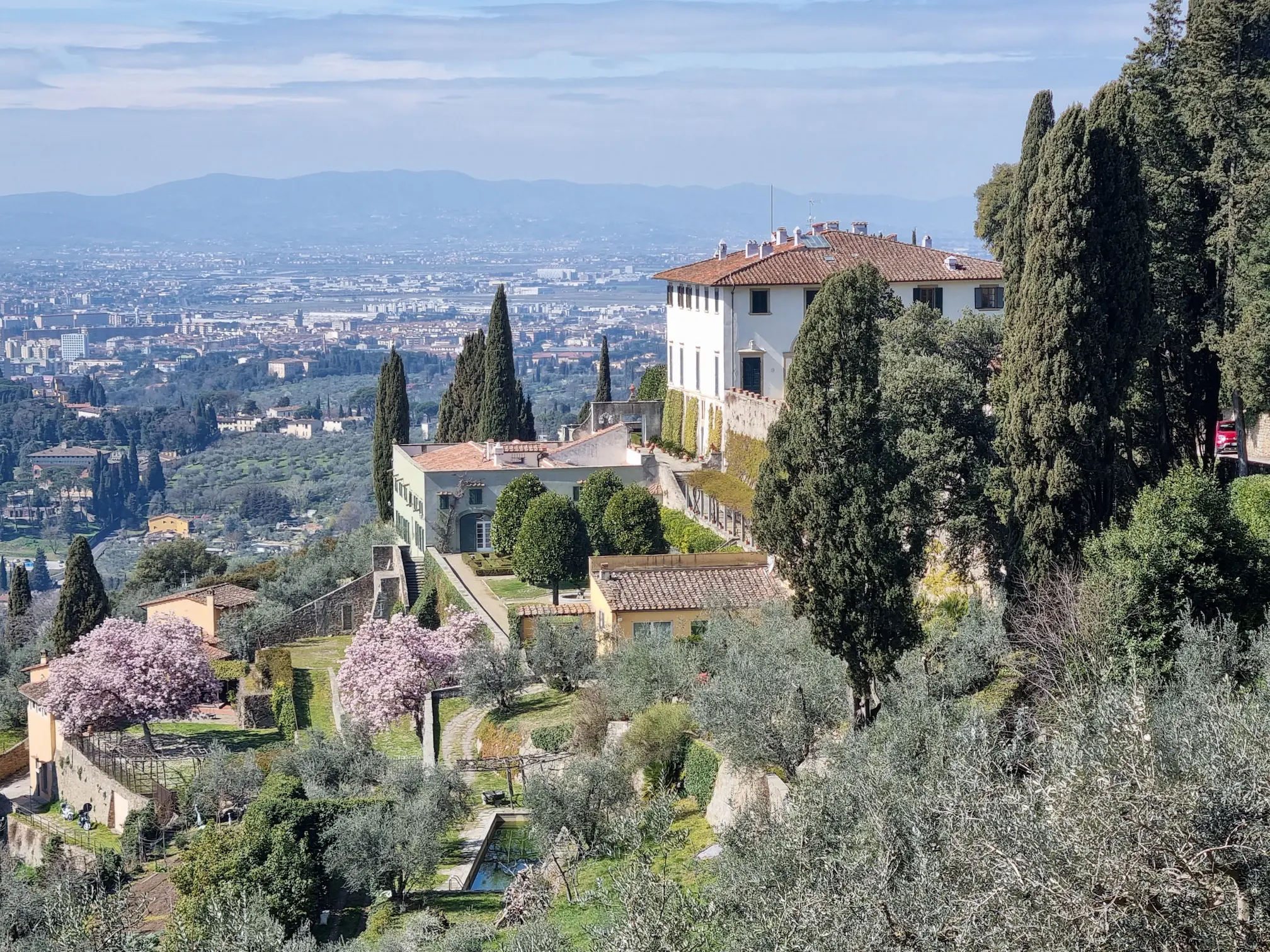
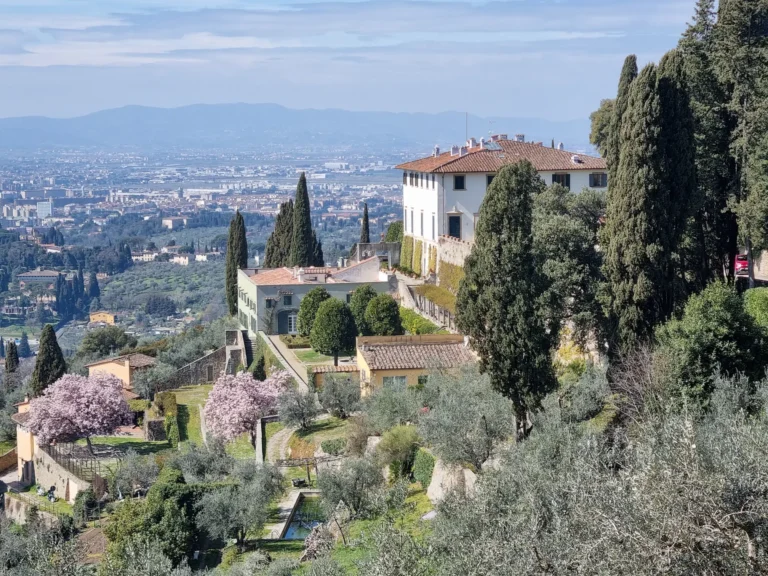
In 1915, Cecil Pinsent and Geoffrey Scott worked at Villa Medici in Fiesole for Lady Sybil Cutting.

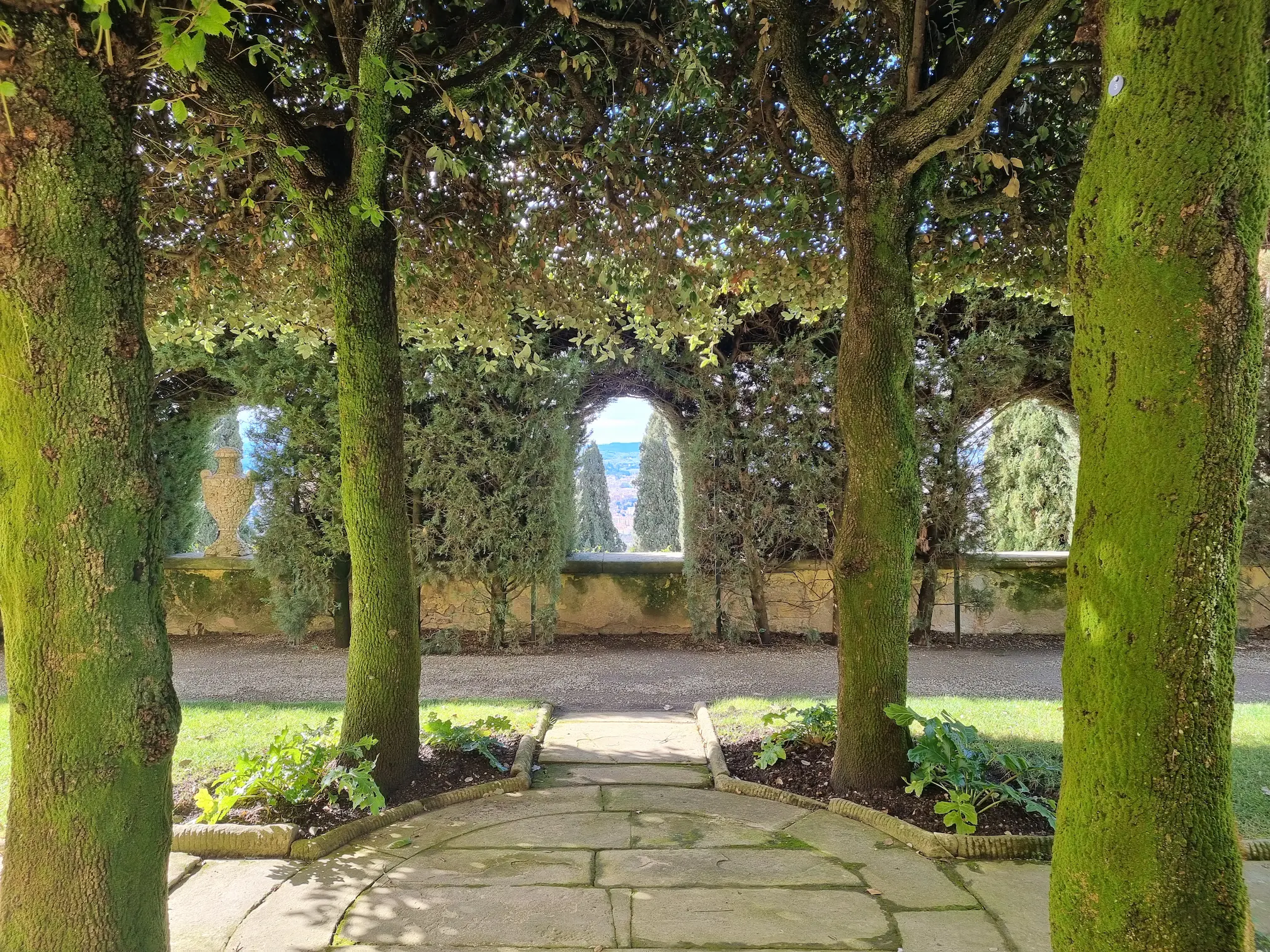
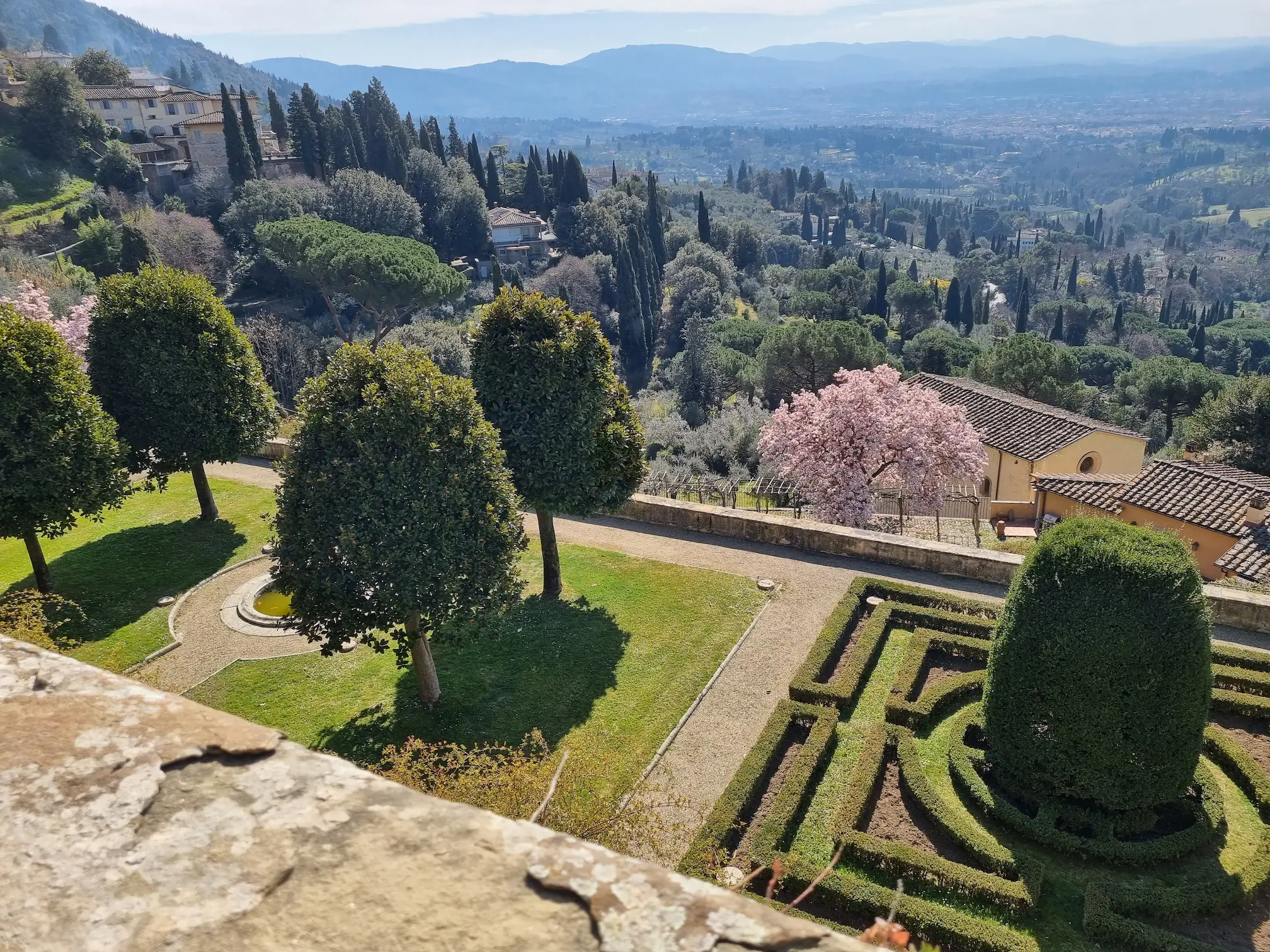
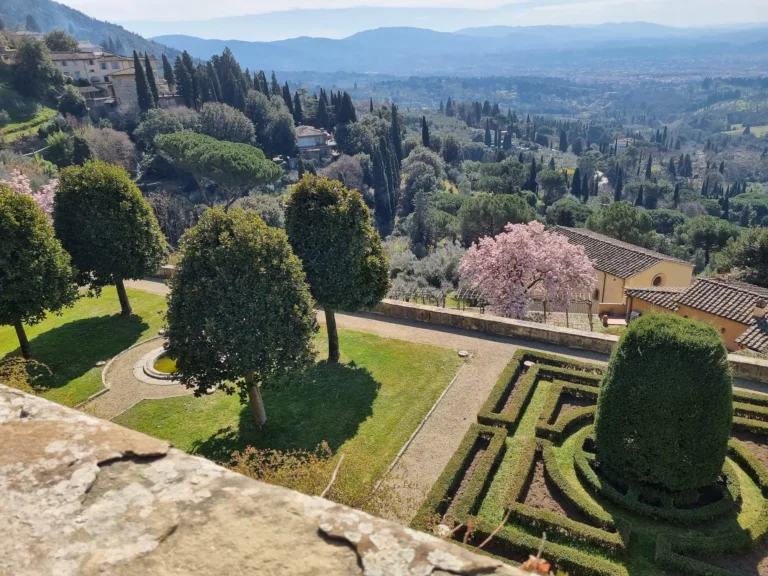
For this aristocratic client he redesigned the lower garden of Villa Medici, shaping it according to the simplest and most ancient of formulas: the Charbagh, the hortus conclusus, the four-part garden. Yet Pinsent broke the closure of such typologies, opening the space to the landscape. The garden glows within the Tuscan hills; the light-blue view penetrating the green forms, and the emerald foliage taking the hue of the sky. Pinsent placed a water feature at the centre of the garden, surrounding it with four magnolias flanked by boxwood hedges. The design is a transposition of the architecture of Filippo Brunelleschi (1377–1446): the lower garden of Villa Medici, in fact, recalls the volumes of the Pazzi Sacristy in the Basilica of Santa Croce in Florence with its floorplan based on squares inscribing circles and two rectangles inscribing semicircles. Once again we encounter in Pinsent’s work those ancient, simple, beloved geometric shapes, celebrated by Plato, recommended by Pliny the Younger, and revived by Leon Battista Alberti in the De Re Aedificatoria.

Villa La Foce

In 1927, Iris Origo, daughter of Lady Sybil Cutting and by then a budding writer sought to refashion the garden of her estate, called Villa La Foce, deep in southern Tuscany overlooking the lunar landscape of the Crete Senesi, it was Pinsent that she thought of.

The property was much larger than the estates where he had previously worked, and located in an area with significantly less water, exposed to the scorching sun, and overlooking swaths of ochre and brown earth.

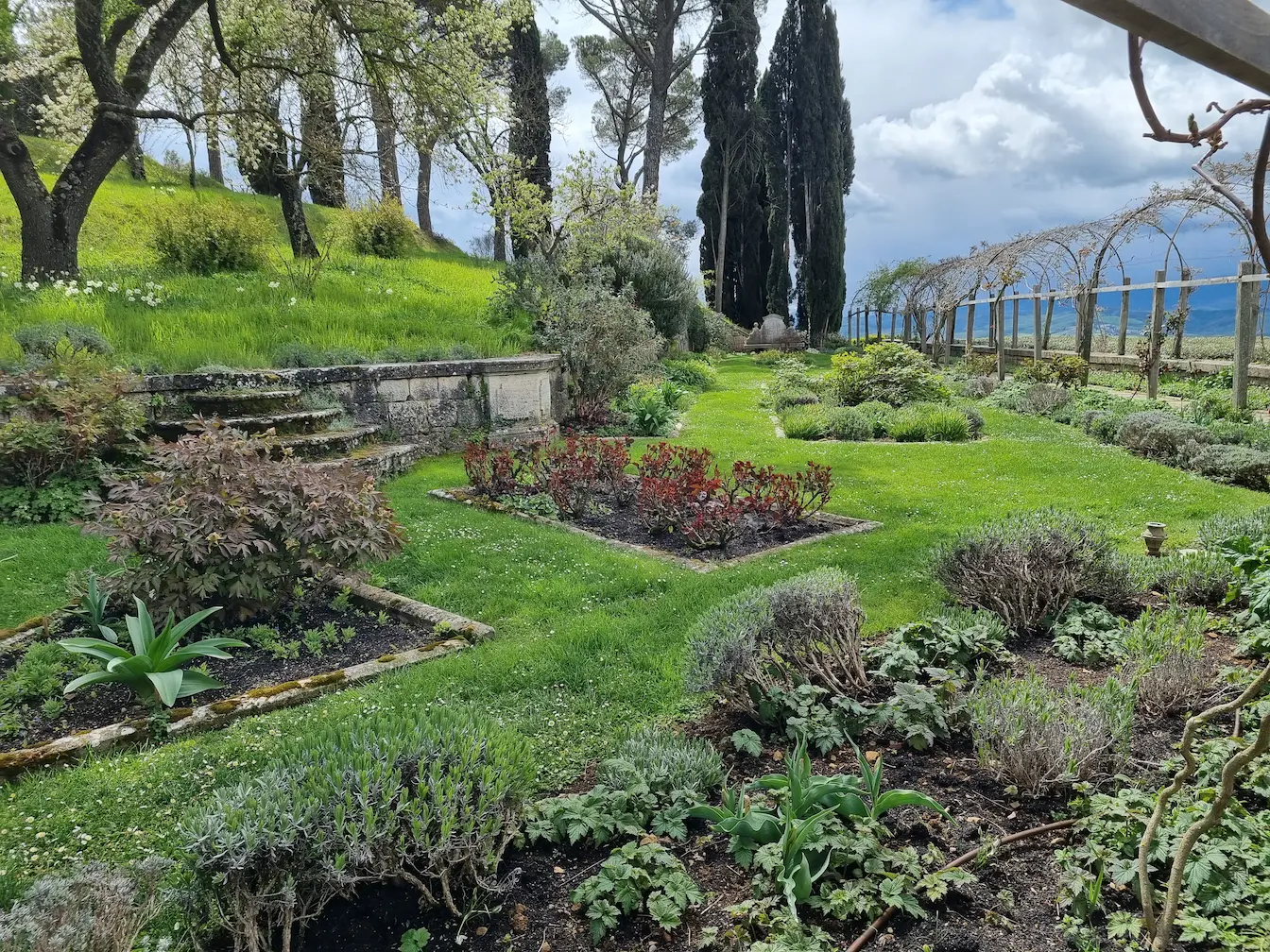
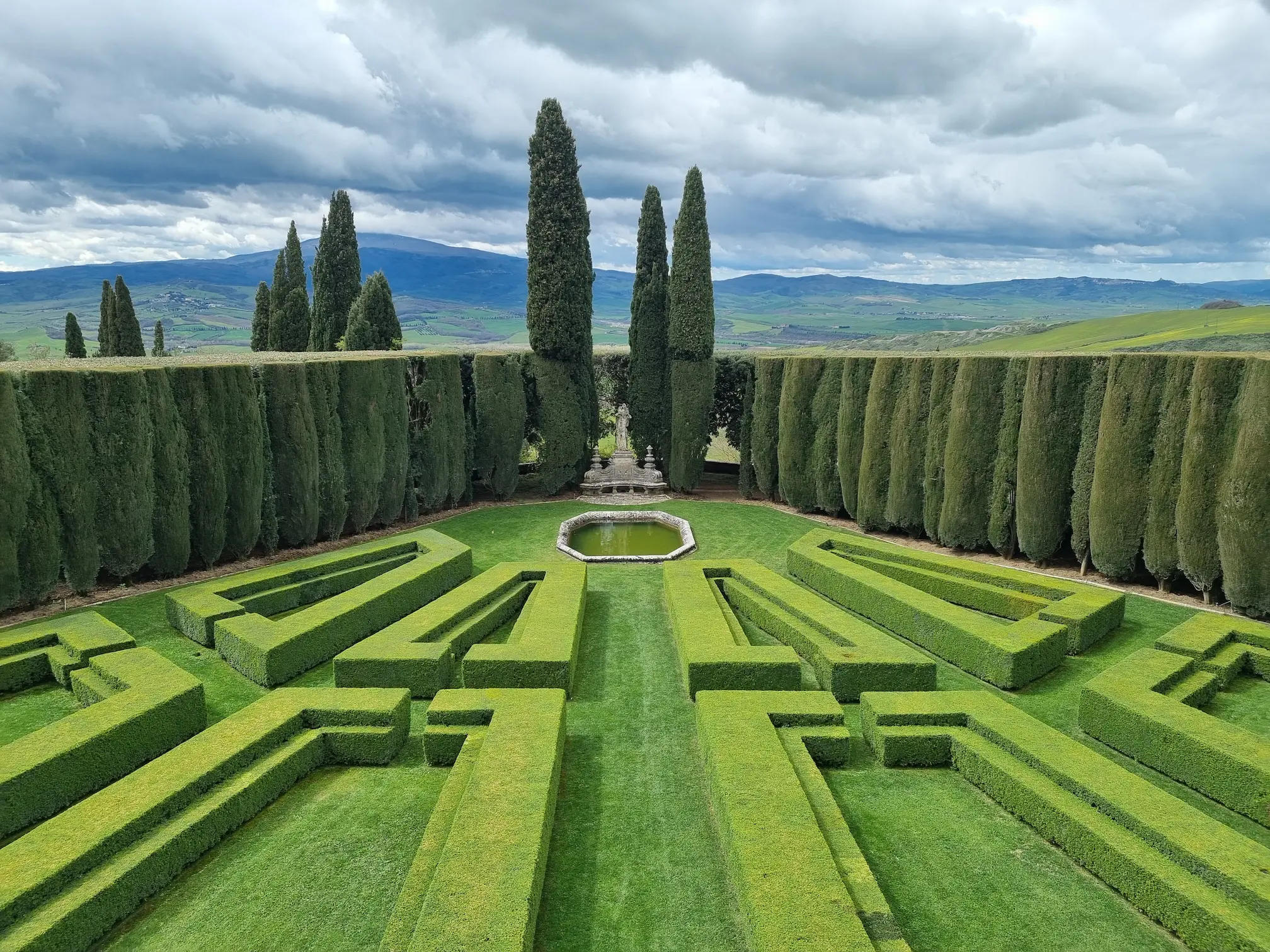
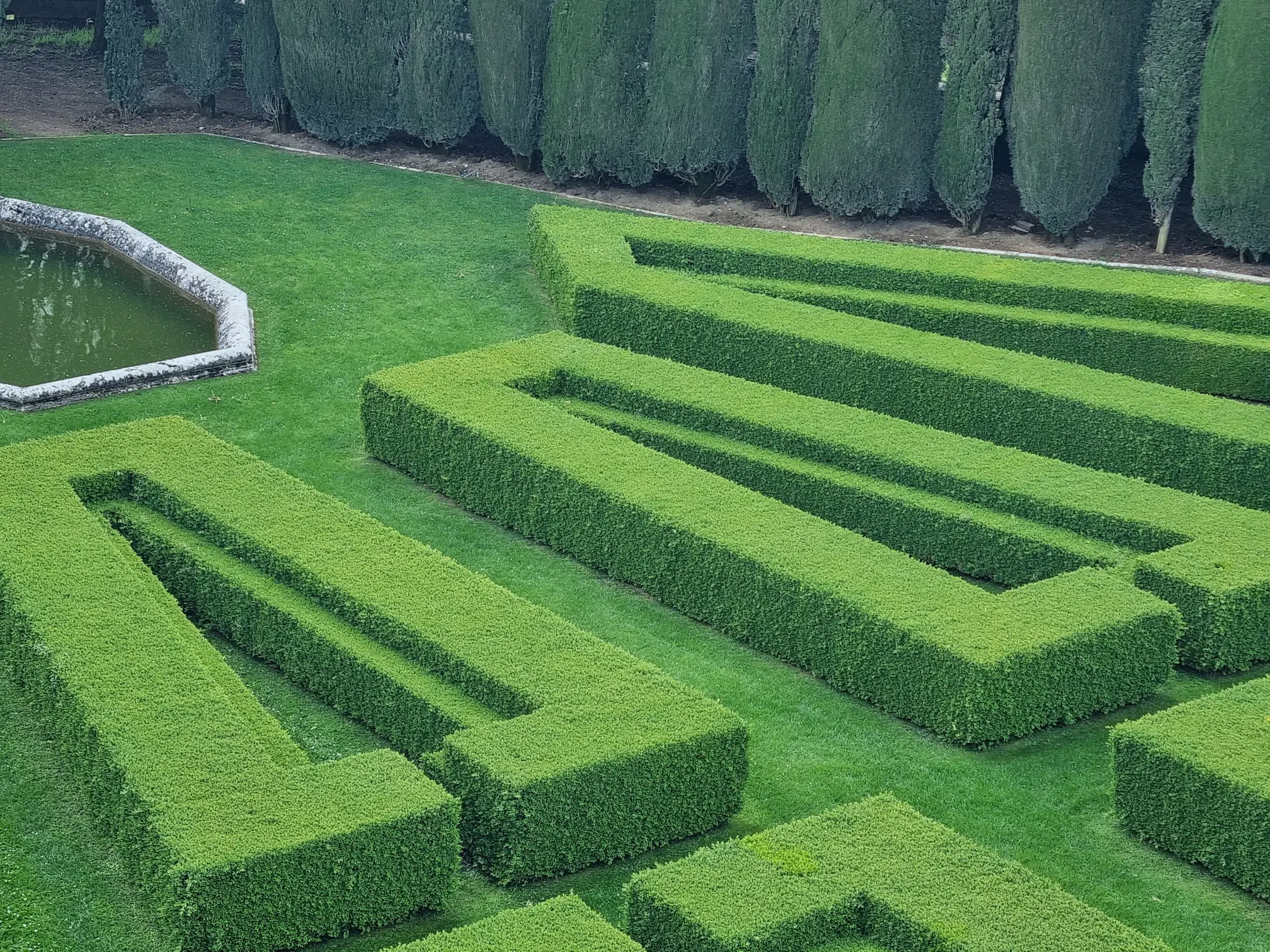
For this project, Pinsent organized the garden into different zones: the ever-present lemon garden, flanked by hedges and boxwood spheres; the awe-inspiring lower parterre, whose impact he softened by flanking it with a long promenade, shaded by soft purple clouds of wisteria. And here, it would look back to the English tradition: up to this point, Italian elements stood out, almost dominating his projects. The abstract and classicising formalism and the pursuit of a Neo-Renaissance style. But here, in the hills of southern Tuscany, Pinsent seems to have returned to the British isles, and he unapologetically inhabited his own era, the 20th century.

Pinsent despised Fascism. By this time, he had already lived through World War I and had not started a family. So, in the end, perhaps he perceived Villa La Foce’s garden as much as a crowning achievement of his studies and the triumph of his landscape architecture, as a projection of his nostalgic disposition of a dying breed of English gentleman. It can even be seen as a refuge from the terror of wartime events and the profound humanitarian crises rocking Europe. The pergola at Villa La Foce is not a straight line but curves gently, following the contours of the landscape. Delicate flowers dot the ground; amid the springtime rustle of footsteps, peonies and roses shine in the garden’s most enchanting and intimate corner, where Cecil Pinsent lets his heart whisper. It is a light, discreet murmur that gently guides the visitor there, toward the true triumph of the noble landscape architect.

Profoundly disillusioned with Italian politics, Pinsent left Italy in 1940. He returned to England, but like everyone who leaves home for so long, when he came back, he struggled to find exactly who he was. Perhaps he missed Florence, even though Florence was no longer what it used to be.

He was born in South America, but he was neither Uruguayan nor Italian, and perhaps by the start of World War II, he was no longer even English. Disheartened and disillusioned, in the final years of his life he retired to Switzerland, where his passion for geometry led him to a surprising new field of study: crystallography. He died in 1963 in Hilterfingen.

The gardens of Villa I Tatti, Villa Le Balze, Villa Medici, and Villa La Foce are all private or serve as campuses for American universities, but with a little luck and goodwill, today they can all be visited.

Cecil Pinsent and his Gardens in Tuscany

People

Cecil Pinsent trained in London before settling in Florence, where he created symmetrical, geometrically ordered Tuscan gardens for the vibrant local Anglo-American expatriate community.

Styles / Topics

English gardens have been deeply intertwined with Italian design since Roman antiquity, evolving through Tudor symmetry, classical 18th-century revivalism, and Victorian geometric formalism.

Places

When she created East Lambrook Manor Garden, from a farmyard and a rubbish heap, Marjorie Fish developed a new cottage garden style that had a huge influence on garden owners of the time and is still relevant today