Search

Origins of the National Garden Scheme

A history of the 20th century scheme founded by philanthropist Elsie Wagg.

In 1927, something rather unusual was happening in gardens across England and Wales. Private gardens, normally hidden behind gates and walls, were opening their doors to the public - all in aid of nursing charities.

The big idea

The idea began with Elsie Wagg, a committed philanthropist. Following Queen Alexandra’s death in 1925, a National Memorial Appeal had been established to raise funds for district nursing, of which the Queen had been a long-standing patron.

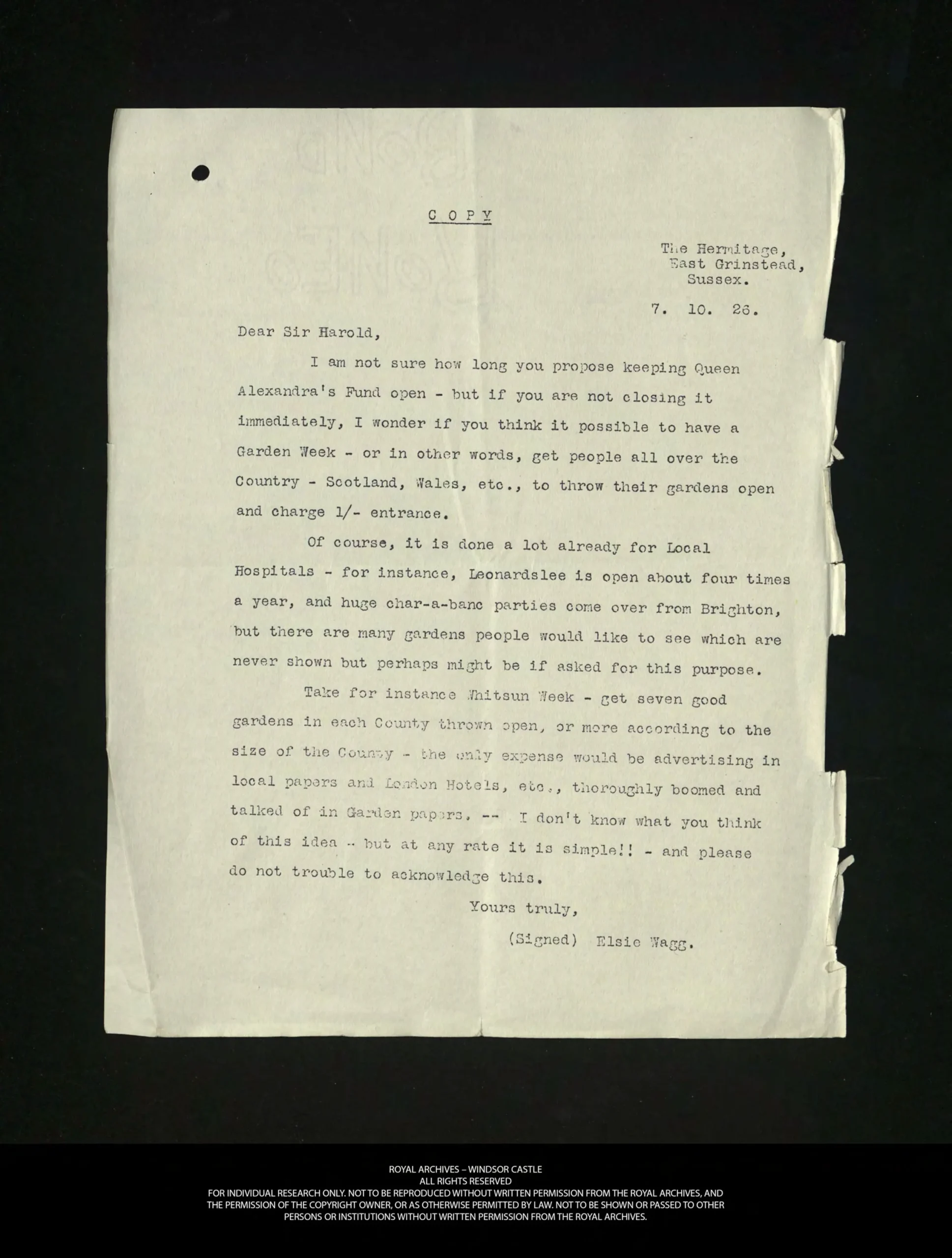
By 1926, the appeal needed new ways to attract support. In October, Wagg wrote a letter to the head of the Memorial Appeal suggesting a national ‘Garden Week’, when private gardens would open for a small admission charge, giving visitors a rare glimpse behind their gates while raising money for the Memorial.

It was a clever idea. Though some gardens opened to the public between the wars, a coordinated opening of hundreds of gardens for a single cause had never been done before.
Wagg’s idea brought together her two great interests: philanthropy and gardens. Her home in Sussex had brought her into contact with some of the most exciting gardens and gardeners of the period, while Leonardslee, near her home, had already shown that people would pay to visit a beautiful private garden for charity.
Seven months to organise

Wagg’s proposal was approved within days and responsibility then passed to the Women’s National Committee to deliver.

Chaired by Lady Georgiana Mure, with Millicent Stobart at her side, the committee set about turning Wagg’s idea into a national scheme in just seven months. They drew on district nursing associations, horticultural organisations and personal connections to recruit gardens and spread the word.

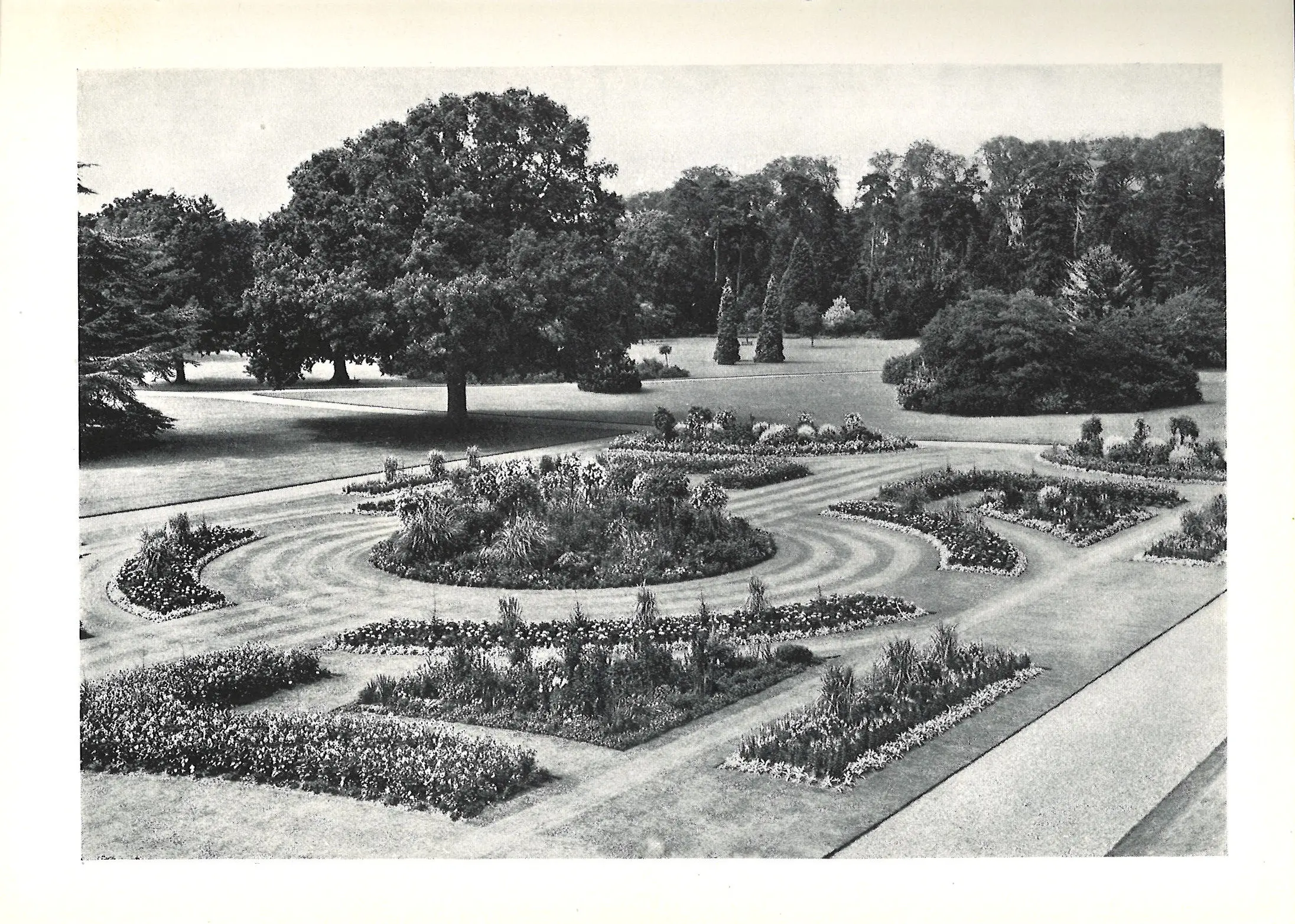
And what gardens they found. Among those opening in 1927 were William Robinson’s Gravetye Manor, Ellen Willmott’s Warley Place and Hestercombe, designed by Gertrude Jekyll and Edwin Lutyens. Most of the open gardens surrounded stately homes, castles and great halls, with estates such as Blenheim Palace, Chatsworth, Cliveden and Highclere Castle on show.

And it all came with a royal seal of approval. In February 1927, King George V agreed to open Sandringham, giving the scheme enormous publicity and reassuring other garden owners that this was a venture worth joining.

Getting visitors to the gardens was not so easy. Few people owned cars and many gardens were in the countryside, so the organisers approached railway companies and motor-coach operators. Special excursions were arranged, while The Times and Country Life helped publicise the openings.

Garden owners had another concern: what might happen when hundreds of strangers arrived? The organisers reassured them with practical measures and even added a gentle reminder to the tickets: ‘Someone loves this garden and has lent it to you’.

The success of the first year

Garden owners fears proved unfounded. The first gardens opened on 30 May and the response was so strong that the scheme was extended through to September. By the end of the season, 609 gardens had opened, attracting nearly 200,000 visitors and raising £8,191.

What began as a temporary fundraising experiment had become something much bigger. Within weeks, discussions were under way to make the scheme permanent.

Nearly a century later, the basic idea remains wonderfully familiar: open a garden, welcome visitors and turn a love of gardens into support for nursing and health charities. Elsie Wagg provided the spark, but it was the collective effort of women, garden owners, gardeners and volunteers that turned her idea into the National Garden Scheme.

The story doesn’t end in 1927. The author is continuing to explore the history of the National Garden Scheme through a PhD, looking at how the gardens opening under the scheme have changed over the years – from the great gardens of stately homes that dominated the early years to the wonderfully varied gardens opening their gates today.

For gardens to visit today, go to https://ngs.org.uk.

Related articles by topic :

People

The Hermitage was Elsie Wagg’s much-loved Sussex home, but her garden inspired something much bigger. In 1926, she came up with an idea that would open hundreds of gardens across England and Wales

People

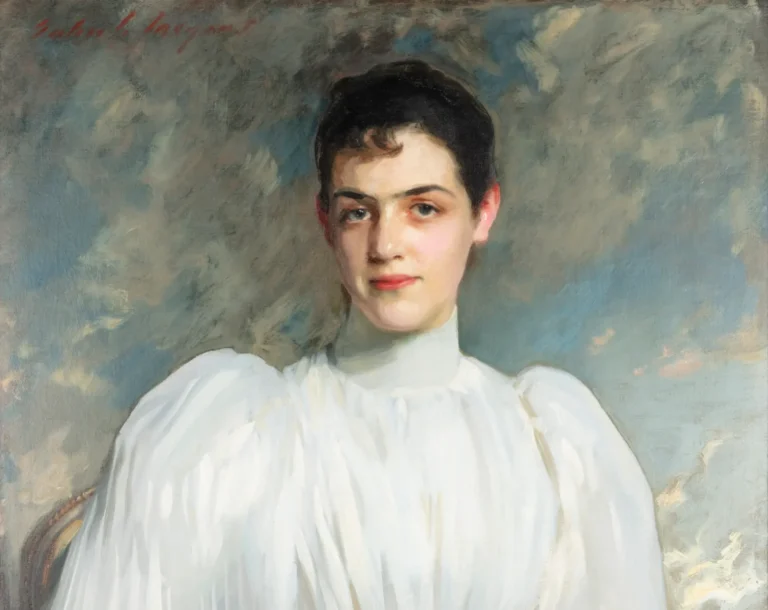
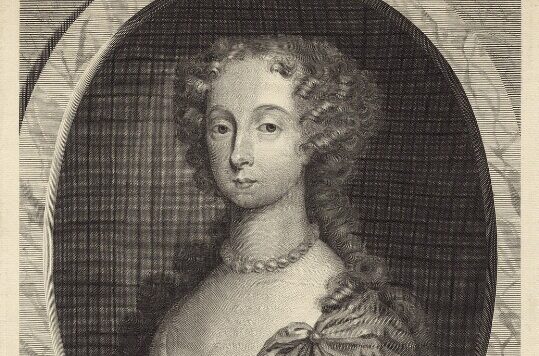
In the late 17th century, Mary Somerset, Duchess of Beaufort, described gardening as her “innocent diversion”, yet this apparently genteel pastime became an ambitious enterprise of cultivation, collecting and botanical investigation.

People

Without any previous experience of gardening, Margery Fish made one of the most celebrated informal gardens of the mid-20th century and used her writing skills to share what she had learnt in the process

Places

When she created East Lambrook Manor Garden, from a farmyard and a rubbish heap, Marjorie Fish developed a new cottage garden style that had a huge influence on garden owners of the time and is still relevant today

Places

The Edwardian gardens at Upton Grey Manor House in Hampshire display the talent and artistry of the garden designer Gertrude Jekyll and remain a delight to wander round and explore

People

After her career as a World War II codebreaker, Mavis went on to be at the forefront of the movement to protect historic designed landscapes, helping to ensure the survival of many important gardens for the future.