Search

Upton Grey Manor Gardens

A restored Gertrude Jekyll garden in Hampshire

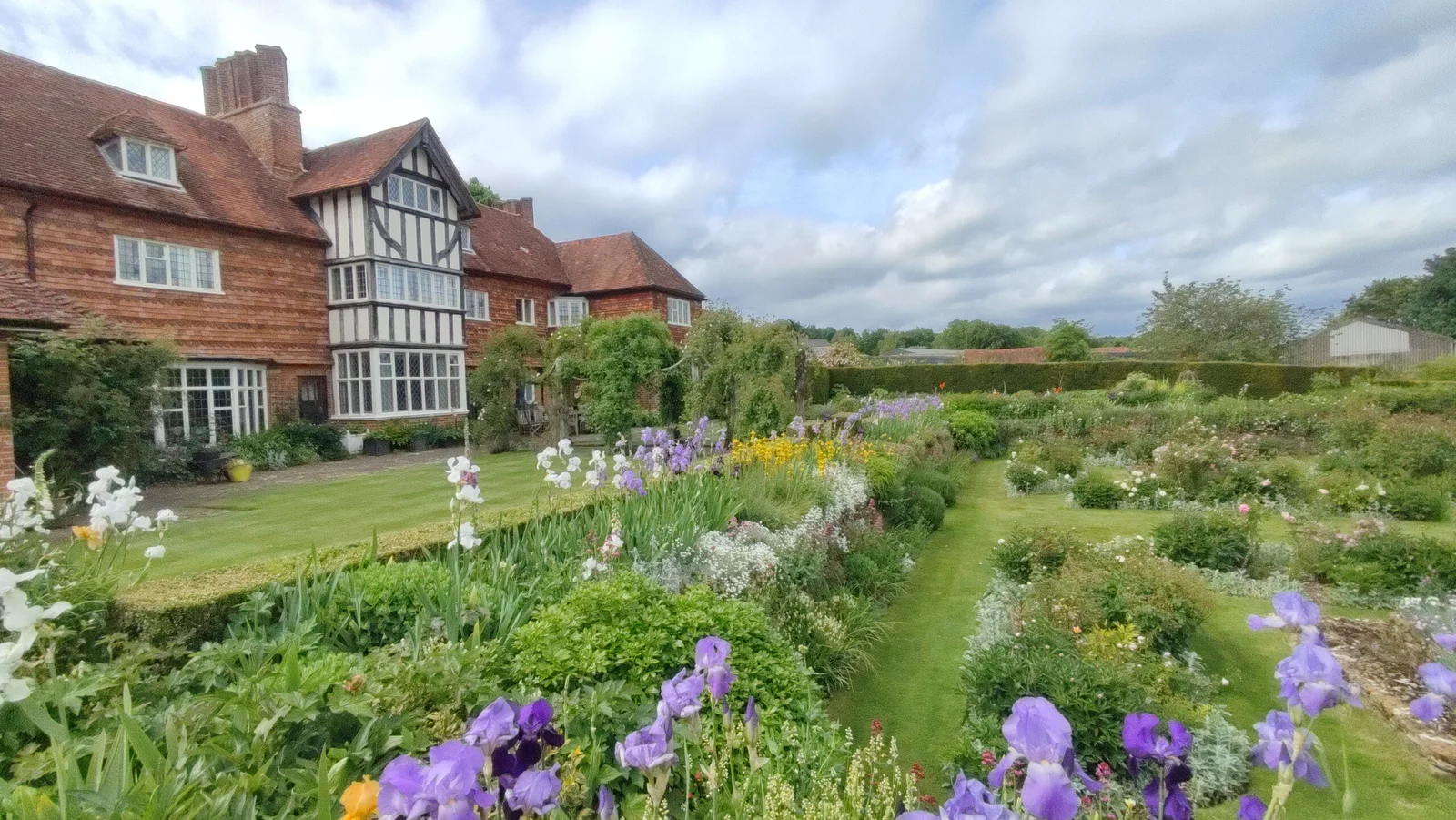
The Edwardian gardens at Upton Grey Manor House in Hampshire display the talent and artistry of the garden designer Gertrude Jekyll and remain a delight to wander round and explore

Gertrude Jekyll

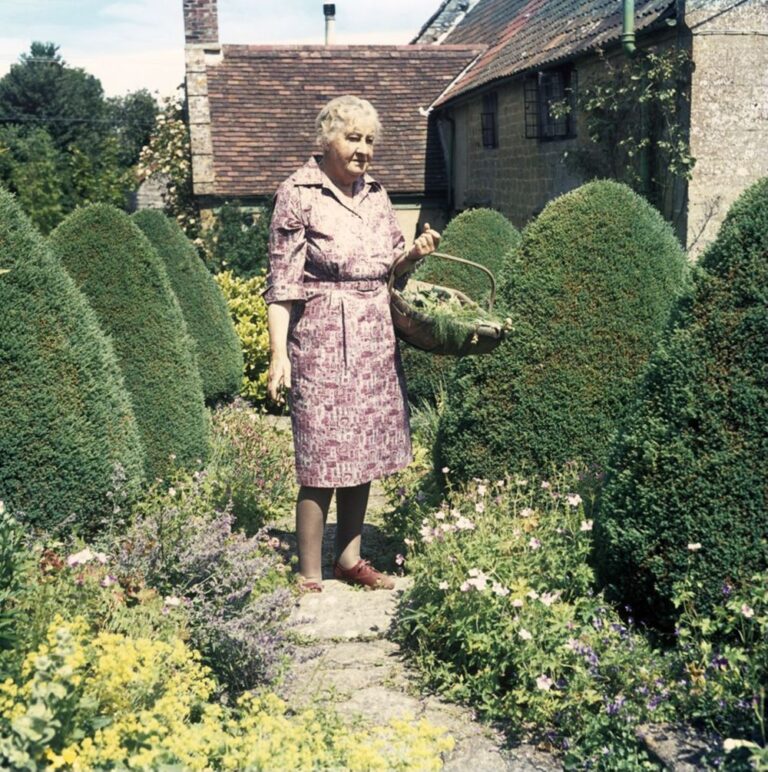
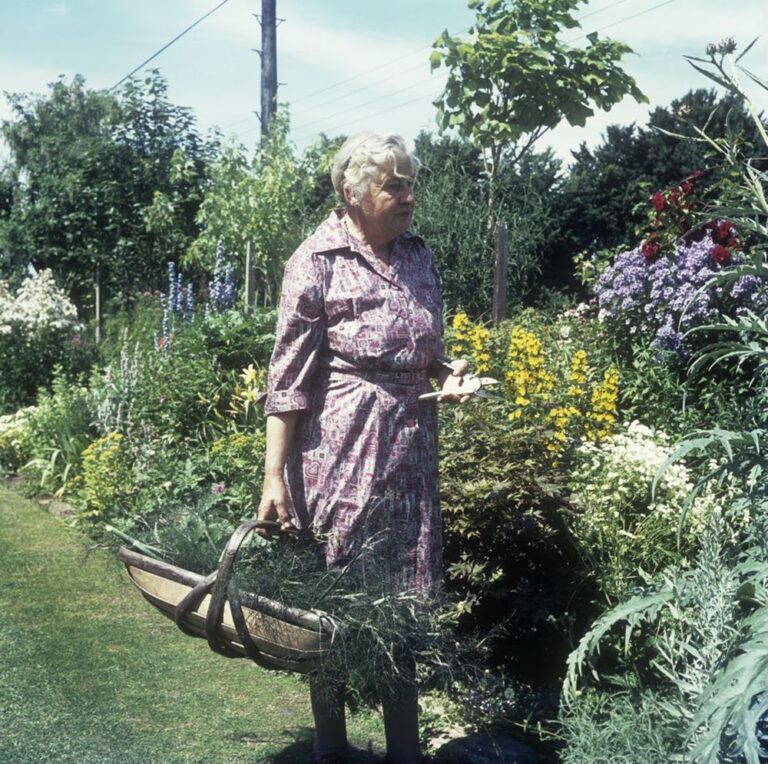
Gertrude Jekyll (1843 – 1932) was an influential garden designer who designed or advised on over 400 gardens in the UK, the rest of Europe and America, wrote 13 books on gardening and numerous articles.

She had trained as an artist and when she changed careers from painter to garden designer she used that experience to inform her use of colour.

In contrast to Victorian gardens which were often very formal, regimented and whose main season of interest was the summer, Miss Jekyll used plants to work in harmony with, but soften, the architecture and hard landscaping and provide interest throughout the seasons.

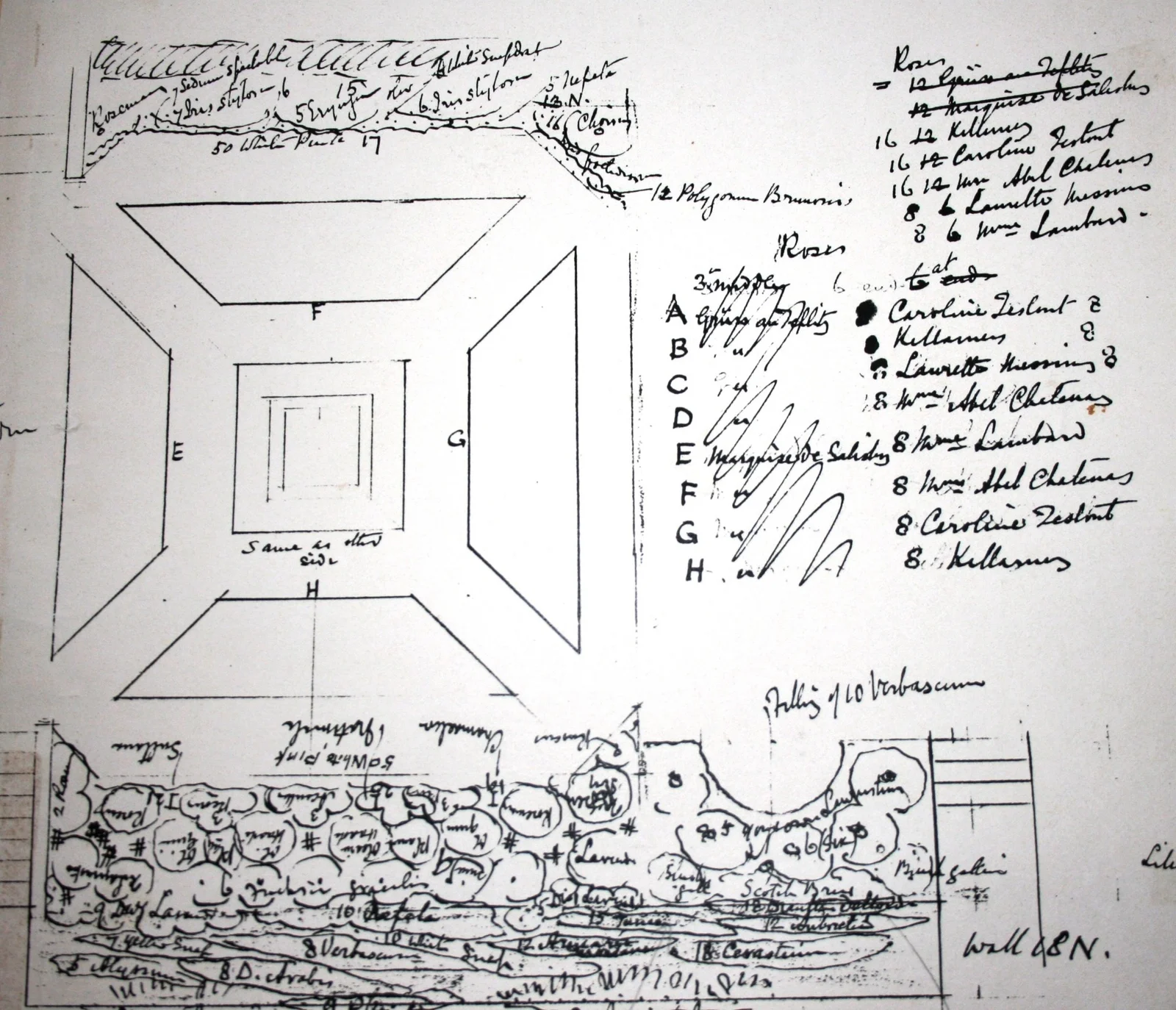
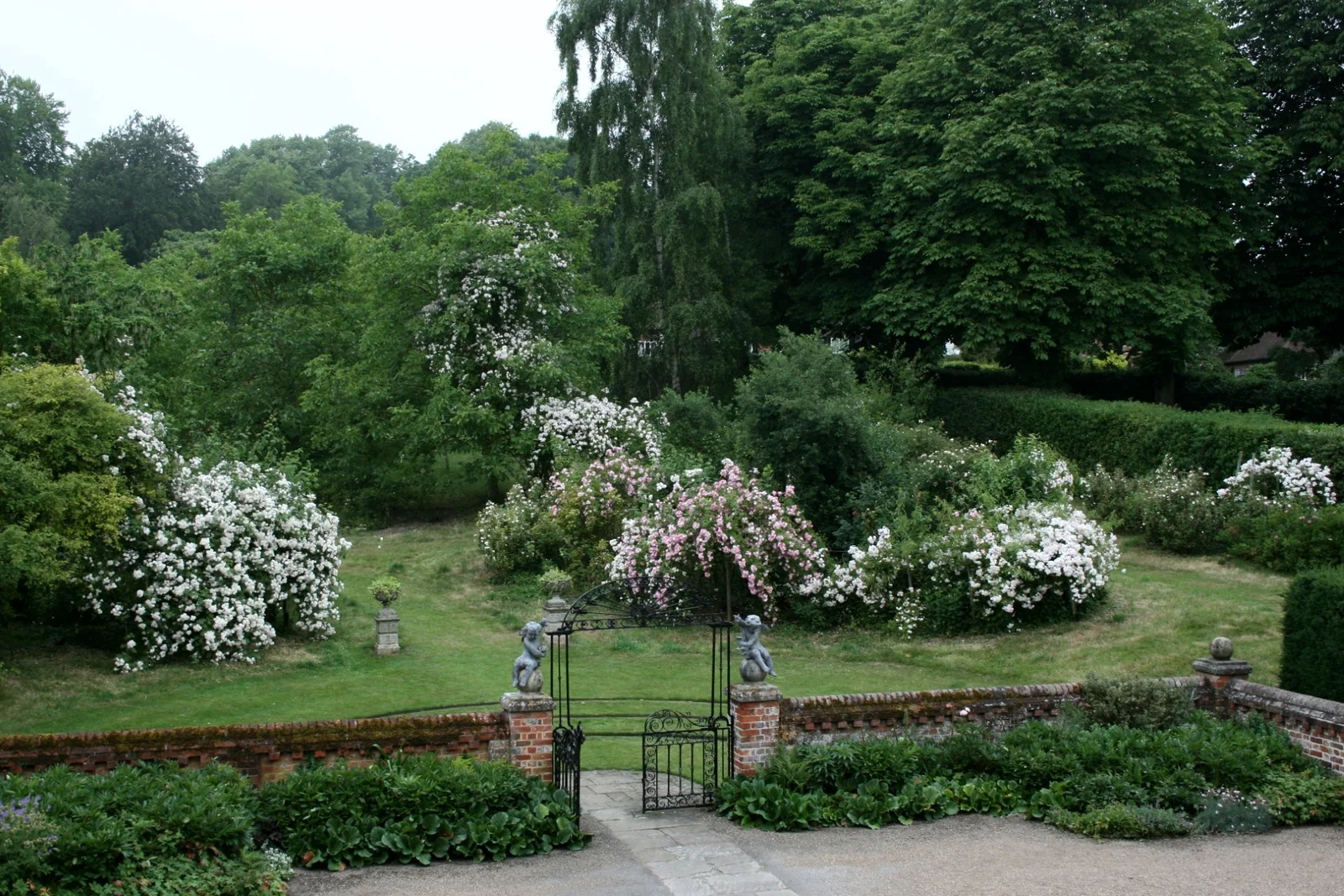
There are few complete and original Jekyll gardens left but one such is that at Upton Grey Manor in Hampshire. Starting in 1984, Rosamund and John Wallinger faithfully restored its nearly 5 acres, which still retained the original layout, using Miss Jekyll’s 1908 planting plans.
Formal Gardens

Miss Jeykll transformed the east-facing slope behind the manor house into a series of terraces supported by dry-stone walls and reached by flights of stone steps.

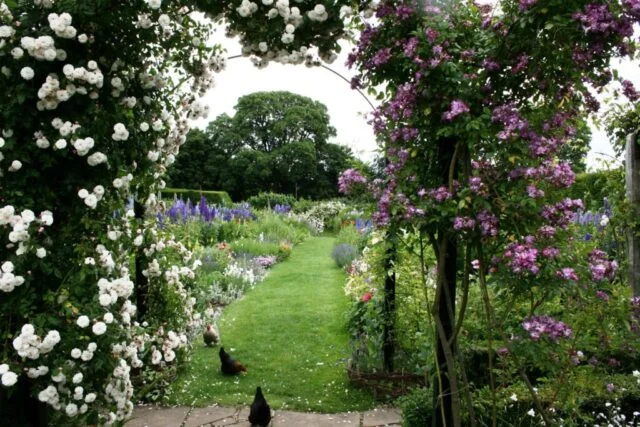
On the top lawned terrace is an oak and rope pergola covered with roses, aristolochia, jasmine and Virginia creeper giving a long season of colour and interest. This leads to a gap in the clipped yew hedge that encloses the formal garden and to the first set of steps.

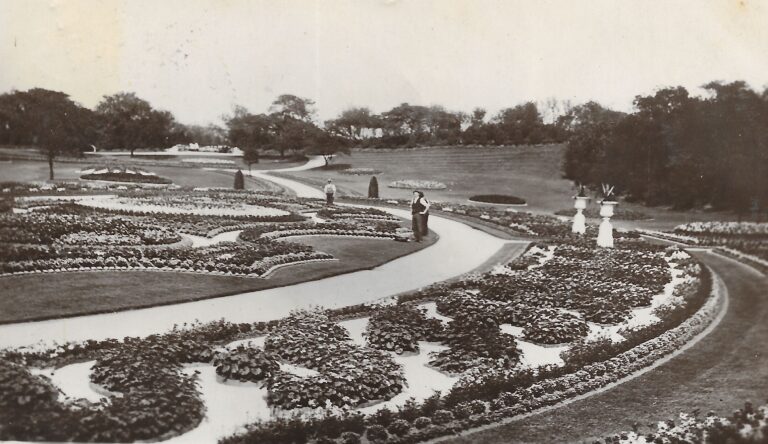
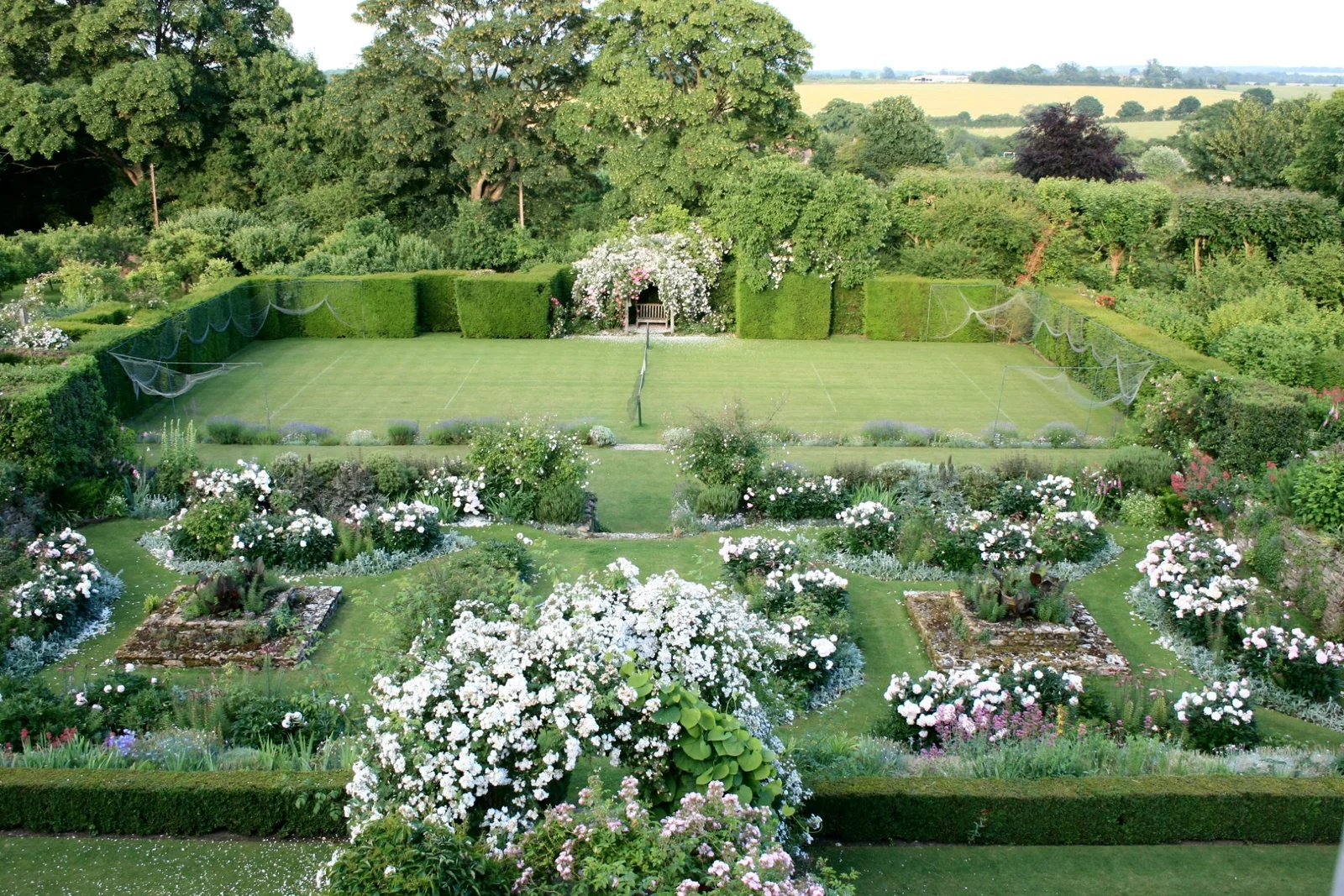
These steps lead down to the rose lawn which is laid out with a geometric pattern of trapezoidal beds and central two-tiered square stone beds filled with pastel pink roses and other cottage garden plants such as peonies. Above and to the sides of the rose lawn are herbaceous borders showing Miss Jekyll’s characteristic drifts of colour, use of texture and year round interest. The retaining walls themselves are also planted.

From the rose lawn a second set of steps leads down to the bowling lawn and a third to the tennis lawn.

Kitchen and Wild Gardens

Behind the yew hedge to the left (north) of the formal garden is the kitchen garden.

Today only a small area is still used to grow produce while the remainder is used to propagate replacement plants for the main borders. Below this is a walled orchard. On the opposite side behind the yew hedge is a nuttery full of hazel shrubs which are coppiced to provide plant supports and to make low hurdles for use around the garden. Primroses and bluebells grow beneath.

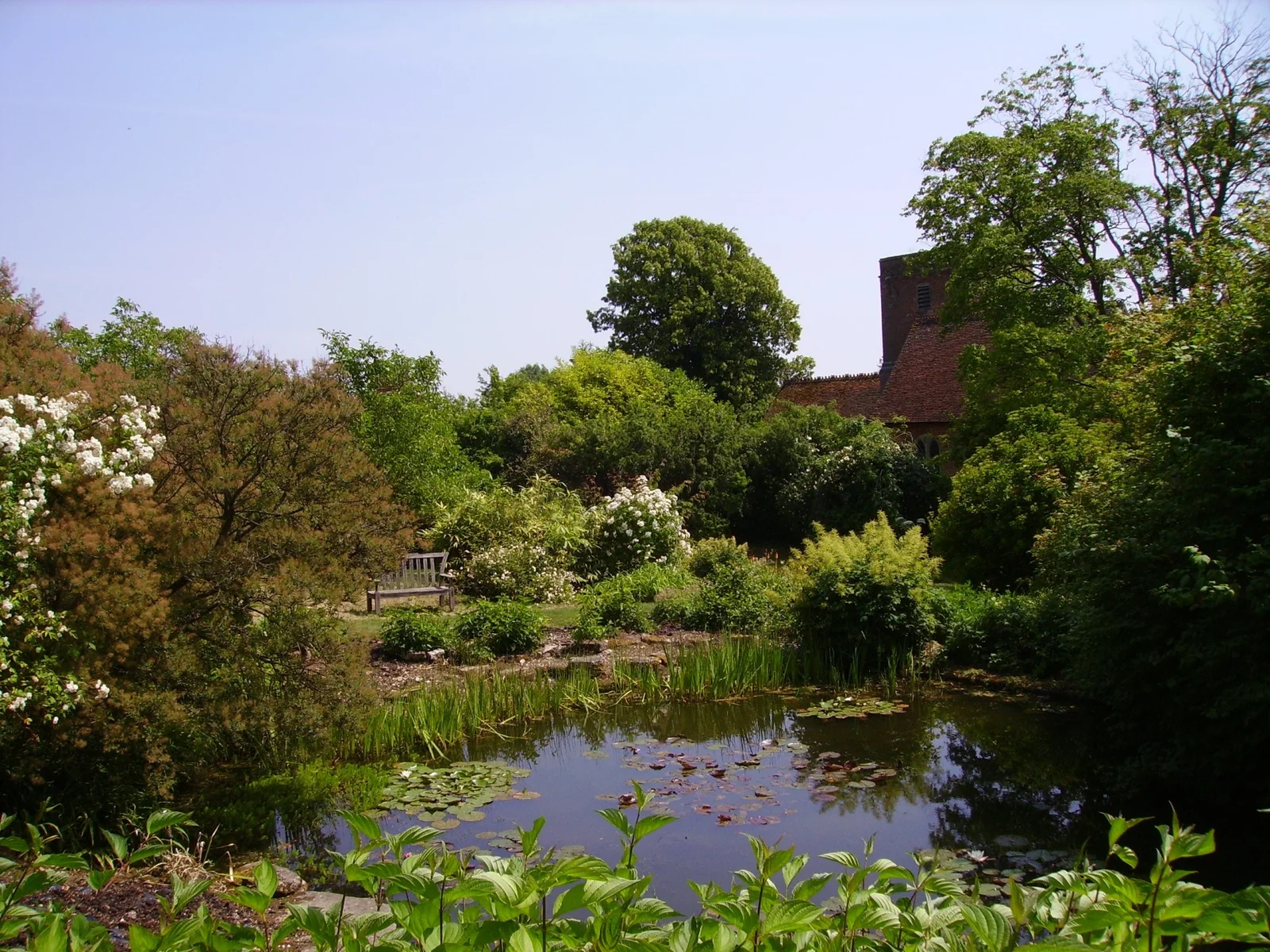
To the west of the house, bounded by the churchyard, the road and the drive, is the only surviving example of a Miss Jekyll wild garden. Mown grass paths curve around beds of rambling roses, walnut trees, bamboo, shrubs such as guelder rose and broom and small trees such as cherry plum and crab apple. Wild flowers grow in longer areas of grass and drifts of daffodils welcome the spring. At the far end is the pond planted, like the rest of this area, with a mixture of native and introduced species. Old copper beech and horse chestnut trees and an ancient yew complete the scene.

Upton Grey Manor Gardens

Places

Eleonora Tonon takes us on a tour of Cecil Pinsent’s famous 20th Century gardens in Tuscany, from their inspiration to their creation.

People

Cecil Pinsent trained in London before settling in Florence, where he created symmetrical, geometrically ordered Tuscan gardens for the vibrant local Anglo-American expatriate community.

Styles / Topics

English gardens have been deeply intertwined with Italian design since Roman antiquity, evolving through Tudor symmetry, classical 18th-century revivalism, and Victorian geometric formalism.