Search

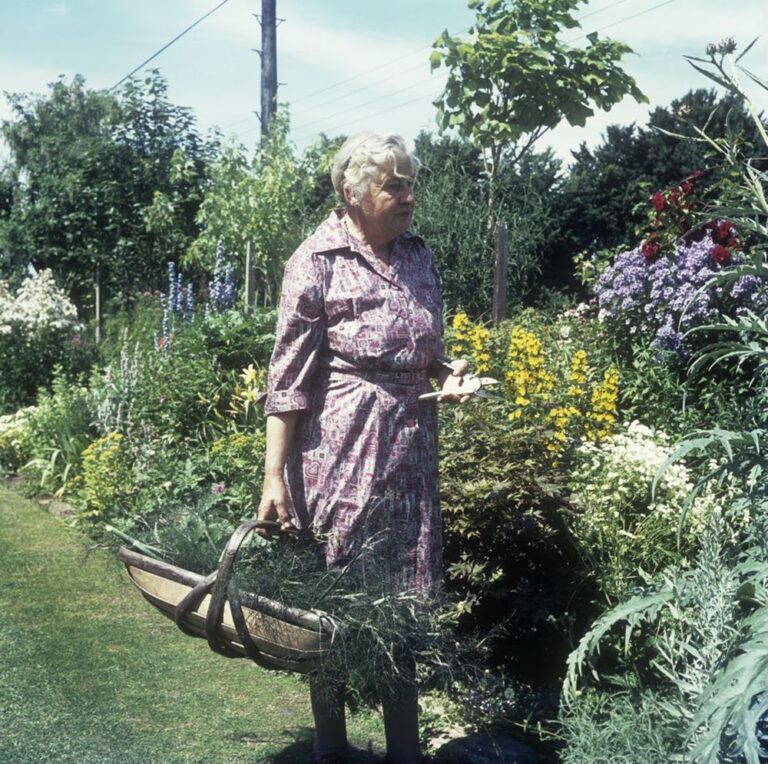
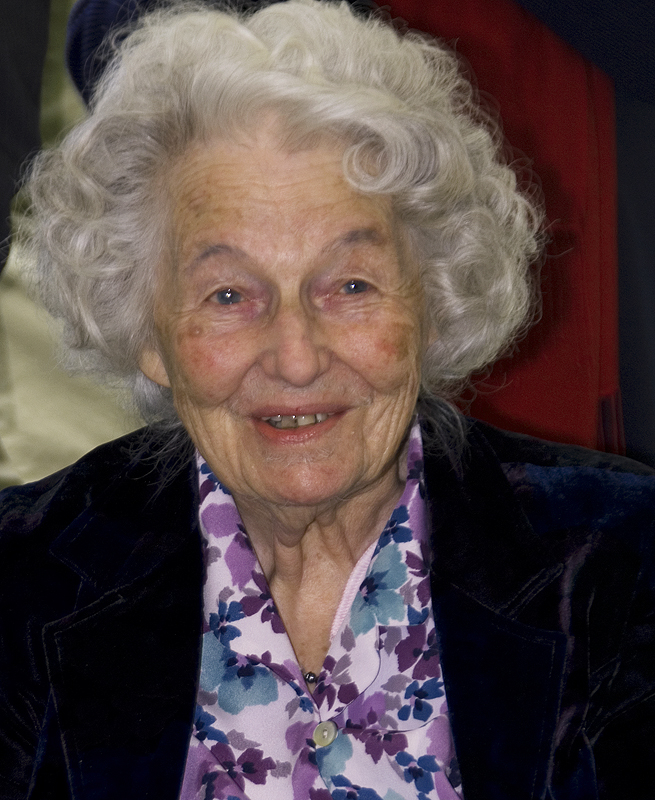
Mavis Batey

Garden historian and President of the Garden History Society (later the Gardens Trust) for almost 30 years

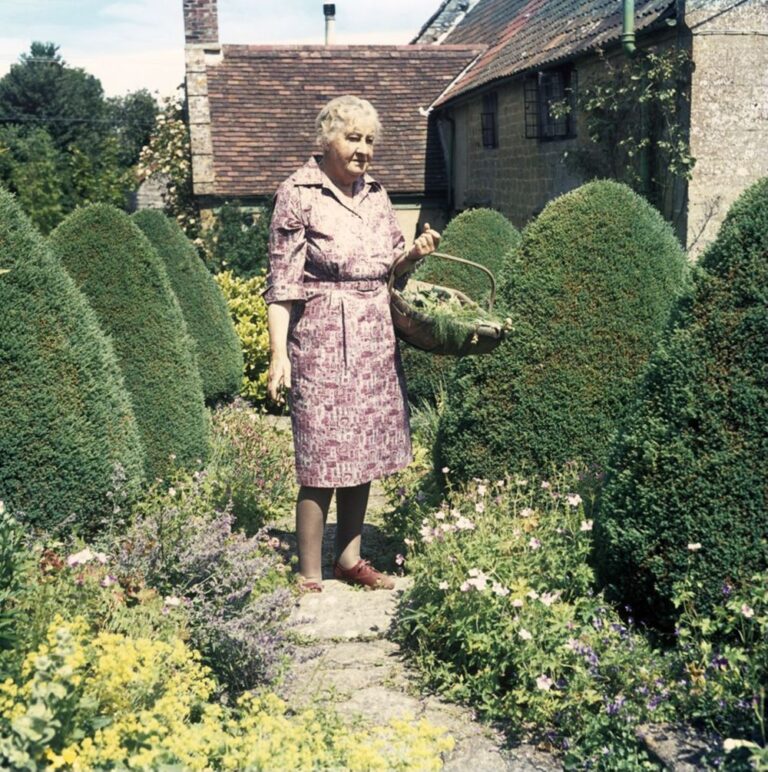
After her career as a World War II codebreaker, Mavis went on to be at the forefront of the movement to protect historic designed landscapes, helping to ensure the survival of many important gardens for the future.

Codebreaking at Bletchley

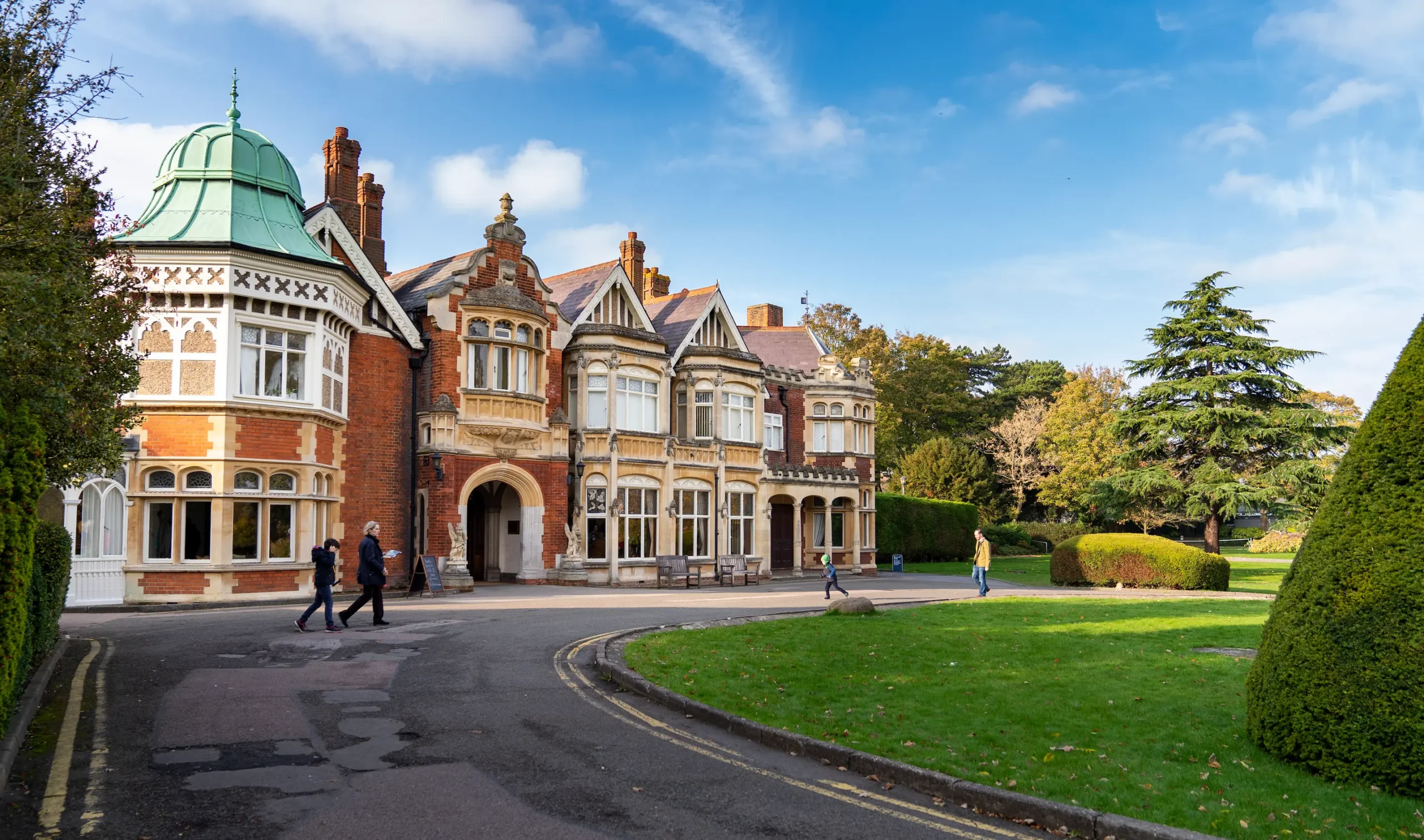
Born Mavis Lever on 5 May 1921, the young Mavis grew up in Norbury and was educated at a convent in Croydon. She was deep into studies on German Romanticism at University College, London when the Second World War broke out. Realising the sobering connection between her subject and Nazi nationalism, she abandoned her studies and applied to the Foreign Office to do war work instead.

Mavis was sent to Bletchley Park, the centre of code-breaking operations which were crucial to the allied victory in the war. Here she met and married her husband Keith in 1942, and together they kept the secret of their war-time intelligence work, forbidden like everyone else involved from speaking about it for the next 30 years.

Since her involvement at Bletchley became known, Mavis has been in great demand from researchers wanting inside information. Actress Kate Winslet wanted to know what it was like to be a woman at Bletchley for her part in the film Enigma. Most recently Mavis has been helping researchers to establish how much of the action in Ian Fleming’s James Bond novels was based on his career in naval intelligence.
Activism and the beginnings of an interest in garden history

Mavis had long taken joy in the natural landscape, escaping to the Shirley Hills beyond Croydon as a child. In Oxford, she fell under the spell of the influential William Hoskins, author of Making of the English Landscape, and joined the Council for the Preservation of Rural England (CPRE).

She was on the Executive Committee of the Oxfordshire branch of the CPRE at a time when the county’s historic landscapes were at risk from development and the CPRE took a lead in campaigning to protect them.

‘It seemed to me that the moment I’d got interested in these lovely landscape parks, they came under threat. The Ministry of Transport actually said that putting a road through Highclere Park would give the motorist something good to look at as they drove through!’ she says indignantly.

Mavis came to the history of gardens almost by chance when she and her family moved to the 18th-century estate of Nuneham Courtenay, which was owned by the University of Oxford.

‘We lived in the agent’s house, right in the middle of a Capability Brown park, but it was William Mason’s garden that really got me. We had to cut our way into it. It was all overgrown and garden ornaments were buried in the grass, but I knew at once it wasn’t just an ordinary derelict garden: someone had tried to say something there, I knew at once it wasn’t just an ordinary derelict garden: someone had tried to say something there,’ she recalls.

Mavis spent the next few years researching the garden, and to her delight she found that it was not only part of garden history but of the history of literature as well. The garden turned out to have been inspired by Julie’s garden in Rousseau’s La Nouvelle Heloise.

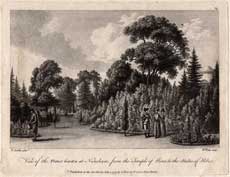
Paul Sandby, Nuneham Courtney, 1777.

The Flower Garden at Nuneham. Engraving, 1777.Mavis was pleased to be able to establish that that Nuneham was in fact the village immortalised in Oliver Goldsmith’s celebrated poem, ‘The Deserted Village’. Her article in Oxoniensa in 1968, ‘Nuneham Courtenay: an Oxfordshire 18th-century Deserted Village’ revealed just how many villages had been removed in the making of landscape parks during the 18th century.

Garden History Society Campaigns

Mavis's research on Nuneham brought her into contact with the Garden History Society (later to become the Gardens Trust), which had been founded in 1965, and in 1971 she became its Honorary Secretary.

Mavis Batey’s activism through the Garden History Society (GHS) was pivotal in securing recognition and protection for historic gardens in Britain. As Honorary Secretary, she helped transform the Society from a scholarly group into an influential campaigning body at a time when historic landscapes were largely ignored in policy.

Under her leadership, the GHS lobbied during the passage of the Town and Country Amenities Act 1974, which, for the first time, acknowledged historic gardens as heritage assets deserving protection. She also chaired the Society’s conservation committee, pushing for national recognition and practical safeguards.

Frustrated by lack of funding, Mavis initiated a volunteer-led pilot survey of historic parks and gardens, personally documenting dozens of sites. This grassroots effort laid the foundation for the national register later formalised by English Heritage under the National Heritage Act 1983. She subsequently served on its Historic Parks and Gardens Panel, helping guide the development of official registers that strengthened conservation efforts nationwide.

Alongside policy work, she campaigned to save threatened landscapes such as Painshill and Rousham, and played a pivotal role in exposing the dormant Land Fund, contributing to the creation of the National Heritage Memorial Fund.

Batey’s approach balanced advocacy with pragmatism. While committed to conservation, she resisted rigid statutory controls, arguing that gardens, unlike buildings, must evolve. Her work established historic gardens as a recognised part of national heritage and demonstrated the power of persistent, grassroots activism.

Mavis Batey died in 2013 and is remembered through our annual Mavis Batey Essay Prize named in her honour.

Mavis Batey

Places

Horatio’s Garden supports the recovery and wellbeing of people with spinal injuries within NHS healthcare settings

Topics

Gardens Trust Trustee Chris Blandford OBE takes us on a tour of those with historic designed landscapes in the UK and the benefit this status brings

Topics

The idea that gardens can support healing is not a modern innovation, but a recurring theme within the history of designed landscapes.