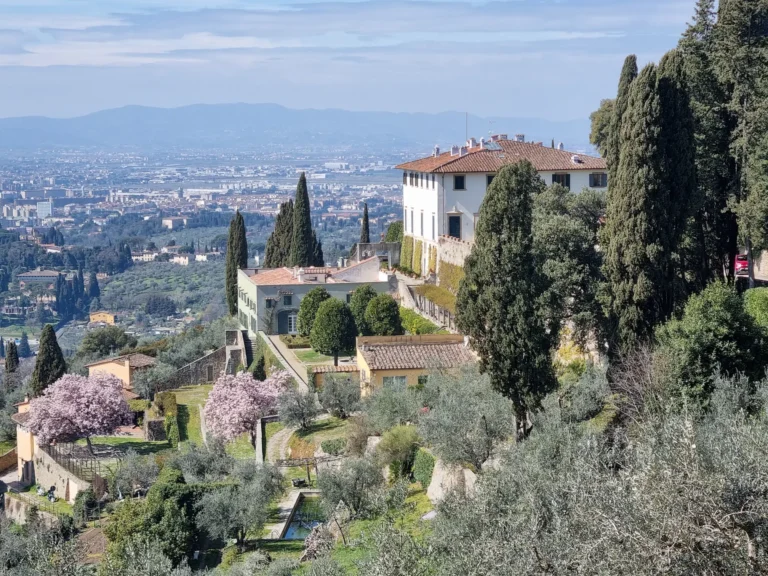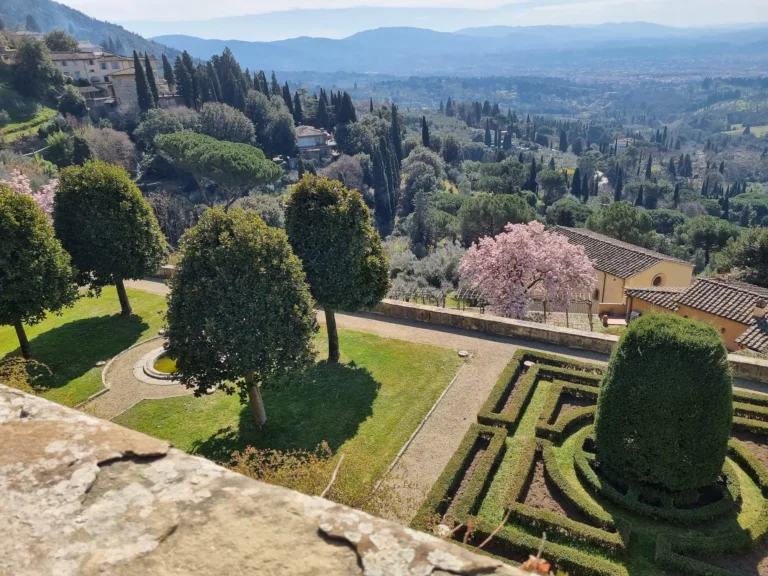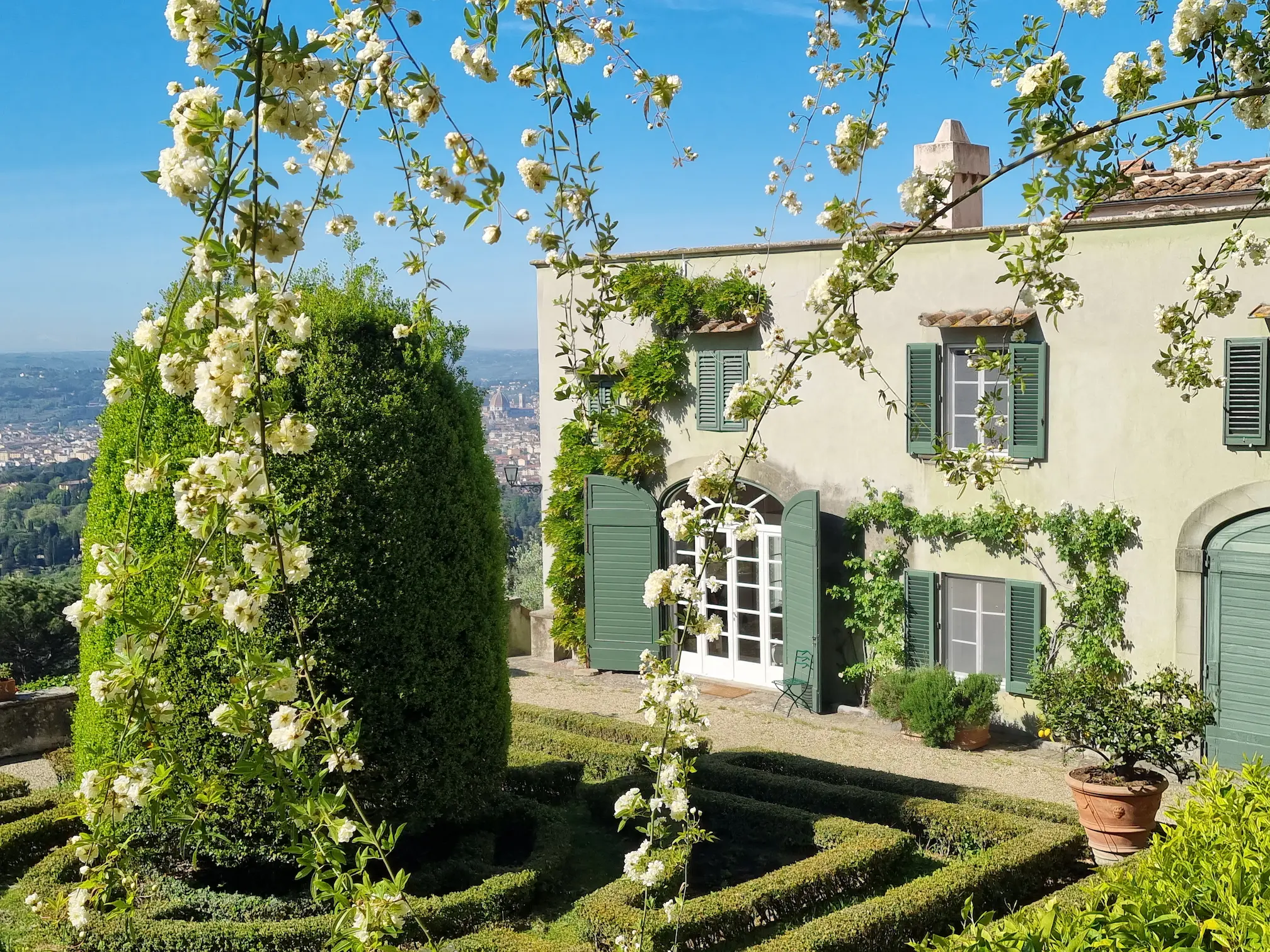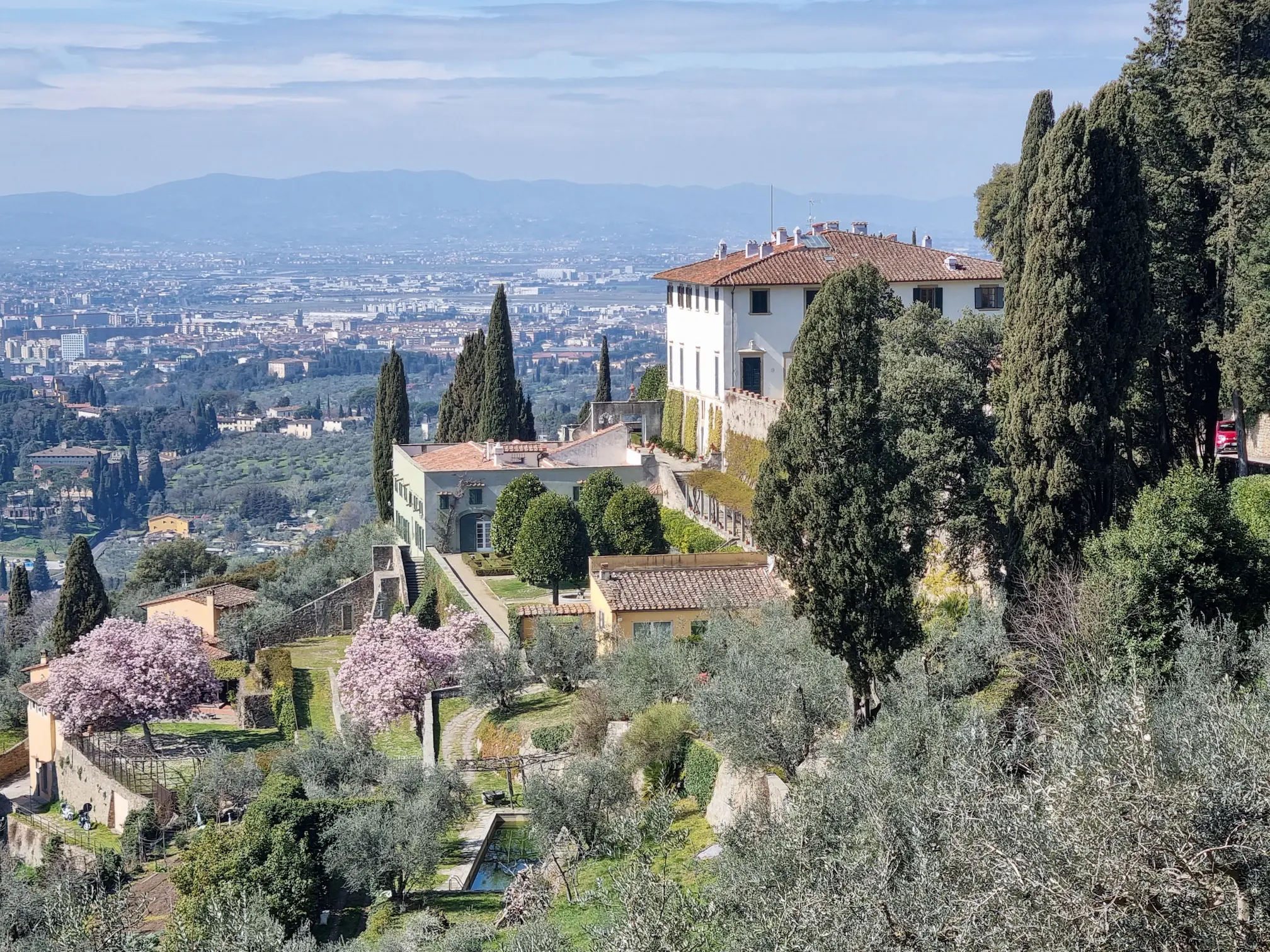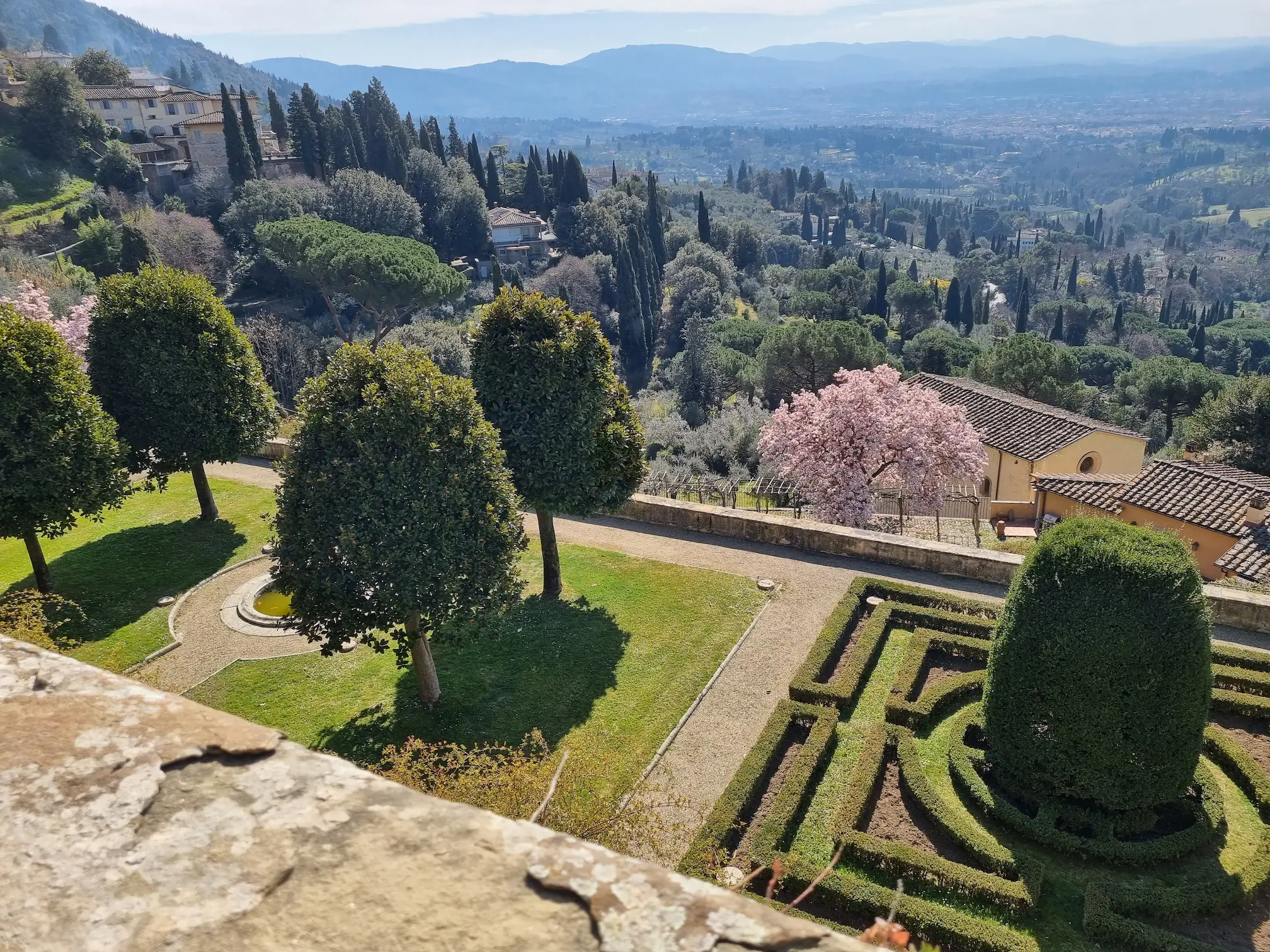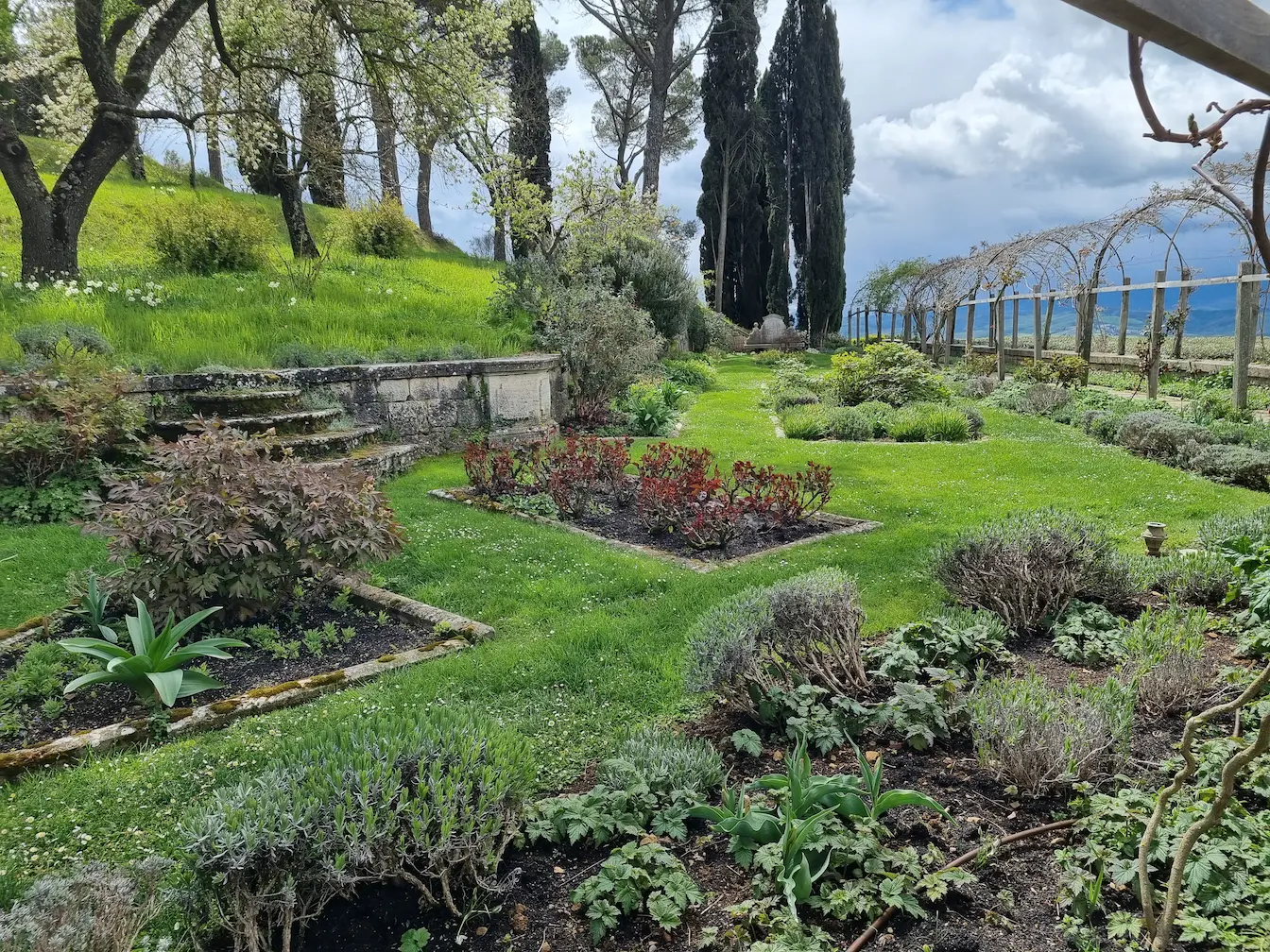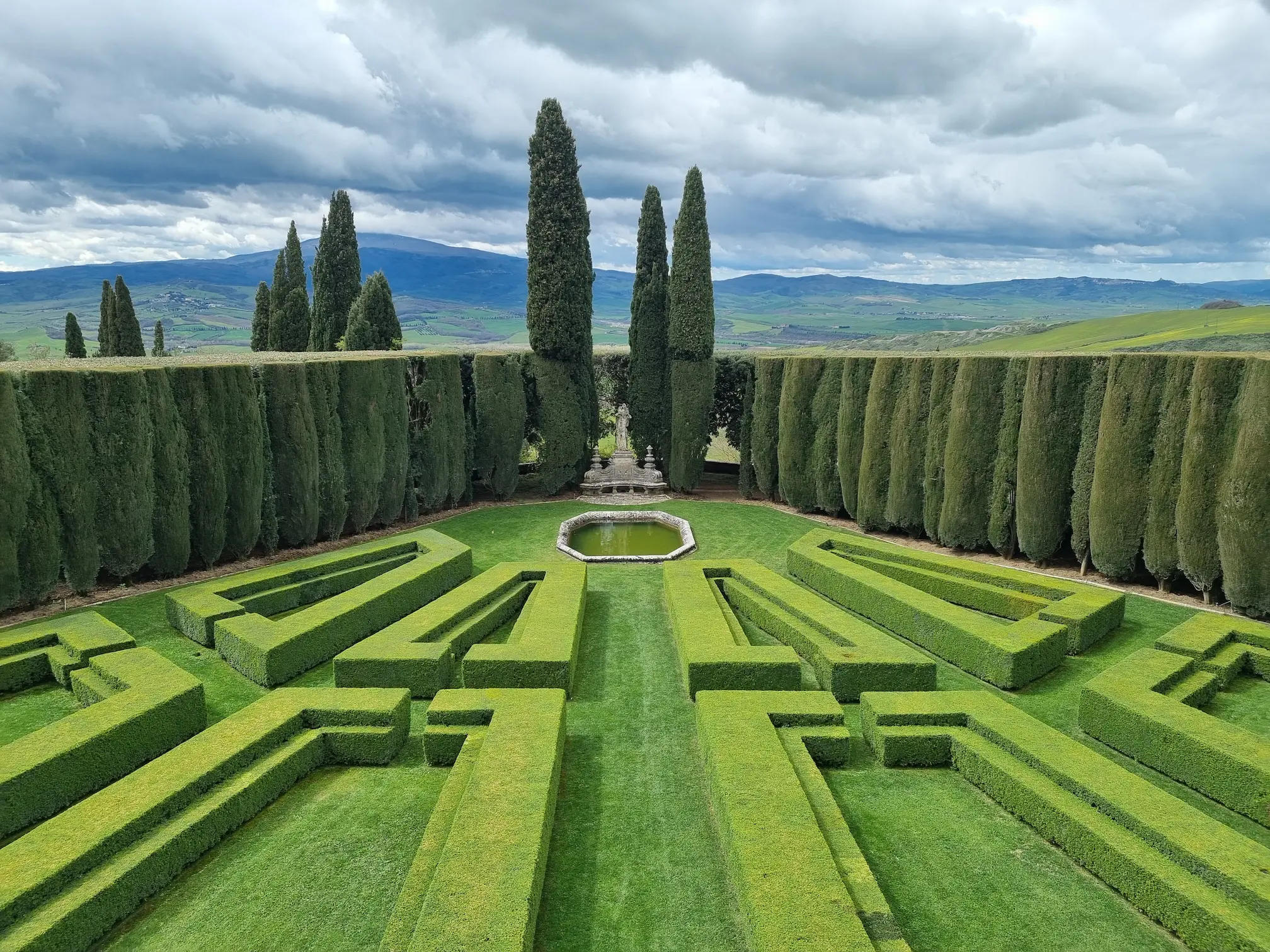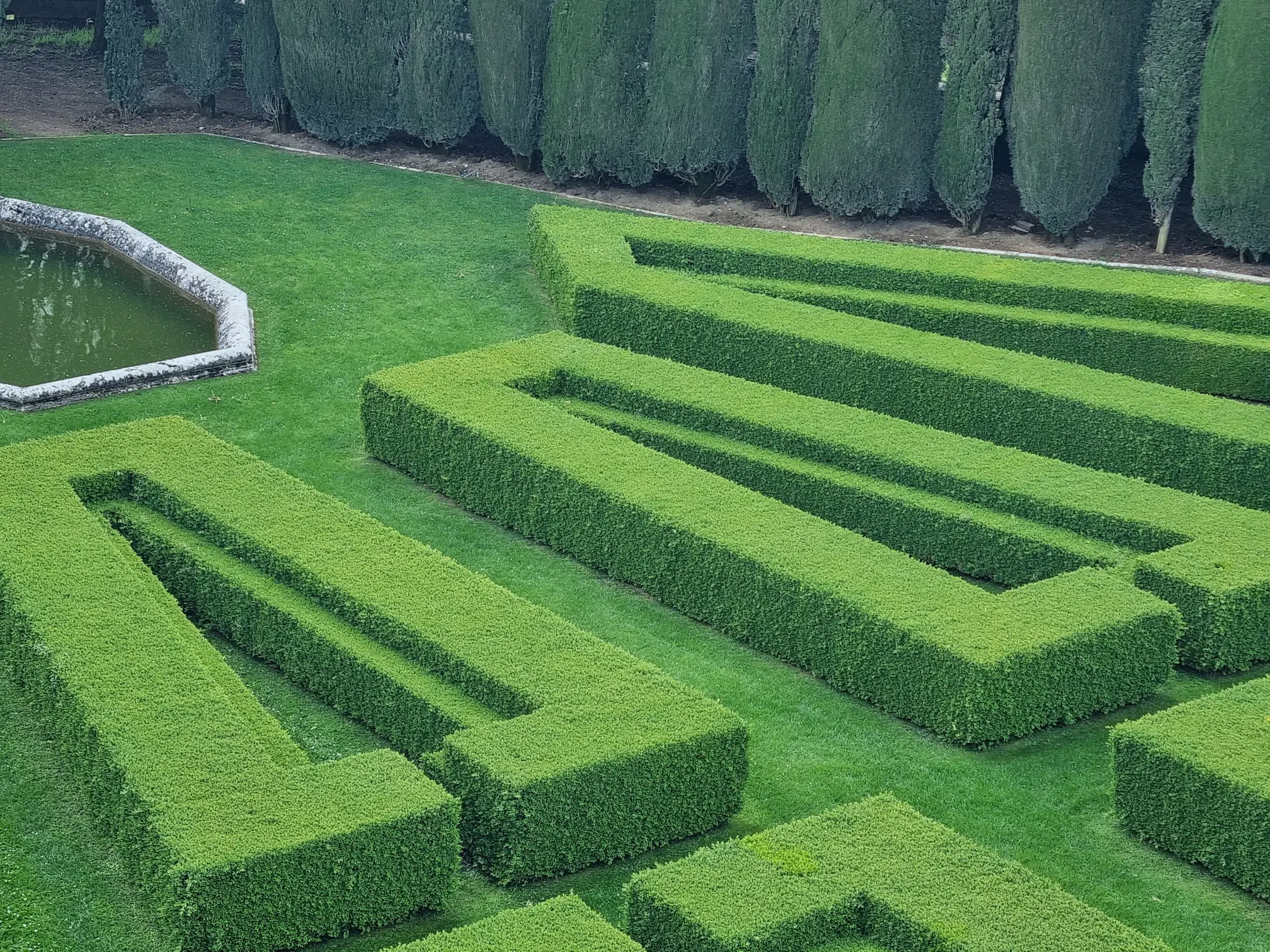
In this garden, a series of terraces and the austerity of the evergreen vegetation allow for no interruptions in the view. The garden is monochrome and austere: it perfectly embodies the ascetic spirit of 15th-century Florentine bankers, almost a tribute to Cosimo the Elder de’ Medici—all sobriety, diplomacy, and no ostentation. Pinsent was only twenty-five years old, but he already grasped the essence of Florentine character and, indeed, gracefully made it his own.
Villa Le Balze
Unstoppable, in 1911 Pinsent arrived at Villa Le Balze, a residence just a stone’s throw from Villa Medici in Fiesole, where he would work a few years later. But rumours were circulating. The Anglo-Americans didn’t trust Italian gardeners… better to rely on English architects, so they thought. This time, Pinsent’s client was Professor Charles Augustus Strong, the widower of Elizabeth Rockefeller. He had bought a plot of land in Fiesole and commissioned an idyllic retreat where he could philosophize in solitude, like members of Lorenzo the Magnificent’s circle. Rumour has it, however, that the view was too beautiful, and the owner found himself distracted…
Pinsent worked alone this time and had to contend with a narrow, steep, and rugged site. In this case, there was no pre-existing garden; the architect had to create one from scratch. He did so in a stunning manner. Critics believe that Villa Le Balze served—literally—as a testing ground for Pinsent prior to his masterpiece, the celebrated Villa La Foce.
Cecil Pinsent’s interpretation of space at Villa Le Balze is brilliant: on a site with a distinctly longitudinal layout, he masterfully applied the concept of “garden rooms,” enticing visitors to explore every corner of the garden and constantly ask themselves: ‘But what lies on the other side, beyond?’ The result is impeccable. Villa Le Balze is a string of gardens, where each ‘garden room’ links to the next, like dance steps. There is a luminous and unabashed lemon garden; a single-axis avenue of the terrace; the intimate embrace of an agapanthus garden; the monastic solitude of a holm oak garden; and the triumph of the cabinet de rocaille, a tribute to the tradition of grottoes with their “tartari”—artificial stalactites that were a typical feature of Tuscan gardens.