For the ancient Greeks, grottoes, or nymphaea, were originally shrines built over sacred springs in natural caves, later developing into purpose-built temples.
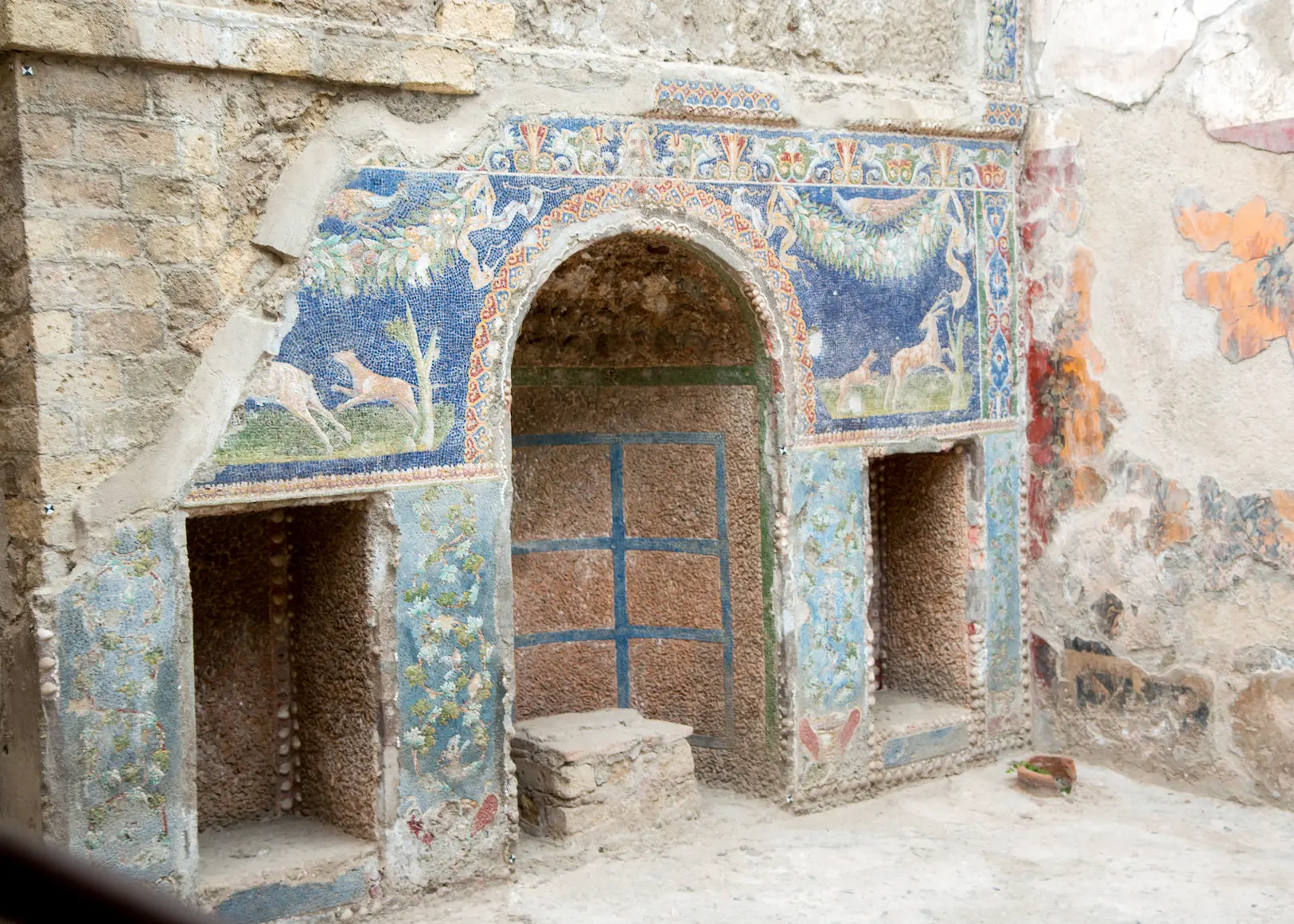
The Romans followed this idea and also started including grottoes as features in their villas, often decorating them with shells. Wherever they were, water was a must.
The Renaissance in Europe from the 14th to the 16th centuries was a time of looking back to the ancient Greek and Roman civilisations and improving on their achievements in areas such as medicine, art and architecture. In Italy, this included introducing grottoes into gardens.
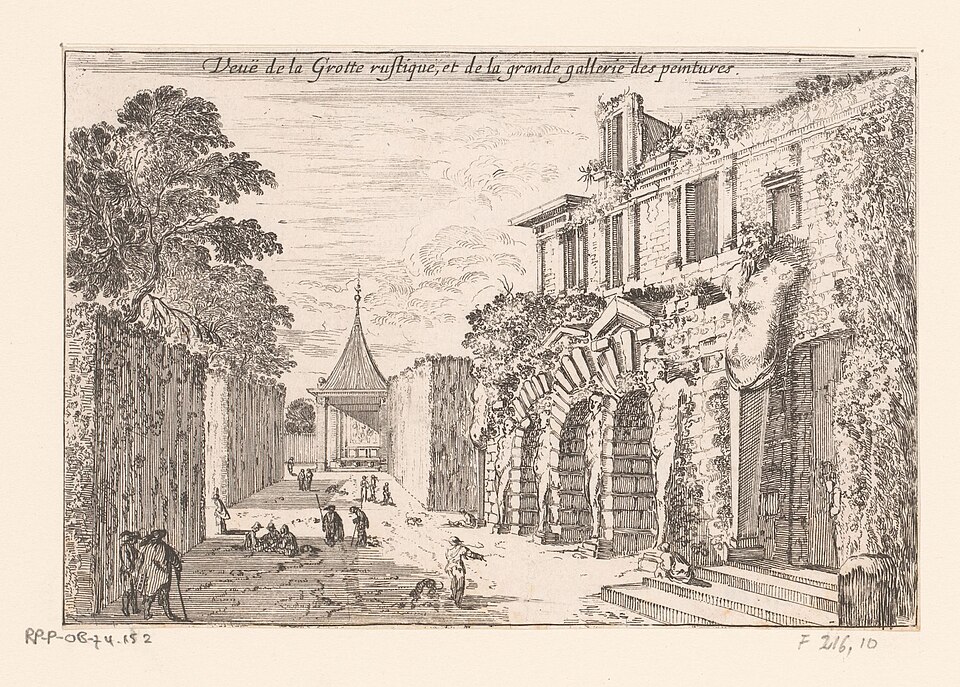
16th century Italian Renaissance garden grottoes were often elaborate structures, decorated inside with items such as shells and pebbles. They contained fountains and niches with statues of deities connected to water. When Renaissance garden design spread to France this included grottoes. One of the earliest to be built, in the early 1540s, was the “grotte des pins” at the Chateau do Fontainebleu. By the 17th century, grottoes, or shell rooms as they were sometimes called, were being built in Britain, often as indoor rooms, for example in the undercroft of the Banqueting House at Whitehall Palace and also at Woburn Abbey. The latter can still be seen today.
18th Century
Starting in the 17th century and reaching its peak in the 18th century, it was common for wealthy young English gentlemen to make a grand tour of Europe to complete their cultural education, spending long periods in both France and Italy. Whilst there, they admired the Renaissance gardens and on their return often built grottoes in their own pleasure grounds.
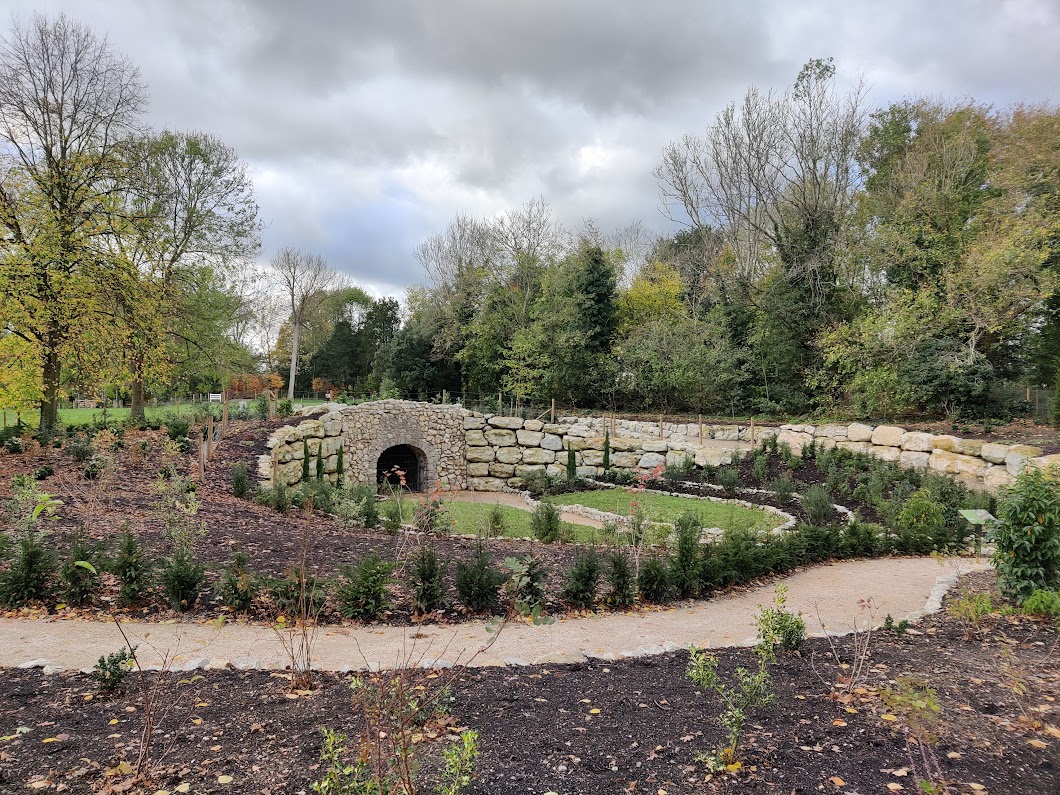
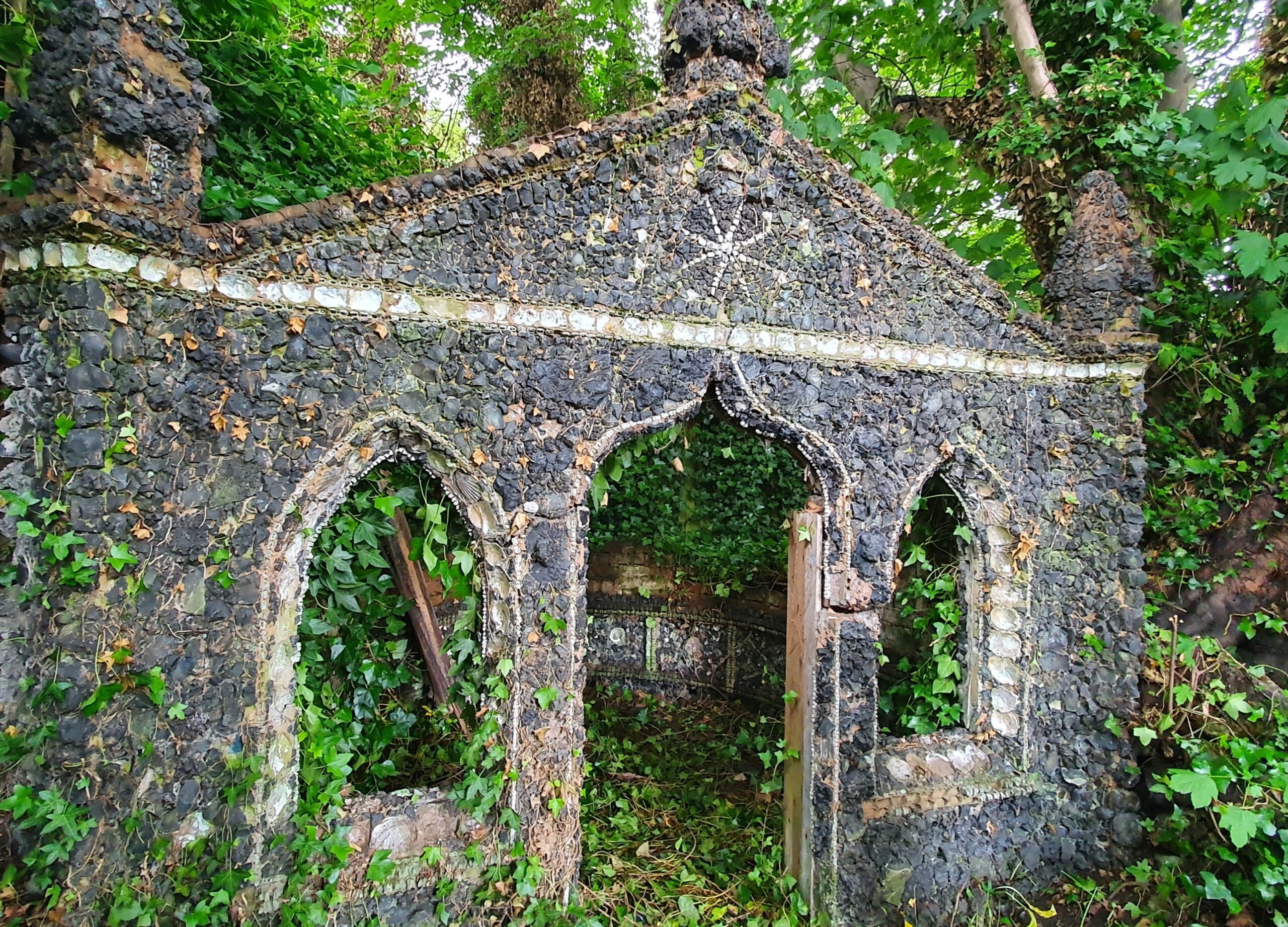
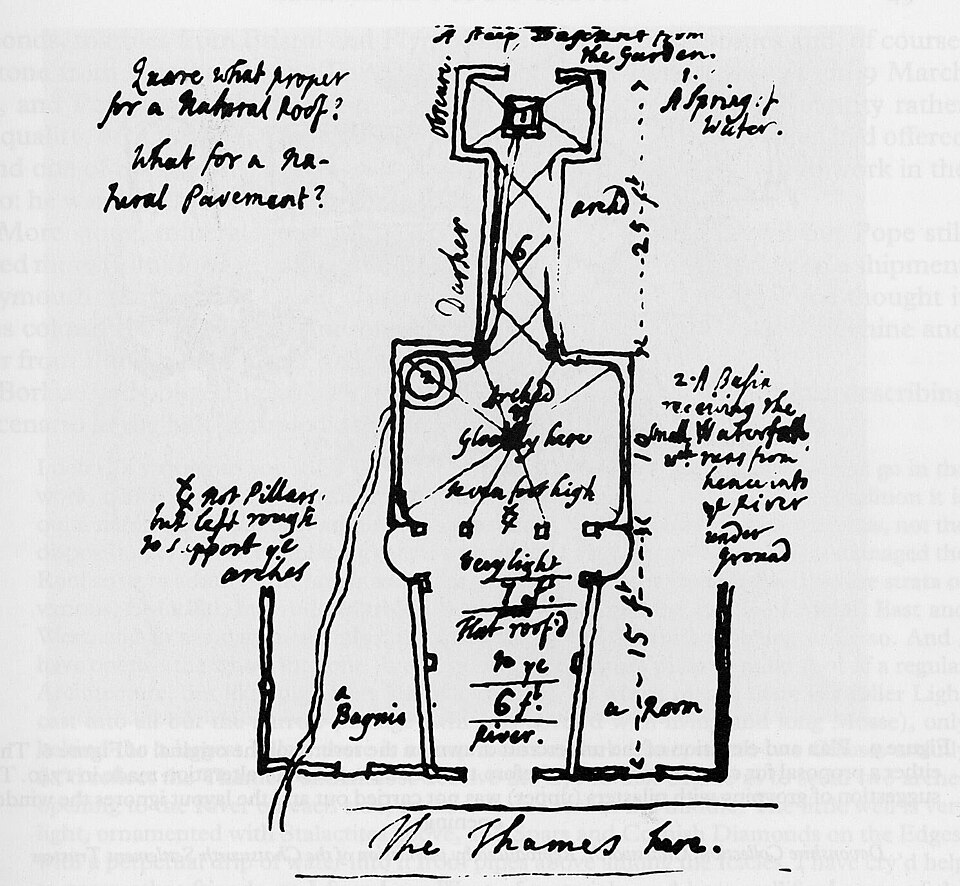
Pope’s Grotto One of the earliest was that built by the poet Alexander Pope in 1725 at the entrance to a tunnel built under the road which linked his Thameside house in Twickenham to his garden. It contained a natural spring and was decorated with shells and glass. He later extended this decoration to the tunnel itself including various rocks, minerals and mirrors. Goldney House The grotto at Goldney House in Bristol, built between 1737 and 1764, has several chambers decorated with rare shells and quartz crystals and divided by encrusted pillars. The central chamber not only contains a statue of a River God overlooking a rock pool with cascades and giant clams but also statues of a life-sized stone lion and lioness. From the roof hang artificial stalactites. Painshill Sited on an artificial island, the grotto at Painshill in Surrey, built in the 1760s, is also richly decorated. The entrance through a dark passage is in sharp contrast to the interior, where minerals such as gypsum, calcite and quartz cover the cavern’s walls and drip from the ceiling in artificial stalactites that sparkle when the sun shines on them through carefully placed openings in the walls. Fall from fashion As gardening tastes changed again in the later 18th century, shell and mineral decorated grottoes became less popular with artificial limestone caves taking their place only to be replaced themselves with caves made from natural rocks and Pulhamite, a popular artificial stone.
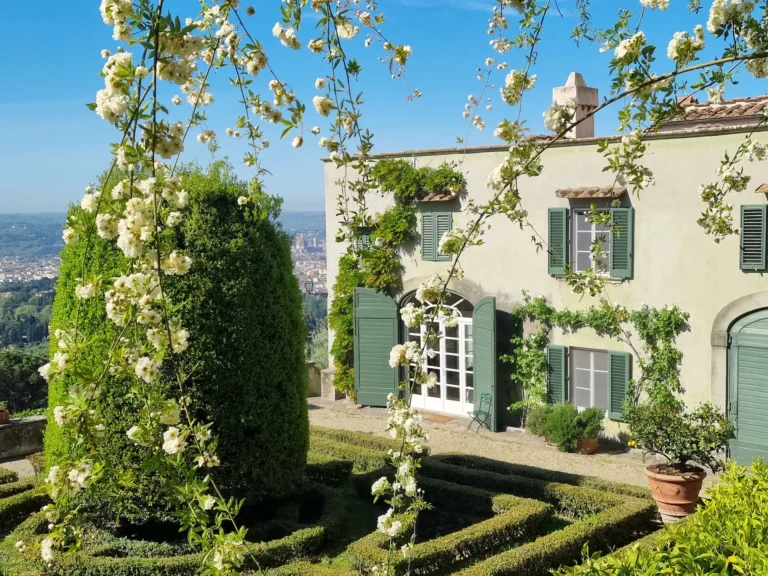
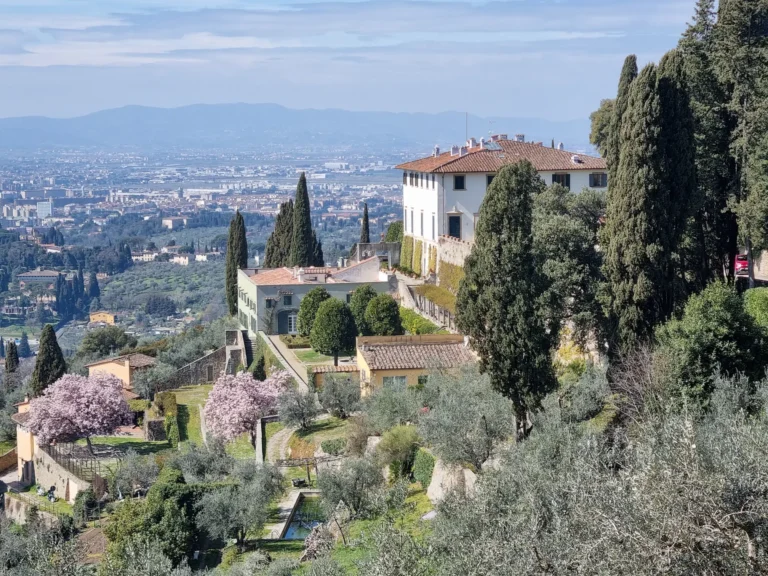
Cecil Pinsent trained in London before settling in Florence, where he created symmetrical, geometrically ordered Tuscan gardens for the vibrant local Anglo-American expatriate community.
A park or garden is more than a single focal point like a fountain, their true charm lies in the full sensory experience of a place including distant views, soothing sounds, and crisp, fresh air.
The Inventory is a freely available online resource dedicated to recording and understanding Suffolk’s rich and varied historic gardens, parks and designed landscapes.
To provide the best experiences, we use technologies like cookies to store and/or access device information. Consenting to these technologies will allow us to process data such as browsing behaviour or unique IDs on this site. Not consenting or withdrawing consent, may adversely affect certain features and functions.
Functional
Always active
The technical storage or access is strictly necessary for the legitimate purpose of enabling the use of a specific service explicitly requested by the subscriber or user, or for the sole purpose of carrying out the transmission of a communication over an electronic communications network.
Preferences
The technical storage or access is necessary for the legitimate purpose of storing preferences that are not requested by the subscriber or user.
Statistics
The technical storage or access that is used exclusively for statistical purposes.The technical storage or access that is used exclusively for anonymous statistical purposes. Without a subpoena, voluntary compliance on the part of your Internet Service Provider, or additional records from a third party, information stored or retrieved for this purpose alone cannot usually be used to identify you.
Marketing
The technical storage or access is required to create user profiles to send advertising, or to track the user on a website or across several websites for similar marketing purposes.