Search

Innovations of the Loudons

Tom Turner explores why the 19th century’s most famous gardeners were actually 21st century visionaries through eight examples

John Claudius and Jane Webb Loudon changed the histories of garden design, publishing, landscape architecture, civil engineering, building architecture, town planning, sci-fi futurology - and sewage disposal.

Planting and design

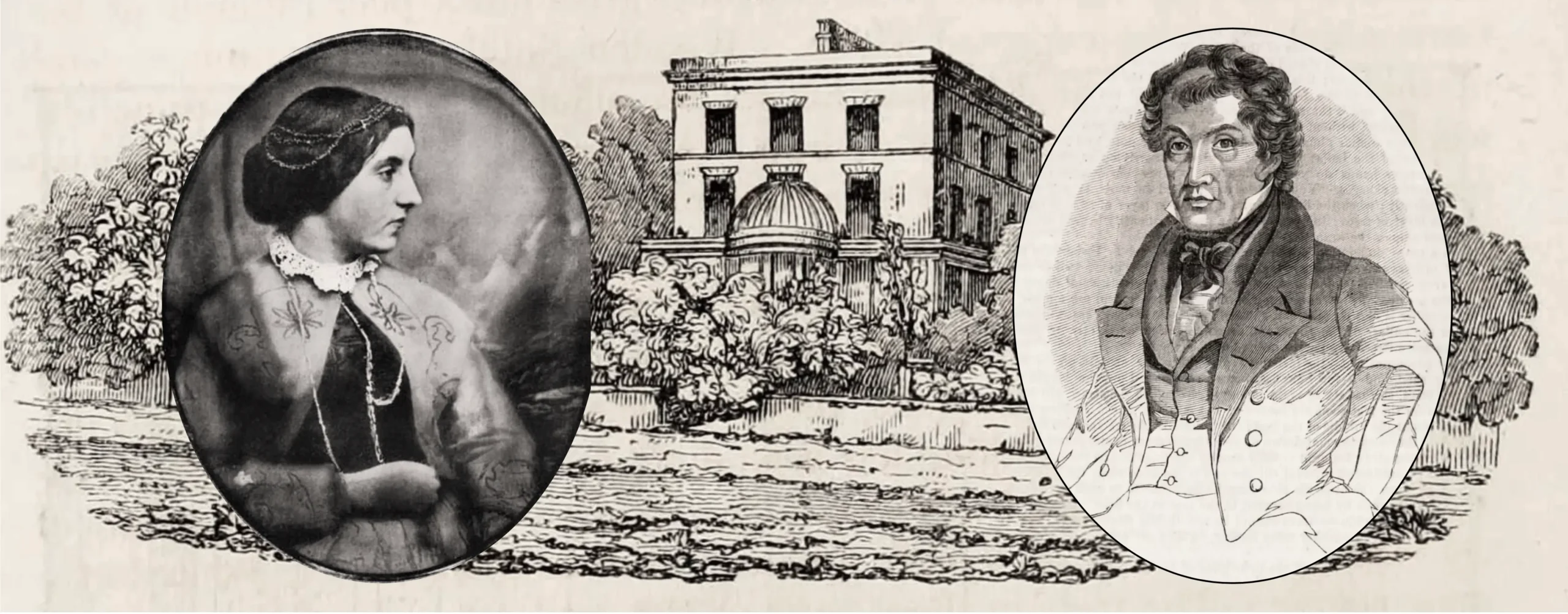
The first example is of the Gardenesque planting for which Loudon is remembered. For the house and garden he designed for himself, 3-5 Porchester Terrace in Bayswater, a full planting schedule survives.

The Gardenesque principle was to use exotic plants in what we would call a naturalistic composition and he called a ‘picturesque’ composition. This principle led directly to the work of William Robinson, Gertrude Jekyll and, among others, Piet Oudolf.

Note also, the Dome on Loudon’s veranda. It was based on his experiments in The Hermitage Garden and it provided the technology for Paxton’s Great Stove and Crystal Palace and for Norman Foster’s glazed architecture.

My next example is Loudon’s 1818 design for the Runcorn Bridge. For this, he invented the use of diagonal stays combined with an arched deck.  The engineering idea may well have come from his work on glass-and-iron shell-structures. It is now a leading principle in bridge design. Loudon’s design was aesthetically and technically superior to Thomas Telford’s design. Neither were built.
Publishing, planning, the whole profession

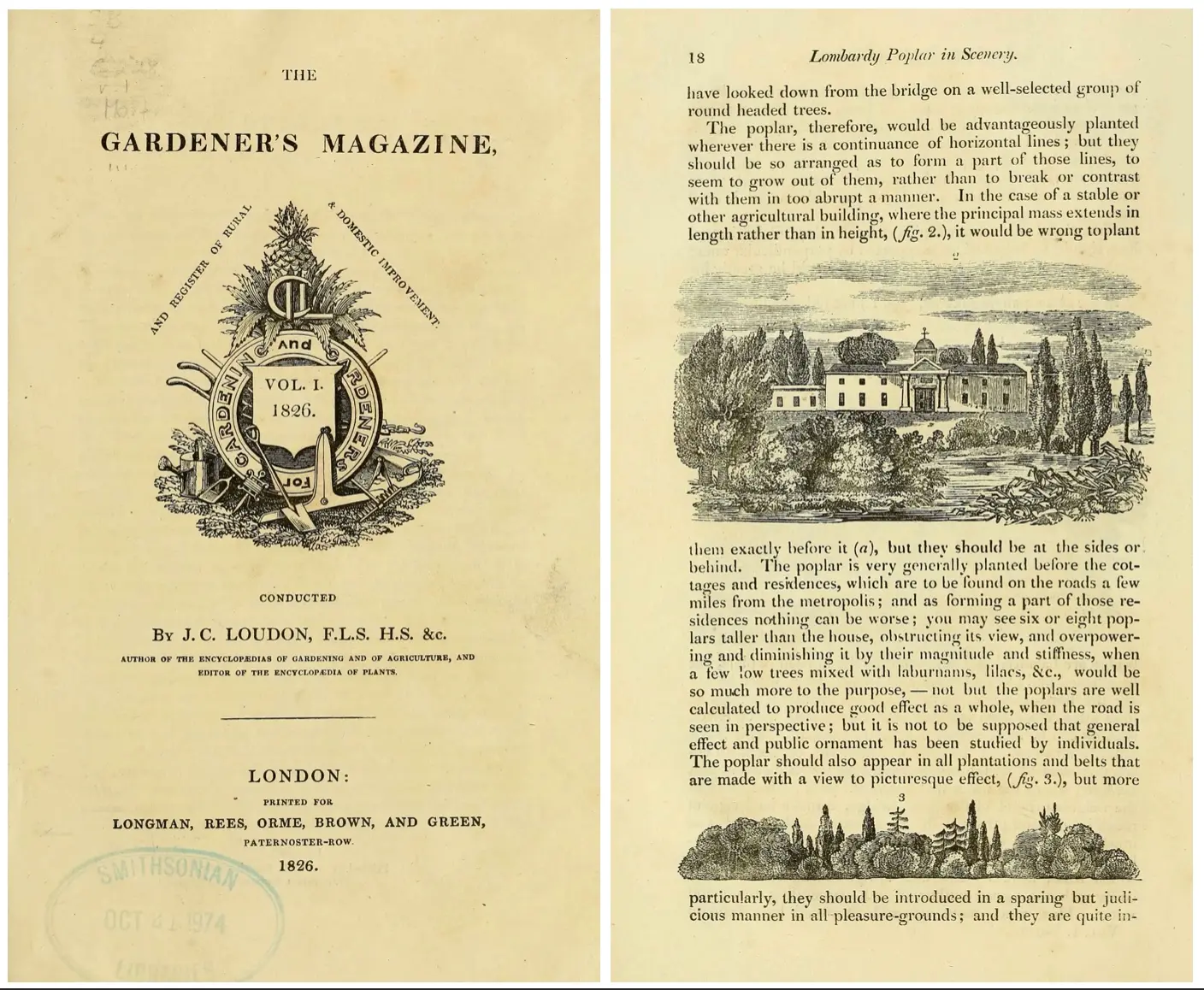
After his health collapsed, at the age of 24, Loudon published the world’s first illustrated encyclopaedias and magazines of Gardening, of Architecture and of Natural History.

In his short life he wrote more words than anyone who had lived before him – their length is equivalent to 76 copies of The Bible.

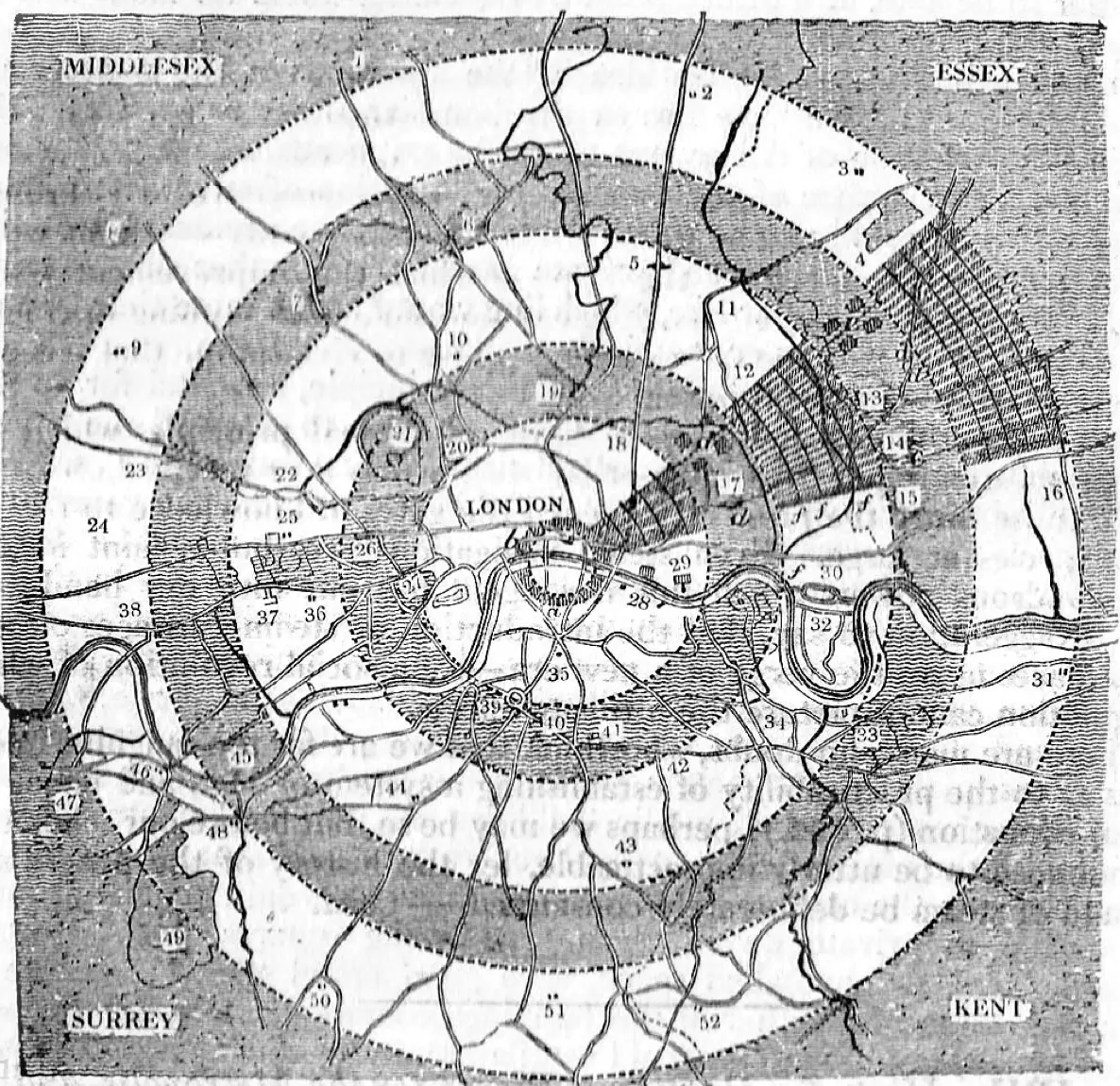
The next example is Loudon’s astonishing plan for the growth of London. It laid the intellectual foundation for Public Parks, Greenbelts, Greenways, Transport Planning and Garden Cities. This was followed by a proposal for intercepting sewers north and south of the River Thames made in 1829. This was thirty years before it was taken up by Joseph Bazalgette, who gave no credit to Loudon. He may not have known it was his idea. Unlike Bazalgette, Loudon wanted the manure to be composted – as would every good gardener.

In I834, with a quotation from Gilbert Laing Meason, Loudon laid the foundation for what is now the landscape architecture profession. Meason had written that “Our parks may be beautiful, our mansions faultless in design; but nothing is more rare than to see the two properly connected.”  The idea came from landscape painting.

Jane Webb Loudon

John met Jane as a result of reviewing a book she had written 3 years earlier. The interest they shared was in ‘Improvement.’ Jane’s book was called The Mummy and the title of John’s review was ‘Hints for improvement’.

He was dazzled, as we all must be, by her Futurology. She was probably the more imaginative of the happily married couple.  Her visions included: Steam-Powered Digging Machines and Milking Machines, International Balloon Travel, Female Trousers, Movable Houses, an Undersea Tunnel – connecting England and Ireland, Automated Lawyers and Judges (perhaps using AI) and an Electric Telegraph. Jane is recognised as a pioneer of Sci-Fi writing.

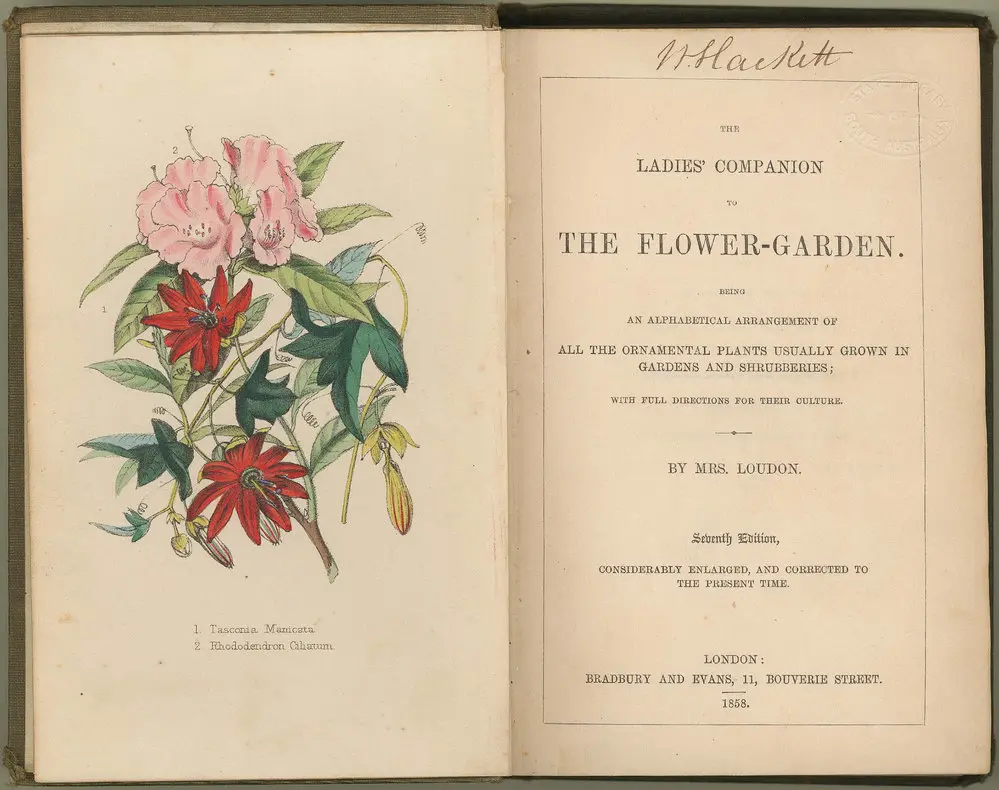
Though often portrayed as a dutiful wife and obliging amanuensis, which she was, Jane was also a dominant influence on the Victorian garden and a heroine of botanical illustration and floral bedding. She favoured geometrical flower beds based on the principles of colour harmony.

I wish the modern world drew more from the Loudons and less from Le Corbusier.

About the author:

Tom Turner is an English landscape architect, garden designer and garden historian, formerly teaching at the University of Greenwich in London. He is the author of books and articles on landscape and gardens and the editor of the Garden History Reference Encyclopaedia.

Related articles by topic :

Topics

The invention and troubled introduction of the secateur in France and England as a replacement to the billhook and pruning knife

Topics

Designed to improve our health and community cohesion, playgrounds began as ‘gymnasia’ for all to use.

Topics

We easily forget how life-changing some gardening inventions can be. One of those is undoubtedly the watering can. So who invented the watering can? And when?