Search

A History of British Football Playing Surfaces

A fleeting history of these unique designed landscapes by Landscape Design Consultant John Harris

The first football pitches of the 1800s were scythed or grazed but over time evolved into highly maintained landscapes incorporating drainage, heating and new technology such as Astroturf

Unique designed landscapes

In the early 1800s football pitches were acquired fields with common grasses, their surfaces cut with a scythe or merely grazed; not ideal for sport but they soon became unique designed landscapes.

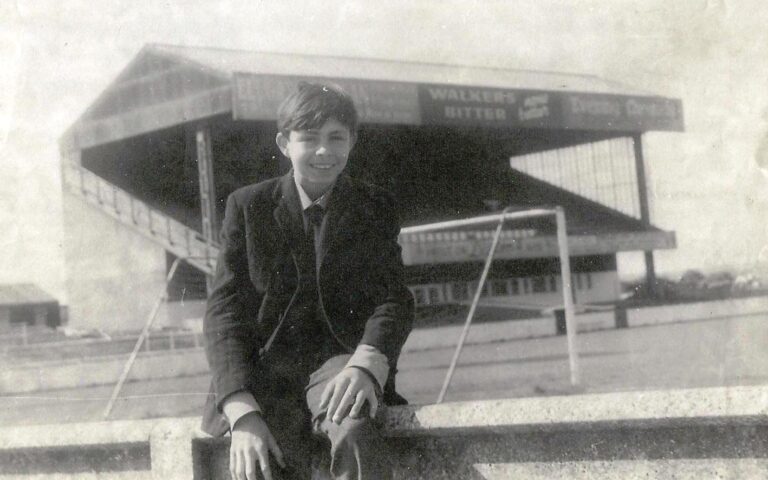
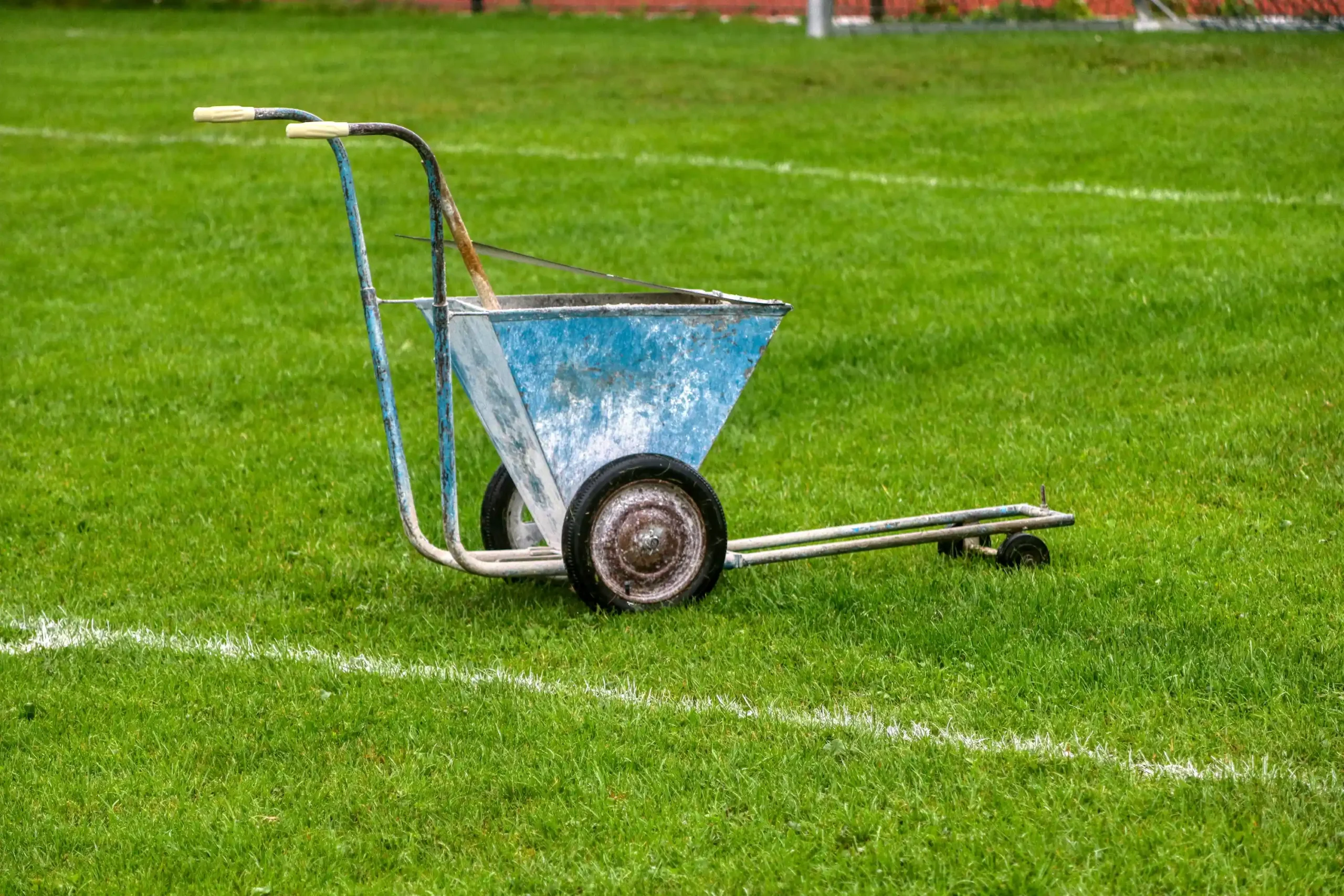
Mowing machines entered the market in 1830 easing labour intensive scything and facilitating improved surfaces. Some early established football clubs played on former farmland or even within a park; Everton played in Historic Stanley Park (now grade II listed). Pitches were improved by the quality of their grass sward as machinery improved. Attention was later given to grass species but the main problem was lack of drainage or poor drainage. Despite attempts to provide a favourable surface for top-tier grounds our winters posed challenges. By the 1960s and into the 1970s games were regularly postponed or abandoned due to weather conditions. Early grounds weren’t marked out but marking was eventually introduced and adapted to today’s layout. Lime was used as a line marker but was an irritant to skin and eyes; kinder materials have now replaced lime.

Drainage

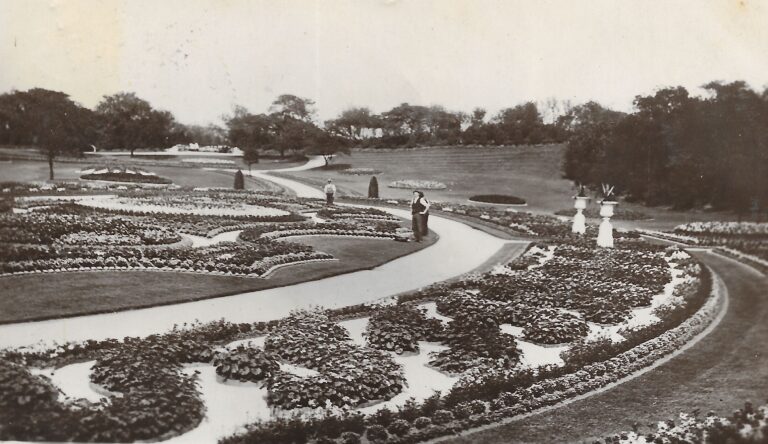
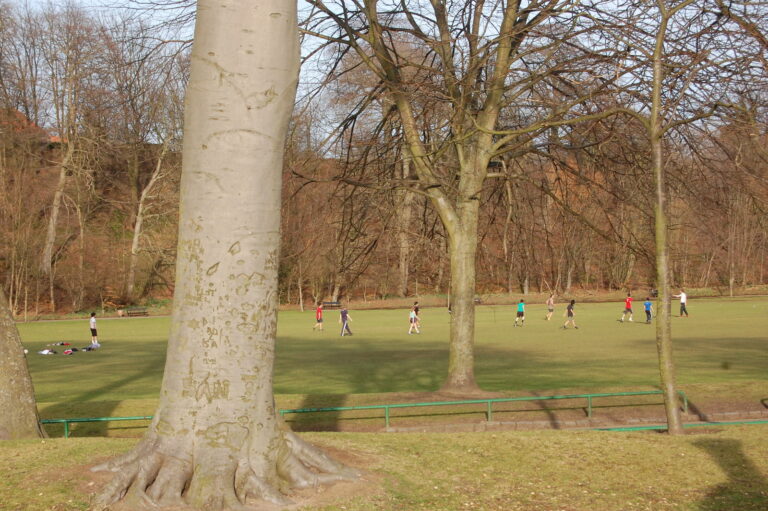
Surface water was a problem and many grounds introduced drainage during the 1970s, often inspired by the organised drainage on expansive formal lawns of important parks.

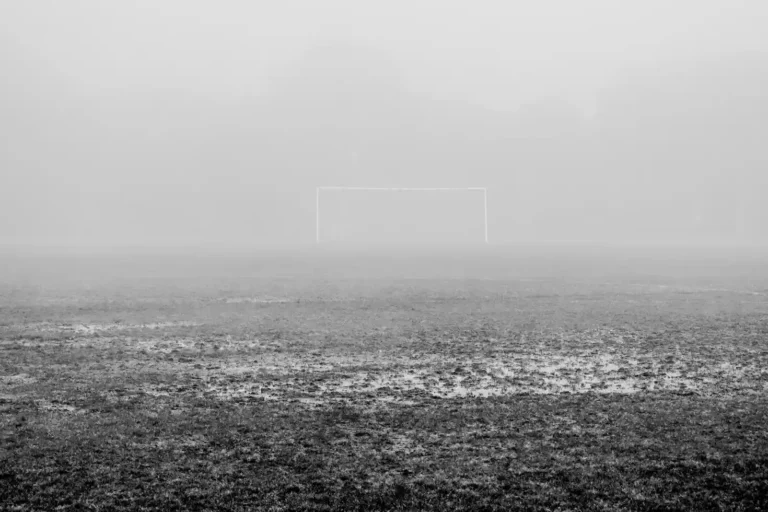
This helped, but with a price to pay: drainage quickly removed surface water, but also removed ground water resulting in dry subsoil during drought, affecting the ability for grasses to strive with regular heavy activity. Subsequently facilities were poor for most of the season. In summer the grass was scarified, top dressed and reseeded. Some top-tier clubs applied turf to the worst affected areas. In late winter teams played on a surface with little grass, mostly dirt or mud, which was rolled to provide a reasonable surface; but by the end of the match it was hard to distinguish between each opposing team’s mud-caked shirts.

Astroturf and modern surface technology

During the late 70s and into the 80s improving surfaces was paramount and artificial playing surfaces were introduced, inspired by earlier American initiatives.

‘Astroturf’ became a household name and soon artificial turf was utilised for problem areas in parks and gardens. In football, Astroturf was unpopular and there was argument over unfair home advantage and eventually these became out-of-vogue. Much effort was then afforded to improving all aspects of surfaces. Heating, automated irrigation and improved drainage became a necessity. This progressed through the 80s and 90s to eventually establish a surface which is presently thought to be the finest and most effective… presently inspiring quality extensive lawns in many celebrated parks to resist the impact of major events.

Modern grounds have a layered structure of various organic materials beneath the playing surface (but sometimes including synthetics), selected grasses for best effect, synthetic materials woven into the sward and scientifically arranged drainage – all avoiding waterlogging whilst retaining moisture to feed the grasses. The best modern pitches are maintained by the country’s best green keepers… and many are historically important ‘greens’ such as Old Trafford, Celtic Park and Brammall Lane.

We’ve come a very long way… but will climate change alter lawn construction once again?

A History of British Football Playing Surfaces

Topics

The Society has produced an Annual Report since 1833 and these invaluable records are now available online

Topics

A park or garden is more than a single focal point like a fountain, their true charm lies in the full sensory experience of a place including distant views, soothing sounds, and crisp, fresh air.

Places / Topics

One of the city’s most enduring innovations has been quietly shaping lives for almost two centuries.