Search

Norris Castle

A Picturesque Estate of Gardens and Seaside Landscape

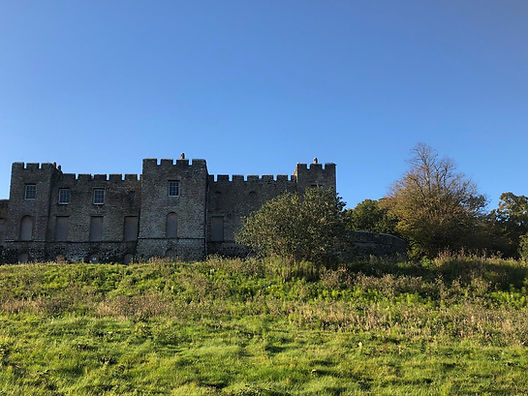
Perched on the north-eastern tip of the Isle of Wight, Norris Castle stands not only as a remarkable Regency Gothic Revival residence but also as home to one of the island’s most significant historic landscapes.

A remarkable Regency Gothic Revival residence and historic landscape

Unlike many designed estates whose gardens have evolved piecemeal over centuries, Norris presents a rare survival of a largely intact late-18th-century designed landscape — a setting conceived not just for architecture but for an immersive garden experience deeply rooted in the principles of the Picturesque.

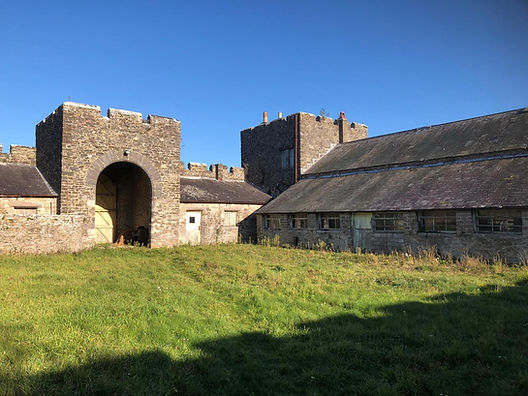
The estate was created from around 1799 for Lord Henry Seymour, a retired MP and landowner with an eye for both gardening and agricultural improvement. James Wyatt, one of the foremost architects of his age, designed the castle, the model farm and associated outbuildings in a dramatic castellated Gothic idiom. At the same time, the surrounding park and pleasure grounds were laid out, probably with Humphrey Repton’s input, placing Norris firmly within the golden age of English landscape design.

In recognition of its exceptional historic and landscape value, the parkland and gardens at Norris Castle are the only Grade I-listed landscape on the Isle of Wight – the highest designation in the national Register of Historic Parks and Gardens. This reflects not just the estate’s architectural ensemble, but the coherence of its designed setting, with sweeping lawns, woodland belts and carefully orchestrated views toward the Solent and back up to the castle itself.
A Picturesque landscape

The landscape is quintessentially Picturesque. Its gently rolling grassland is dotted with copses and specimen trees, edged by semi-natural woodland, and framed by the magnificent seascape beyond.

An oval carriage drive once looped through the park, encouraging visitors to appreciate the evolving interplay of land, sea and architecture. Wooded copses such as West Copse and East Copse historically helped to shape views and provide intimate glades and shady walks.

Unusually for estates of this period, agricultural features were integrated into the ornamental design. The model farm and its attached castellated walled kitchen garden (themselves Grade I-listed) echo the castle’s Gothic form and stand as rare examples of functional farm and garden buildings treated as architectural features within the designed landscape. In the early 19th century, this garden supported productive planting, including fruit trees, vines and melon pits, all enclosed within handsome stone walls.

Water features such as once-numerous stone-lined watering ponds remain scattered through the park, hinting at the estate’s working agricultural past while adding further texture to the landscape.

Norris Castle's gardens today

Despite its historic significance and extraordinary intactness, parts of Norris Castle’s gardens and parkland have faced threats from neglect and proposed development in recent years, reinforcing the ongoing importance of advocacy and conservation for such rare landscapes.

Today, even from afar, the estate’s gardens speak to a moment of English landscape design when nature, architecture and horticulture were seamlessly intertwined, offering a dramatic, evocative and distinctly coastal expression of Regency era taste.

Norris Castle

Garden Historians

Parks manager, historian, author and public speaker Dr Paul Rabbitts tells us how he began his career in parks management.

Topics

One of the greatest ‘inventions’ of the 19th century was the public park. Today, we all use them – and love them – but what do we actually know about them?

Topics

From the Ancient Greeks via 17th century Dutch firefighters to modern day gardeners the history of the hosepipe is far from straightforward.