Search

What is garden history?

The study of how, what and why historic designed landscapes were first created

Gardens Trust Vice President Michael Symes provides his overview of this diverse subject and the insights it offers into other areas of historical research

The study of parks, gardens and other designed landscapes

Garden history is, at its simplest, the study of a park, garden or other designed space anywhere in the world, and of whatever kind, in order to determine how it was laid out originally, or at any appropriate given period, and its subsequent history.

It can also be a focused study on just one period or aspect, such as archaeology, plantings or garden architecture. Ideally it should lead to insights into why it was designed in the way it was.

Garden history can also be much broader than concentrating on a single site, e.g. looking at the work of one designer who was involved at a number of sites, or examining trends or phases of garden-making, such as the Italian Renaissance Garden, where iconography (symbolic meaning) plays a prominent part. A design might well indicate the motivation of the owner/designer: in a number of Italian instances, to demonstrate the power and wealth of the Medici family.

An interdisciplinary subject

As a discipline it can bring together many arts and sciences: the 18th-century landscape garden, which was regarded as an art form in its own right, embraced archaeology, art, architecture, history ancient and modern, literature, philosophy, politics, religion, sociology, botany, geology, geography, agriculture, horticulture, technology, water engineering and practical gardening.

William Mason (1780s) considered that landscape gardens should be constructed with a poet’s feeling and a painter’s eye. While other art forms are static (in the sense that a built structure or a painting is completed), gardens are growing and changing all the time. There is a strong link to practical and field work.

A window into other histories

Because gardens are normally based on nature and views (whether far or near), which are of timeless appeal, garden history is an uplifting subject. Gardens are also a way to ‘read’ the character of another region or country and illuminate its history.

Garden history reacts in different ways to changing circumstances. As it is so often linked to restoration or conservation of a site, practical considerations may well have to take priority over history. Today climate change, which produces ever more drought and flooding, is the single most important factor to consider.

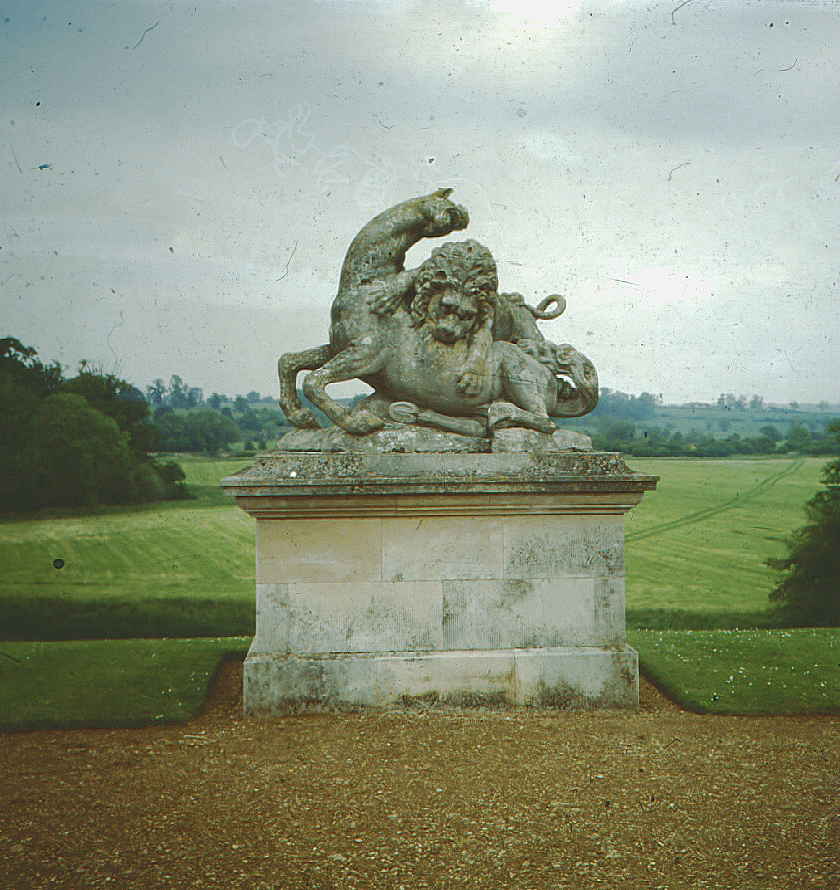
As examples of contrasting approaches to garden-making, the iconography of artificial features can be opposed to the ‘natural’ look of the landscape garden. Fig.1 illustrates a lion attacking a horse, a sculpture by Peter Scheemakers based on a small feature in the ‘Rometta’, a miniature representation of ancient Rome at the Villa D’Este. There it represented Rome (the lion) overcoming Tivoli (the horse). At Rousham, Oxfordshire, an early landscape garden which still retained sculptures reminiscent of a previous formal age, the violent image is appropriate to the owner, General James Dormer, who had been wounded in battle and was terminally ill.

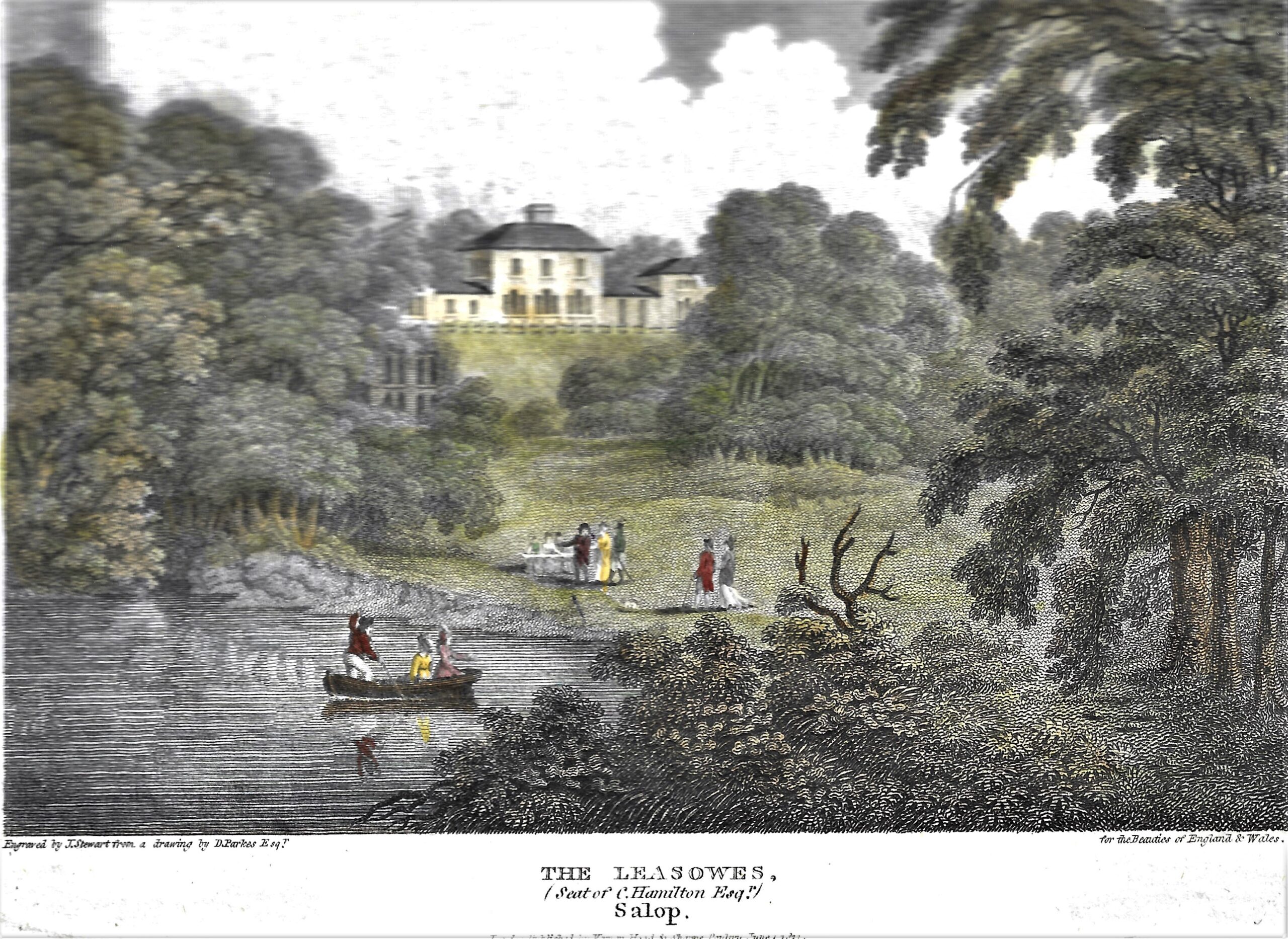
Fig.2  shows a later landscape garden where the owner poet William Shenstone demonstrated what was described as the most intimate alliance with nature (in fact totally contrived) at The Leasowes, then in Shropshire. The print dates from the early 19th century and presents a somewhat overgrown picture.

What is garden history?

Garden Historians

Parks manager, historian, author and public speaker Dr Paul Rabbitts tells us how he began his career in parks management.

Topics

One of the greatest ‘inventions’ of the 19th century was the public park. Today, we all use them – and love them – but what do we actually know about them?

Topics

From the Ancient Greeks via 17th century Dutch firefighters to modern day gardeners the history of the hosepipe is far from straightforward.