Search

Palladian Bridges

Palladian-style Bridges in English Landscape Gardens

What has a 16th century Italian architect got to do with 18th century English gardens? How did the Grand Tour indirectly influence garden design features?

The Grand Tour

For most of the 18th century it was common for wealthy young English gentlemen to make a grand tour of Europe.

Often this was for their cultural education, with long stays in France to learn the language and perhaps other skills such as dancing and then in Italy, again to learn the language but also to study paintings and sculptures and ancient Roman ruins. Once home, their Italian experiences fed into the development of English Landscape Gardens with the building of temples placed to create what have been described as a living work of art (Stourhead) or a living painting (Painshill).

Andrea Palladio

These young gentlemen were also exposed to Italian Renaissance architecture on their travels and were particularly influenced by the work of Andrea Palladio (1508 to 1580) with the result that Palladian style mansions began to be built in England in the 18th century.

Palladio published many books including in 1570 I quattro libri dell’architettura (The Four Books of Architecture) which found their way to English architects and landowners. The third of these contained designs for bridges.

Palladian Bridges in English Landscape Gardens

While most of Palladio’s bridge designs were relatively simple, a few included loggias, as did his rejected design for a bridge to cross the Grand Canal in Venice at the Rialto.

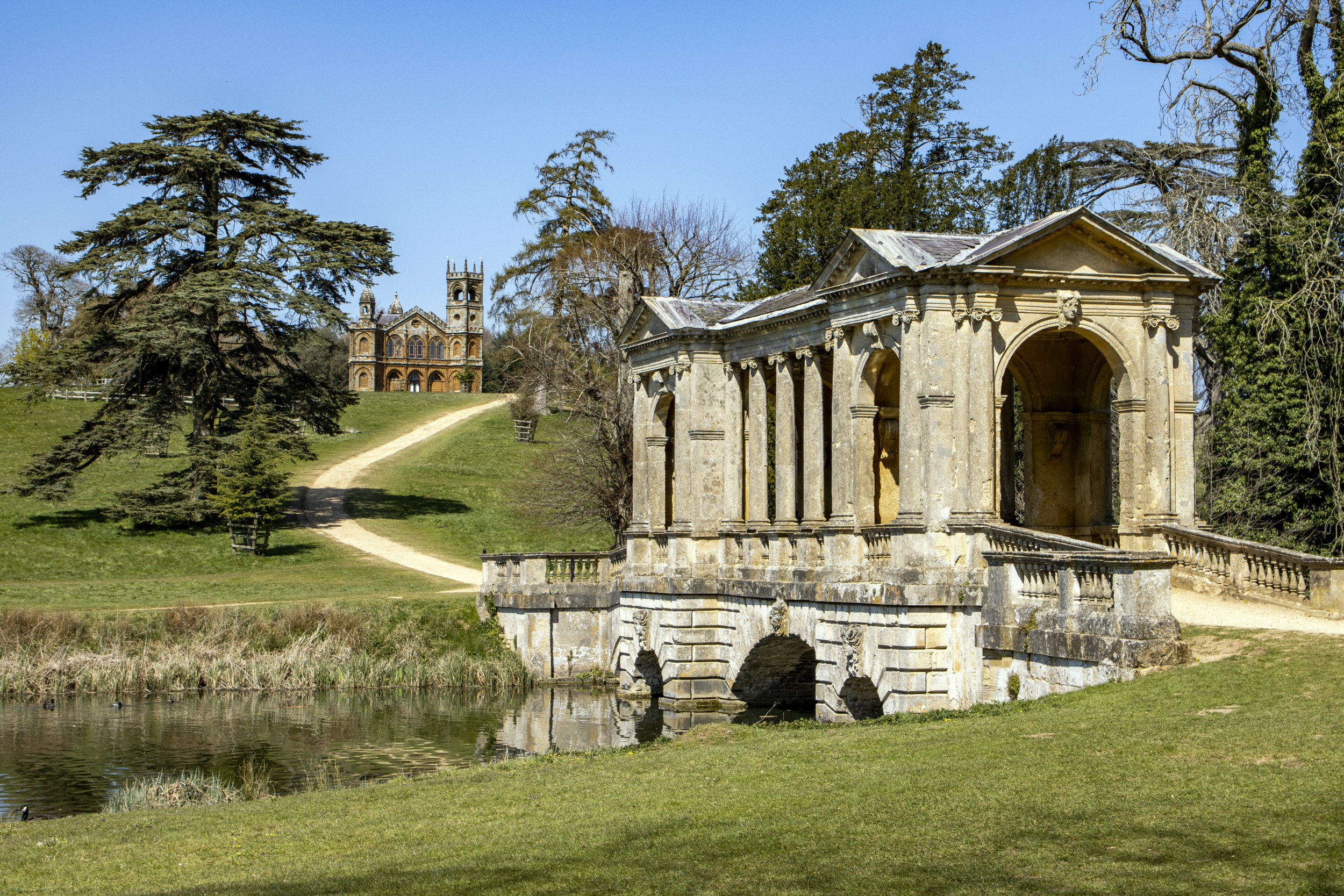
There are three so-called Palladian bridges with loggias in England, but they are not faithful reproductions of a Palladio design, being more inspired by.

The first such bridge to be built, in 1537, was at Wilton House in Wiltshire, the country seat of the Earls of Pembroke, where it crosses the River Nadder. Although similar to a Palladian design, it is not a direct copy and is the work of the 9th Earl and his architect Roger Morris.

Only a year later, in 1538, Richard Temple, 1st Viscount Cobham, built a very similar bridge in his garden at Stowe in Buckinghamshire, crossing one end of the Octagon Lake. One major difference is that instead of having steps at either end of the bridge for people to climb there are slopes, and it is also lower and wider, as it formed part of a circular carriage drive around the whole property.

The third bridge of this type was built at Prior Park in Bath in 1755 by entrepreneur Ralph Allen. Here it crosses one of a series of three lakes and is sited on a dam, meaning that the water level is higher on one side of the bridge than on the other.

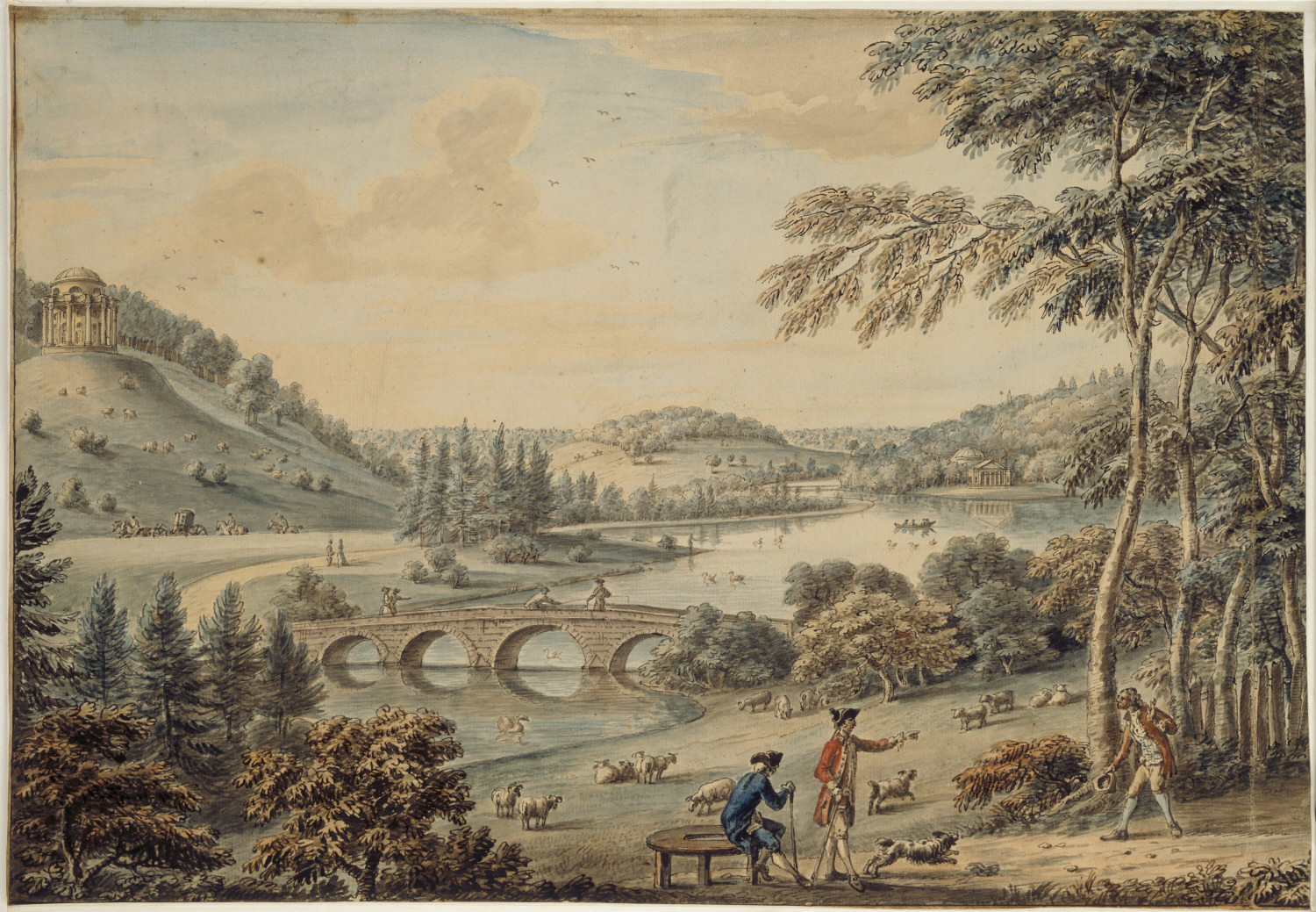
With regard to other Palladian-style bridges, without loggias, the most well-known example is the five-arched stone bridge at Stourhead Gardens in Wiltshire, built by Henry Hoare in 1762, which is based on a three-arched Palladio design. It was placed such that when looking across the lake from the Pantheon, it appears that the bridge crosses a river flowing through the centre of Stourton village and is therefore essential, when in fact there is no river in this direction and only a very short walk to the end of the lake.

Palladian Bridges

The last in our online course A History of Gardens 3, on Tues@10 am. Sponsored by Wooden Books.

... (more)

We have just published another new on-line issue of our journal Garden History. Dr Barbara Simms, our Journal Editor introduces... (more)

Does it give you a buzz of excitement when others share your enjoyment of historic parks and gardens? If so,... (more)