Search

Royal Jersey Agricultural & Horticultural Society Archive

Two centuries of Horticultural History now available on new Digital Archive

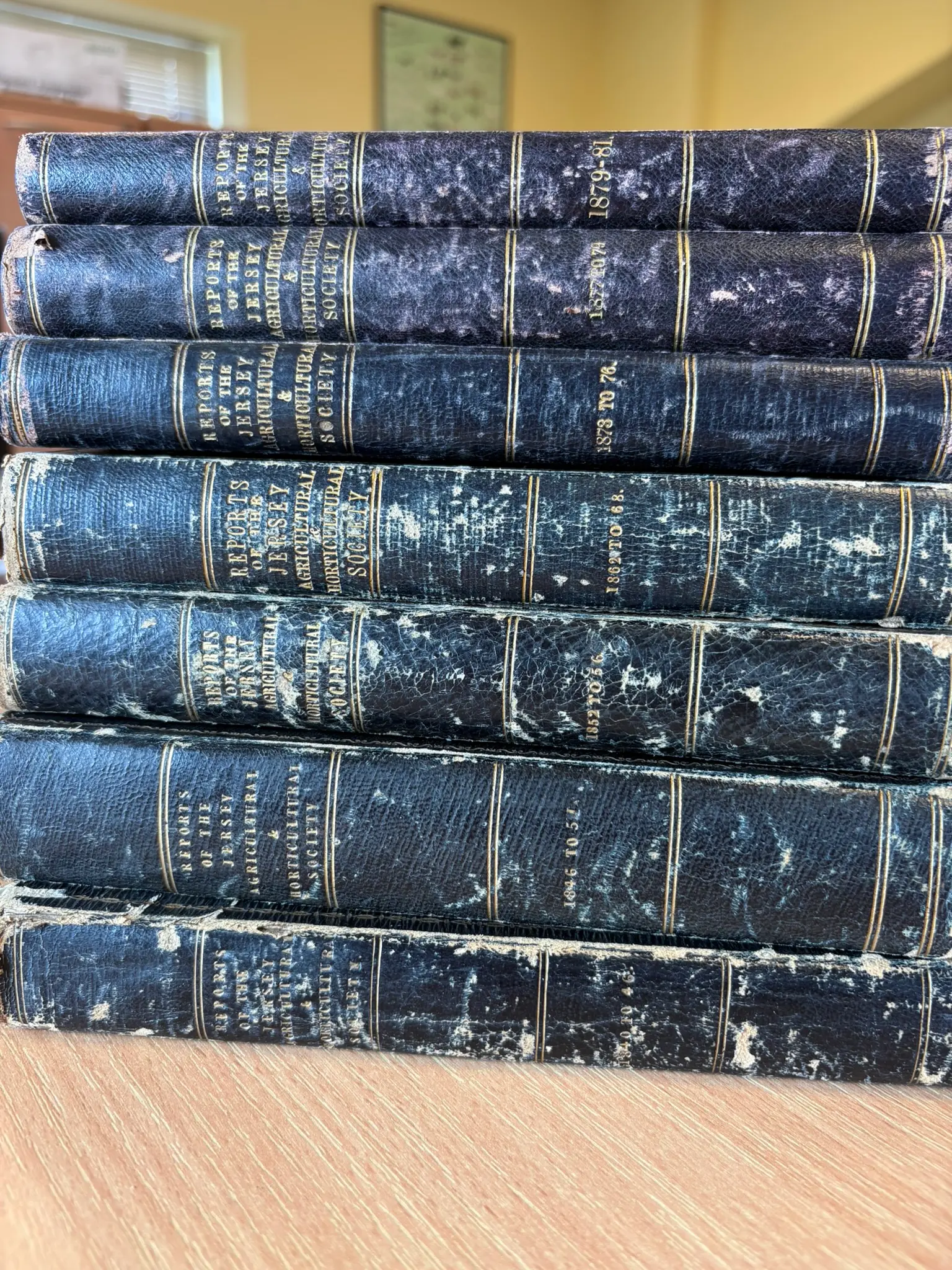
The Society has produced an Annual Report since 1833 and these invaluable records are now available online

Founding

The Royal Jersey Agricultural & Horticultural Society (RJA&HS) was founded in 1833, “to encourage improvements in its Agriculture and Horticulture, the breed of Cattle and to promote habits of industry and economy among the labouring classes”.

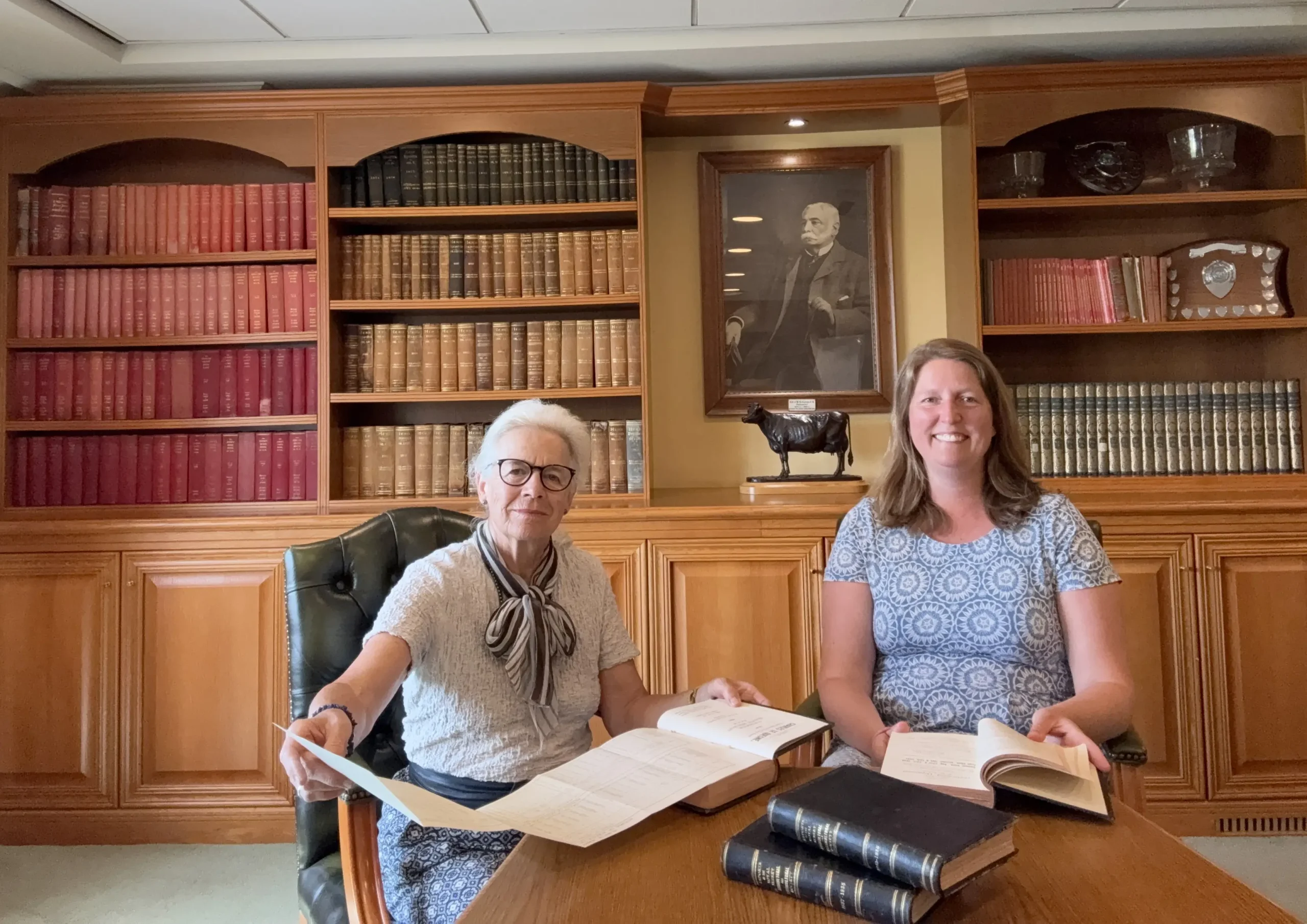
Still in existence 193 years later, the Society has produced an Annual Report virtually every year, and these invaluable records have recently been digitised on a new Digital Archive.

The work was supported by the Jersey Community Foundation and carried out by TownsWeb Archiving Ltd, to whom the Society extends its thanks. The Reports give a fascinating insight into agricultural and horticultural methods used in the Island, the history of the cultivation of the Jersey Royal potato and, of course, the development of the famous breed of Jersey cattle.

A key object of the Society today is to promote the Island’s rural culture, encourage the production of local produce and to protect the farmed countryside.

The Society is made up of two departments:

– The Agricultural Department represents the farming industry: It stages agricultural shows, provides a range of services to support the modern dairy industry and is responsible for the management of the Jersey breed of dairy cow in the Island.

– The Horticultural Department promotes amenity horticulture through shows and competitions, demonstrations and general advice as well as the provision of space for gardeners.
Horticultural Show, Archives and Exhibition

The first Horticultural show was held on May 14th 1834. Classes for flowers, vegetables and fruit became the norm with the lists giving an idea of the variety grown in the Island over time.

There were prizes for exotic produce such as lemons, guavas and pomegranates and separate classes for ‘Cottagers’, who were encouraged by prizes for “the neatest, cleanest and best conducted Cottage and Garden”. It is worth noting that, at today’s valuations, a 5/- (five shillings) prize in 1843 would today be the equivalent of £40 – and so well worth entering the competition!

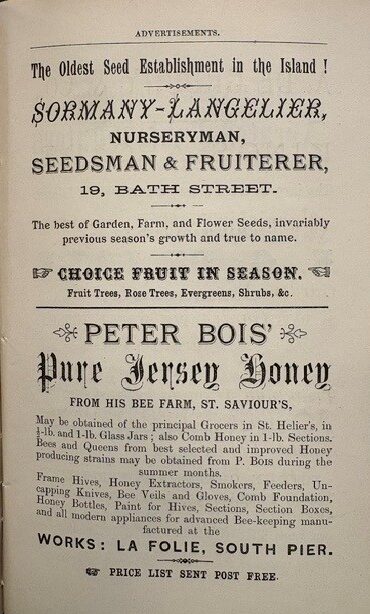
There are many references over the years to weather, disease, use of fertilizers, and the education of young people into the industry. And at the same time as the Society was establishing itself, there were nurserymen setting up their businesses on fertile land around the edge of the town, St Helier. One of these was Bernard Saunders, originally from Devon who, as well as being a judge at the Horticultural Shows, successfully exhibited his produce in Jersey and in England, and René Langelier who exhibited his pears in London and Edinburgh.

In 1871 the Society held a Channel Island Exhibition which was described as “the greatest event in the social life of the Island in the nineteenth century” and was attended by 30,000 visitors “…to look on flowers of the richest hues and emitting the most delicate perfume….”

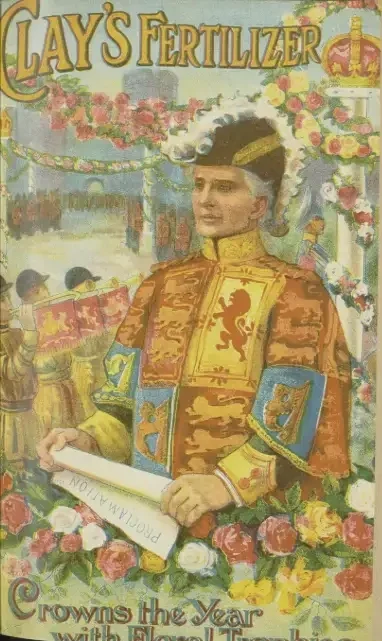
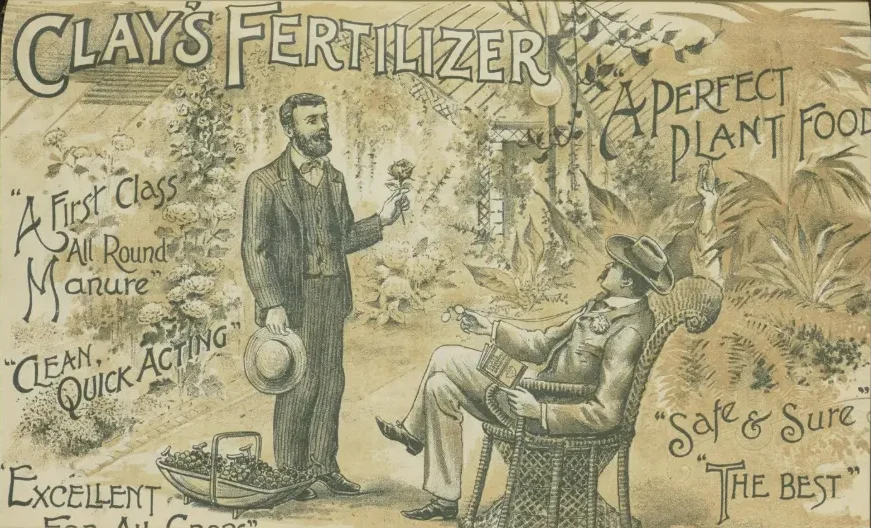
It is not until the 1890s that advertisements start to be published in the Reports, but these are also a valuable source of local information about all manner of businesses operating in Jersey.

The Digital Archive is freely available online at http://archive.royaljersey.co.uk  

The Royal Jersey Agricultural & Horticultural Society Archive

Topics

A park or garden is more than a single focal point like a fountain, their true charm lies in the full sensory experience of a place including distant views, soothing sounds, and crisp, fresh air.

Places / Topics

One of the city’s most enduring innovations has been quietly shaping lives for almost two centuries.

Garden Historians

Landscape Design Consultant John Harris describes his career helping to design and maintain designed landscapes