Search

Hosepipes

The history and evolution of the hosepipe

From the Ancient Greeks via 17th century Dutch firefighters to modern day gardeners, the history of the hosepipe is far from straightforward.

Leather and canvas

Who invented the hosepipe? There are stories of the ancient Greeks using an ox’s intestine attached to a bladder filled with water which, when pressed, forced the water through the ox gut forming a directable stream. However there is no real evidence of this.

Instead, the real story of hosepipes begins in late 17th century Amsterdam with two Dutch brothers, Jan and Nicholas van der Heyden, who manufactured the hoses not for garden watering, but for fire fighting.
Incredible though it might sound, they made a tube out of leather relying on tight sewing to hold it together, and with brass fittings to allow sections of tube to be joined up. Unsurprisingly it wasn’t a complete success! The pipes leaked and the stitching burst under pressure and of course the tubes were heavy and incredibly cumbersome as well as being ineffective. Back to the drawing board!

Attempt two in 1698 used another Dutch speciality, canvas sailcloth. As you can imagine it too had problems! It needed to be sealed to make it thoroughly waterproofed and a range of methods were used to try and do that, usually with a mix of oils and other substances. In the 18th century attempts were made to use other textiles such as linen and hemp but with the same problems and as late as the mid-19th century patents were still being taken out for techniques to make canvas etc. impermeable.

Around the same time rivets started to be used instead of stitches to try to eliminate leaks and although this resulted in enormously heavy weight these hosepipes continued to be used right through until the 1870s.


Old new materials

What everyone had overlooked so far was that there were two other potential alternative materials available to replace leather and which had long been known about in the west.

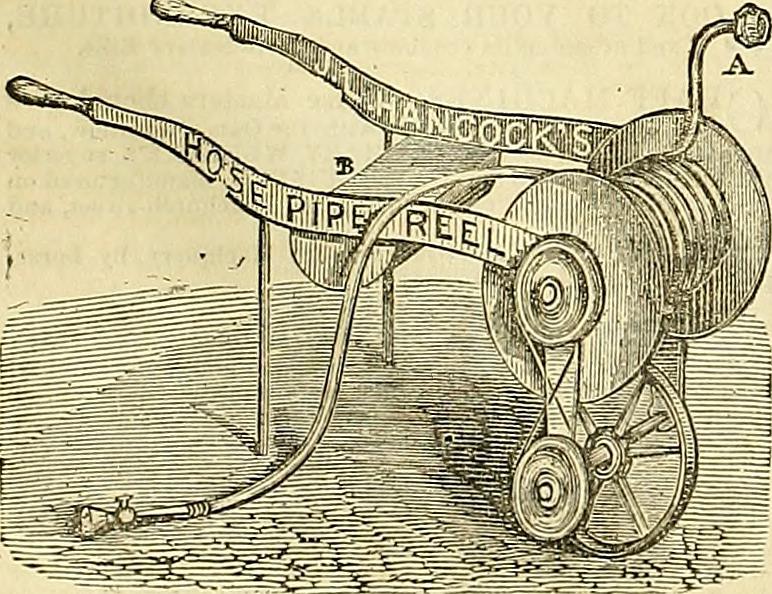
In the 1840s both rubber and gutta percha started to be used to make flexible pipe capable of carrying liquids although both still had problems. By the time of the Great Exhibition of 1851 vulcanized rubber had won the battle of materials for hosepipes but this method of garden watering took a while to catch on.

Water in the garden

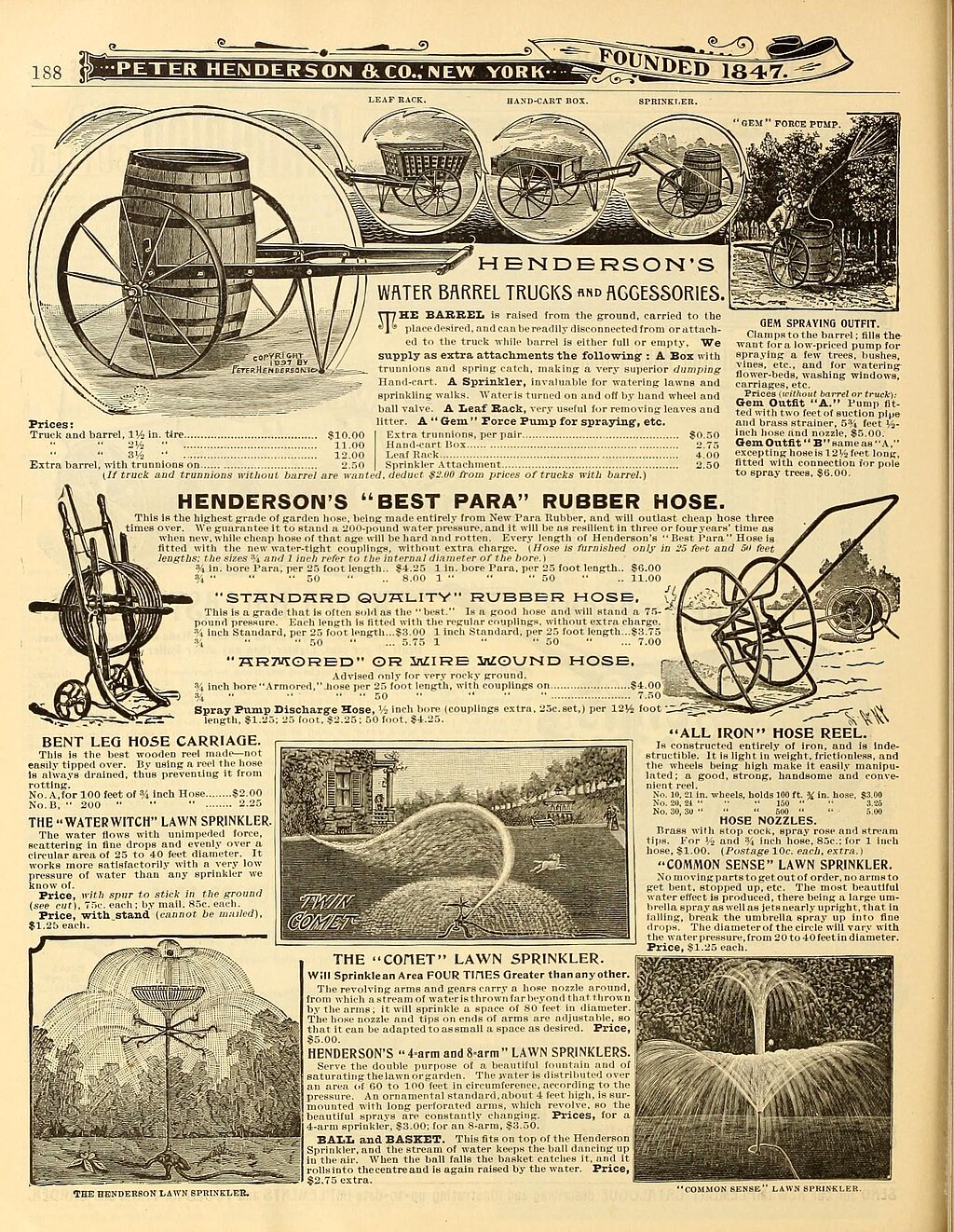
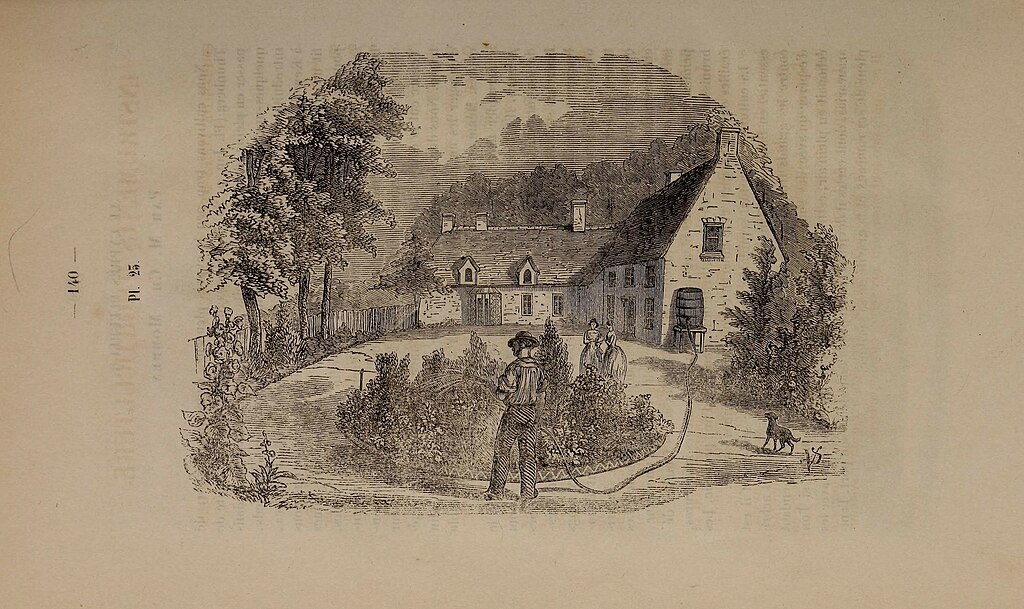
As far as garden use is concerned we’re still in the realms of the unlikely because extensive use of hosepipe in the garden was only possible once there was an adequate supply of water – which in most cases meant from pressurised water mains.

But by a stroke of luck improvements in water supply were also beginning around this time so that gradually gardeners could say goodbye to hand watering from cans or on a larger scale from water barrels.

Then once mains water was more widely available it was just a question of increasingly sophisticated technology. Nozzles and other jets became standardized around 1830, while a patent for a sprinkler attachment was issued in 1871, although these didn’t become common until after the First World War.

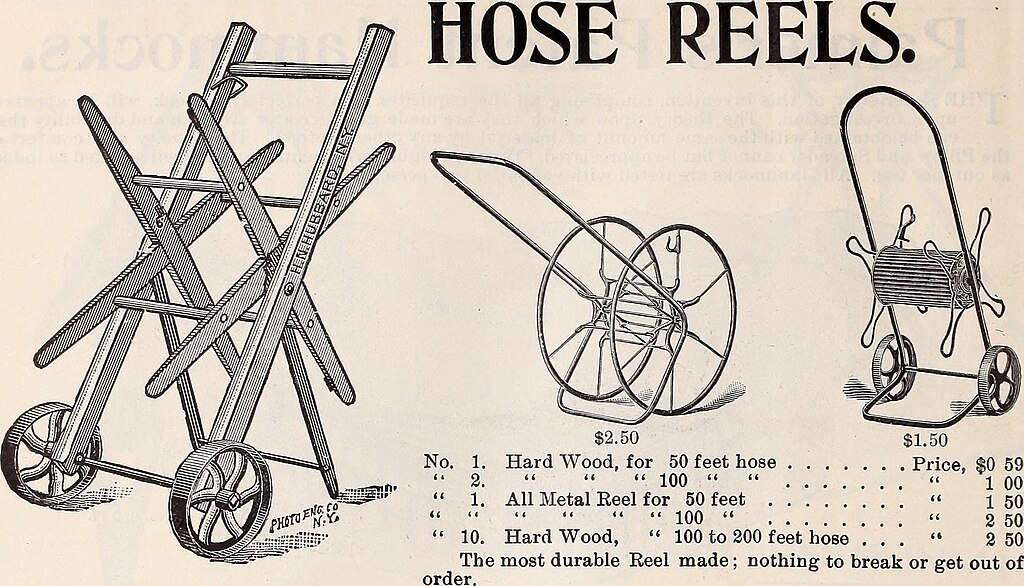
Rubber continued to rule until the early 1950s after which it was rapidly unseated by plastic, then lightweight plastic and reinforced kink-proof plastic with the latest developments being expandable hoses which are lightweight and space saving.

Read the full article on the history of hosepipes by Dr David Marsh on the Garden History Blog here.

Garden Historians

Parks manager, historian, author and public speaker Dr Paul Rabbitts tells us how he began his career in parks management.

Topics

One of the greatest ‘inventions’ of the 19th century was the public park. Today, we all use them – and love them – but what do we actually know about them?

Periods

When we picture the gardens of the Roman period, our minds often leap to grand courtyards and marble statues, yet the reality was far more varied and influential than such images suggest.