Search

Cherrill Sands

Garden Historian Career Profile

Garden historian, teacher and writer Cherrill Sands tells us about her horticultural career change

Changing careers

When considering a career change, as I had gardened all my life, I opted for horticulture and an RHS qualification.

My RHS tutor arranged some garden visits and I discovered places with not only great plant collections, but also social history, interesting stories and links to art, literature and theatre. It was a revelation.

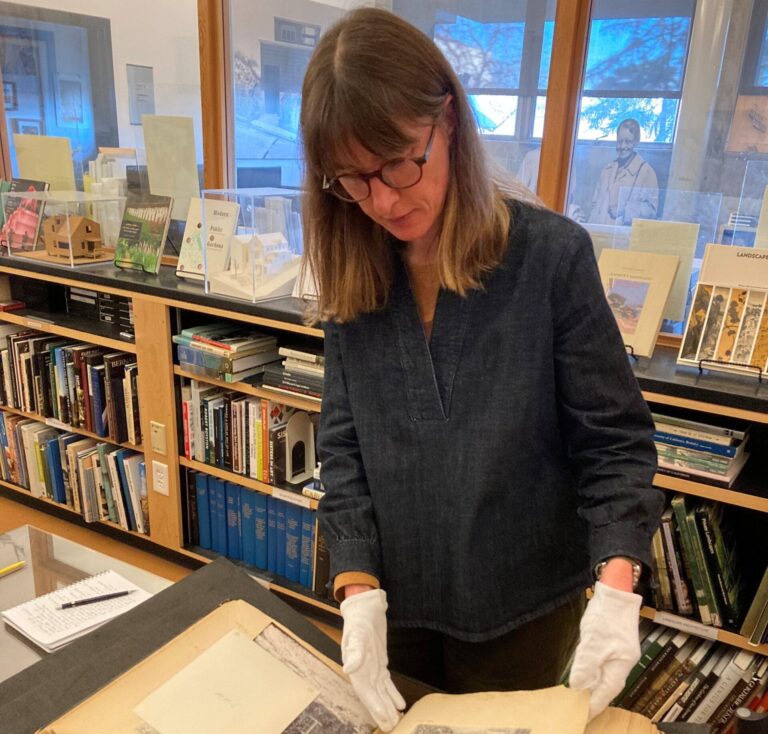
I studied at the Architectural Association on a post-graduate course, The Conservation of Landscapes, Parks and Gardens, which developed into an MA.

Afterwards I was offered the post of part-time historian at Painshill in Surrey, an 18th century landscape garden. The role included research and practical work, giving talks and tours, and being part of the team to plan future events, lectures, conferences and exhibitions.

Teaching garden history

To improve my teaching skills I undertook a PTLLS qualification (Preparing to Teach in the Lifelong Learning Sector) and have taught and talked about gardens of all kinds for some years.

It has led to invitations to give lectures in the USA and in Germany. The great joy has been meeting like-minded people and following up personal research projects.

What’s your top tip for someone who wants to work in the garden history field?

Join the Gardens Trust and also your local County Gardens Trust. They provide advice, information, research and training opportunities as well as the chance to meet other gardeners and historians.

I’ve always found garden folk are welcoming, encouraging and good fun – and you can be as eccentric as you like. Get involved with projects that interest you, even if there is little or no money involved: your mind will be stimulated and lead to your own ideas (and obsessions). Writing articles helps to gain recognition as well as to clarify your own thoughts. The county gardens trusts often hold talks and study days. For example, last year the Surrey Gardens Trust celebrated the anniversary of William Gilpin. It was fascinating to research and put together a programme, and very rewarding then to share the knowledge.

Cherrill Sands

Places

Eleonora Tonon takes us on a tour of Cecil Pinsent’s famous 20th Century gardens in Tuscany, from their inspiration to their creation.

People

Cecil Pinsent trained in London before settling in Florence, where he created symmetrical, geometrically ordered Tuscan gardens for the vibrant local Anglo-American expatriate community.

Styles / Topics

English gardens have been deeply intertwined with Italian design since Roman antiquity, evolving through Tudor symmetry, classical 18th-century revivalism, and Victorian geometric formalism.