Search

Camilla Allen

Garden Historian Career Profile

University lecturer Camilla Allen shares her route into garden history from landscape architecture

Bitten by the research bug

My route to garden and landscape history is most clearly traced from my decision to move to Sheffield and study landscape architecture at the University of Sheffield.

I had felt an urge to change my trajectory, and life as a practising landscape architect seemed to be where it was heading, but that wasn’t quite to be…

Once at university I got bitten by the research bug and never quite left. Or to be more specific, I became fascinated in the history of the knowledge, values and ideas that are bound up in the discipline of landscape architecture.

So, following my master’s I undertook a PhD supervised by Dr Jan Woudstra on a 20th century forester and environmentalist, Richard St. Barbe Baker, which I completed in 2021, titled The Making of the Man of the Trees. Around the time that I was finishing my doctorate, Jan and I edited The Politics of Street Trees which brought together interdisciplinary and international perspectives on the issue for which Sheffield for a time was notorious. In 2022-23 I also worked as tutor on the University of Oxford’s English Landscape Garden course and as a post-doctoral researcher on the AHRC-funded project, Women of the Welfare Landscape, led by Professor Luca Csepely-Knorr at the University of Liverpool. The project explored and celebrated the legacy of landscape architect Brenda Colvin and her peers as they helped shape the post-war practice of landscape architecture.

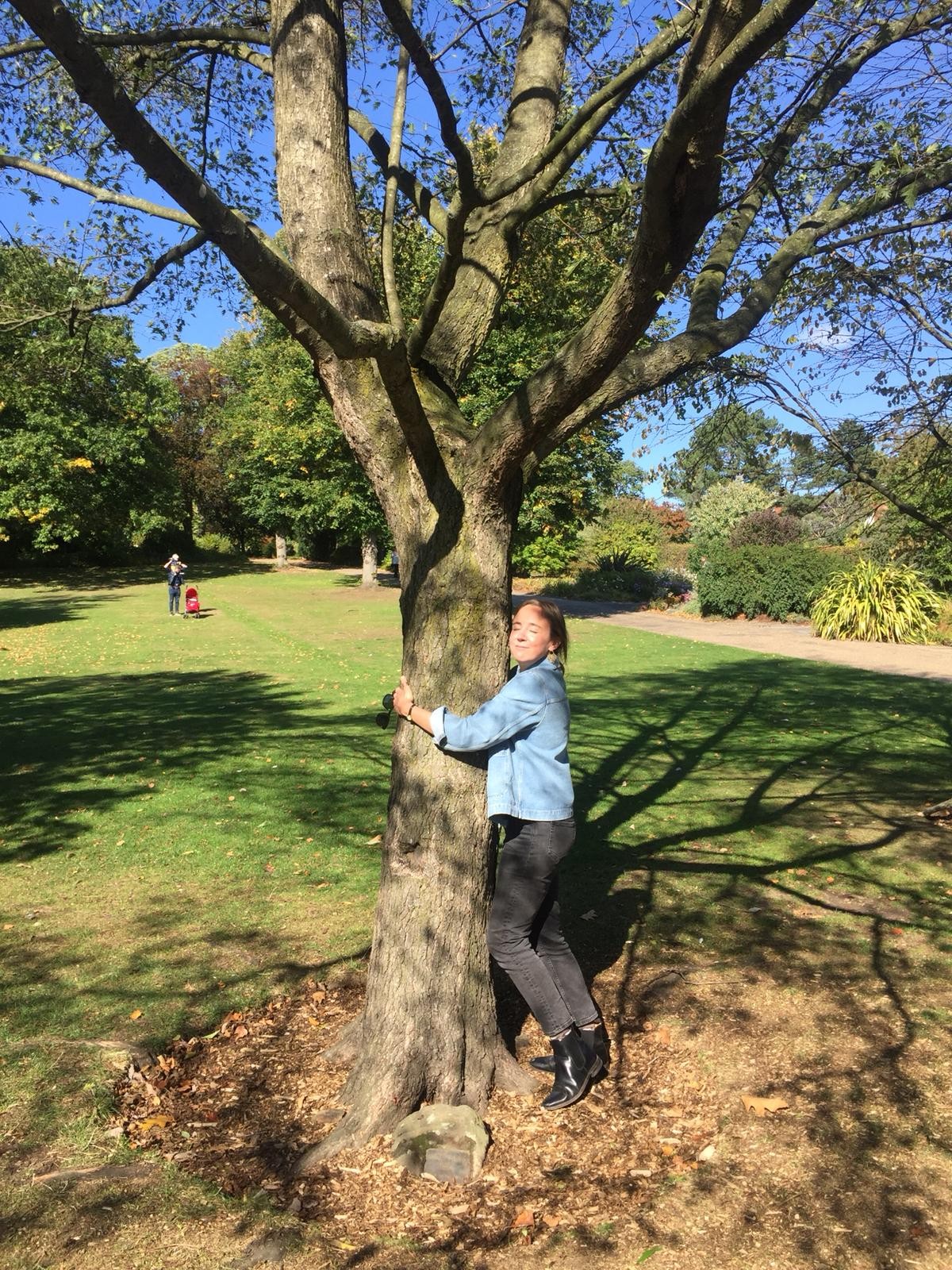
An interest in all things arboreal

In 2023 I rejoined the University of Sheffield as a lecturer where I teach undergraduate and post-graduate students, with a broad humanities and historical bent.

In 2023 I rejoined the University of Sheffield as a lecturer where I teach undergraduate and post-graduate students, with a broad humanities and historical bent. My research practice is most clearly defined by an interest in all things arboreal, but I think that it more accurately reflects my desire to understand the world around me, and that trees have been a useful ‘in’. I delight in finding new examples of tree planting – specific people, places and events – that offer insight into the past. This could be a figure like Nobel Prize-winner Wangari Maathai, the creation of a ‘cathedral of trees’ in Milton Keynes or the drive to plant commemorative street trees during WW1. For me, this encapsulates what I think is so fantastic about the field, that it rewards curiosity but is also highly relevant and relatable beyond disciplinary or professional silos and boundaries. As a result, my advice for someone interested in garden and landscape architecture is to identify where that interest comes from and to build from there.

Frances Hodgson Burnett’s Secret Garden

Returning to the question of where this all started for me, the truth is that my route to garden and landscape history started much earlier and specifically, in the pages of Frances Hodgson Burnett’s Secret Garden.

For me, it is the book through which the hopeful and redemptive power of the natural world first came alive to me; a power that underpins the purpose that I find in teaching and the delight that I find in research.

Camilla Allen

The last in our online course A History of Gardens 3, on Tues@10 am. Sponsored by Wooden Books.

... (more)

We have just published another new on-line issue of our journal Garden History. Dr Barbara Simms, our Journal Editor introduces... (more)

Does it give you a buzz of excitement when others share your enjoyment of historic parks and gardens? If so,... (more)