
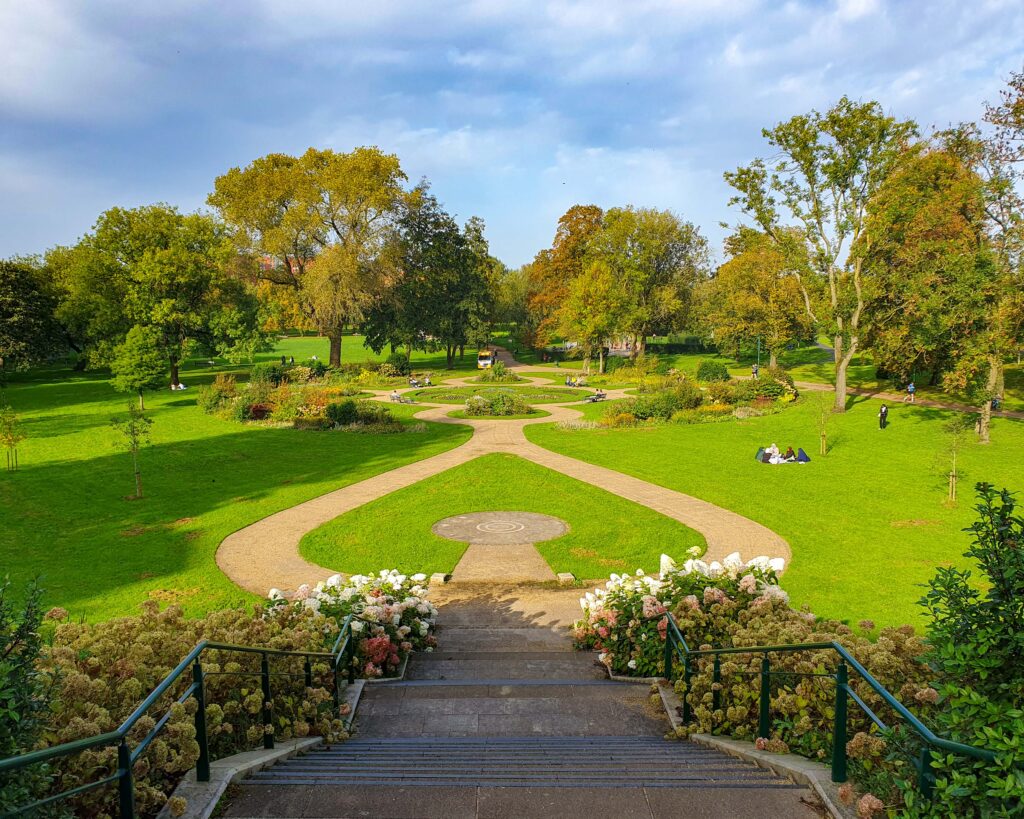
The Gardens Trust has written to Andy Burnham, urging him to make one of his first key decisions as Prime Minister the protection of the historic parks and gardens, including public parks which were pioneered in Manchester.
We have asked him to retain our role as a statutory consultee in the English planning system, following the Government’s consultation on its proposal to remove the role and instead simply notify us of planning applications within the Registered boundary of parks and gardens.
You can read our letter to Andy Burnham here.
This proposal would remove the protection for setting of historic parks and gardens, which is key to the significance and enjoyment of these special places. Read more about Setting as well as our views on the Government’s proposal on our website.
The Gardens Trust supports the drive for new housing, but this needs to be delivered with expert advice making sure that historic green space is available to support the new communities. Removing our statutory consultee role would put the nation’s green space treasure of parks and gardens, created and enjoyed over hundreds of years, at immediate risk of destruction through poorly-informed development. We have also sent Mr Burnham a letter of support from Afzal Khan MP, which articulates the need for new housing to not come at the cost of existing green space. Over 90% of people are concerned that the government’s plan to build 1.5million new homes could threaten green open space.
As factories multiplied and the population soared during the 19th century, Manchester’s civic leaders increasingly recognised that a successful city needed more than industry, housing and transport. It needed parks. Manchester’s 19th-century parks were ambitious civic projects, created to improve public health, provide opportunities for recreation and bring communities together. They reflected a bold belief that access to beautiful, well-designed green spaces should be part of everyday urban life. Today, retaining existing parks and gardens is essential if new housing is to provide for healthy, contented and prosperous communities.
In 1846, three public parks opened almost simultaneously: Peel Park in Salford, Queen’s Park in Harpurhey and Philips Park in east Manchester. Their creation represented a remarkable commitment to public investment in green space at a time when many British towns had little or no equivalent provision. You can read more about them on our Garden History Hub here: Manchester’s green revolution: how Victorian parks helped build a modern city.
Today, parks and gardens remain critical to sustainable communities, especially in cities where they provide communities with essential green space. They have key roles to play in addressing issues facing us all in the 21st century, such as:
- They add hugely to the UK’s tourism economy, being one of the biggest drivers in this field, nationally and internationally. Around 20% of total international visitor spend in the UK is on visits to parks or gardens – around £2 billion.
- Help to ameliorate the impacts of climate change.
Parks and gardens due to the cooling properties of trees will play and increasing important role by provide shade and cooling islands in and around urban areas
- Support nature recovery, particularly in our cities, where established older landscapes can provide established complex habitats.
- Public parks play an important role in social cohesion by offering space for people to come together and build communities, as well as offering places for wellbeing, play and recreation
- Parks help reduce demand on the NHS by offering free-to-access places to exercise and enjoy fresh air, critical for health and wellbeing. Parks and gardens save the NHS around £111million through the health benefits of spending time in them.
- Nurturing opportunity for all, because not only does an active parks and gardens sector support inclusive access to leisure but it also offers a range of accessible career pathways.
You can read more about the role of historic parks and gardens in the 21st century in the Gardens Trust report Harnessing : Parks and Gardens in the 21st Century: How Historic Landscapes can Support our Today and Tomorrow.
Our letter also highlights the threat to local planning authorities’ ability to meet the requirements of the National Planning Policy Framework. Local planning authorities (LPAs) do not have the expertise to handle park and garden casework without guaranteed specialist input. The cost of all local planning authorities having to deliver the service currently provided by the Gardens Trust themselves is estimated at £3,692,846 per annum. (In 2024/25, the Gardens Trust received a grant of £43,963 from the Department of Culture, Media and Sport to deliver its statutory consultee role.)
You can continue to support us by:
- Sharing your support for us on social – you can follow and tag us @thegardenstrust on LinkedIn, X, Facebook, Instagram and TikTok.
- Writing to your MP, sharing our letter to Andy Burnham and asking them to draw it to his attention. Advice and tools for writing to your MP can be found here.
- Donating to the Fighting Fund, in order to help with the challenges ahead.
